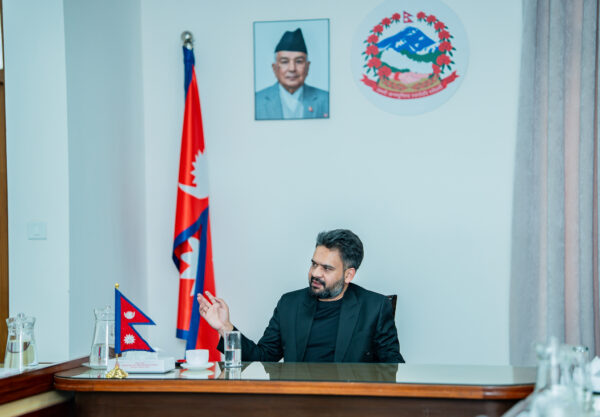
Nepal's Ruling Party Faces Internal Power Struggle
Politics
2026年7月10日
5
The Diplomat Indonesia

Nepal's Ruling Party Faces Internal Power Struggle

AI サマリー

Nepal's burgeoning Rastriya Swatantra Party (RSP) is teetering on the brink of a split as a power struggle intensifies between Prime Minister Balendra Shah and party chairman Rabi Lamichhane. Their conflict is casting a shadow over party governance and foreign policy.

Read The Diplomat, Know The Asia-Pacific Differences between Prime Minister Balendra Shah and RSP chief Rabi Lamichhane, two politicians with competing centers of authority, were inevitable. Nepal’s Prime Minister Balendra Shah, Apr. 16, 2026 The most immediate threat to Nepal’s ruling Rastriya Swatantra Party (RSP) comes not from outside but from within the outfit. Ever since Balendra Shah, the erstwhile popular mayor of the national capital, Kathmandu, joined the party at the end of 2025, there have been speculations over Shah’s ability to work with RSP founding chairperson Rabi Lamichhane. In the March 2026 elections, the RSP romped home to victory by riding the wave of antipathy against the old political parties, winning nearly a two-thirds majority in the federal lower house. Both during the elections and in their aftermath, the two leaders continued to project unity. Yet signs of strain are already visible. According to a pre-poll agreement between Shah and Lamichhane, if the RSP got to form the government, Shah as prime minister would look after state affairs while Lamichhane managed the party. It was a marriage of convenience. As the mayor of Kathmandu, Shah had developed the image of an efficient technocrat among the educated urban voters. Lamichhane, meanwhile, was popular among the less educated, rural masses. Together, they could have a pan-Nepal appeal. Lamichhane’s legal troubles, which stood in his way of being prime minister, also made it easier for him to project Shah as the party’s prime ministerial candidate. Even at the time of its signing, the deal appeared idealistic. By design, in Nepal’s parliamentary system, the head of the party leading the government dictates its functioning. Often, unlike the current arrangement in the RSP, the same person heads both the party and the government. It was thus only a matter of time before Shah started seeking greater space in the RSP, if only to consolidate his hold on the government. The recent RSP general convention, the party’s supreme decision-making body, marked Shah’s debut as a political leader within the organization. Before that, he had avoided all party-related gatherings. Nearly three weeks after the general convention, the RSP has been unable to give a full shape to its central committee or to fill all of its office-bearer positions as Shah and Lamichhane tussle over the pick of nominees. Perhaps an even bigger sign of strain is the party statute endorsed by the convention. It has a provision whereby the party chair can change the RSP parliamentary party leader if the latter veers off the official party line. This is not a minor arrangement. If Shah, the current RSP parliamentary leader, is removed from the position for some reason, his hold on the prime minister’s office would become untenable. The new party statute also provides for another senior leader besides Shah. This appears to be another way for Lamichhane to check Shah’s growing influence in the party. Even in the past, such top-down, personality-driven unity in Nepali political forces tended to quickly unravel — most famously in 2021, when the Nepal Communist Party, with similar strength to that of the RSP now, imploded following a prolonged power struggle between its two top leaders. In a way, the divergence between Shah and Lamichhane, two politicians with competing centers of authority, was inevitable as the RSP gradually morphed from an anti-establishment movement to an established political party. Foreign engagement has turned into another theater of the internal Shah-Lamichhane contest. In the first three months of his premiership, Shah had assiduously avoided any one-on-one engagement with foreign dignitaries. So much so that he held off on accepting Indian Prime Minister Narendra Modi’s invitation to visit India. Instead, Lamichhane travelled to Delhi, where he got a rapturous welcome. While there, the RSP chair met many top Indian officials, including Modi and Indian Home Minister Amit Shah. But following the party convention, Shah seems to have realized the folly of limiting his foreign engagements. Over the years, India has had an outsized influence on governments in Kathmandu. While it has been beneficial for Nepali prime ministers to cultivate India, China and the U.S. have traditionally helped them balance New Delhi’s outsized influence. This is why Shah last week broke with his pledge of keeping a safe distance from visiting foreign dignitaries and met the top Asian Development Bank (ADB) official. Meeting the ADB official is not the same as full diplomatic re-engagement, but it suggests that Shah may be reconsidering his policy of keeping foreign actors at arm’s length. Shah needs to tread carefully. India is unhappy with the way he has “sidelined” it, especially by refusing to meet the visiting Indian Foreign Secretary Vikram Misri, who was coming to Nepal to extend Modi’s invitation. Many in Nepal saw Lamichhane’s warm welcome in New Delhi as a signal from India that, should Shah continue to rebuff it, it would be prepared to cultivate an alternative power center in the RSP. China, too, is unhappy with the drastic reduction in the clout of the Nepali communist parties in the March elections and a recent increase in “anti-China activities” on Nepali soil. There appears to be a perception in both Beijing and New Delhi that the current government is increasingly tilting towards the U.S. The American government and its agencies, in their eyes, have steadily increased their engagement in Kathmandu since the Gen Z protest last year. Shah will have to reassure the Indians and Chinese without appearing to relinquish his foreign policy autonomy. The RSP was until now an amalgam of people from different political and socioeconomic backgrounds united by a common anti-establishment sentiment. Now that the party is in a position to distribute patronage and posts, the interests of these people from disparate backgrounds are bound to surface, which also creates openings for external actors to exploit. The RSP has already vanquished the old political parties. Can it survive the tussle for power between the two men at its helm? Subscribe today and join thousands of diplomats, analysts, policy professionals and business readers who rely on The Diplomat for expert Asia-Pacific coverage. Get unlimited access to in-depth analysis you won't find anywhere else, from South China Sea tensions to ASEAN diplomacy to India-Pakistan relations. More than 5,000 articles a year. Already have an account? Log in. Biswas Baral is the Editor of The Kathmandu Post and a columnist for The Diplomat. He writes on Nepal’s domestic politics and foreign policy. Get briefed on the story of the week, and developing stories to watch across the Asia-Pacific.

多角的分析

経済的影響

RSPの権力闘争は、ネパール経済の安定性に間接的な影響を与える可能性がある。政治的不確実性の高まりは、国内および海外からの投資を抑制し、経済成長の鈍化を招く恐れがある。特に、インフラ開発や外国直接投資(FDI)への影響が懸念される。過去のネパールにおける政情不安の事例では、経済政策の遅延や一貫性の欠如が経済指標の悪化につながったケースが多い。

投資家心理

投資家にとって、RSP内の権力闘争はネパール市場への投資リスクを増大させる要因となる。政治的安定性の低下は、政策の予測可能性を損ない、資本逃避を招く可能性がある。特に、インドや中国といった周辺国からの直接投資は、両国のネパール政府への影響力行使の度合いによって左右されるため、不透明感が増す。過去、ネパールで政治的混乱が生じた際には、株式市場の低迷や通貨価値の不安定化が見られた。

社会的影響

シャー氏とラミチャネ氏の権力闘争は、RSPを支持した多様な社会層の期待を裏切る可能性がある。特に、旧来の政党への不満からRSPに投票した層は、党内の権力争いが国民生活の改善に繋がらない場合、失望感を募らせるだろう。例えば、カトマンズ市長としてシャー氏が推進した都市開発プロジェクトへの期待や、ラミチャネ氏が掲げた公約が、党内対立によって停滞するリスクがある。また、党大会で承認された党規約の変更は、党内の民主的な意思決定プロセスに疑問を投げかけ、一部の党員からの反発を招く可能性も指摘されている。

市民の声

ネパール国民、特にRSPを支持した層は、党内の権力闘争によって、自分たちが期待した政治改革が遅延するのではないかという不安を抱いている。例えば、カトマンズ市民は、シャー氏が市長時代に示した行政手腕への期待から、国政における彼の活躍を願っていたが、党内対立がその機会を奪うのではないかと懸念している。また、ラミチャネ氏の支持層は、党首としての彼のリーダーシップが揺らぐことへの不安を感じている。このような状況は、国民の政治への信頼を低下させ、政治参加への意欲を削ぐ可能性がある。

背景・歴史的文脈

ネパールの政治は、長年にわたり権力闘争と政党分裂の歴史を繰り返してきた。特に、2015年の憲法制定以降、政治勢力間の力学は複雑化している。RSPは、2022年の下院選挙で、旧来の政党(ネパール会議派、ネパール共産党統一マルクス・レーニン主義派など)への不満を背景に、既存政治へのアンチテーゼとして台頭した。バレンドラ・シャー氏は、カトマンズ市長として「ネパールのトランプ」とも呼ばれるほどの人気を得て、そのカリスマ性をRSPの選挙運動に活かした。ラビ・ラミチャネ氏は、ジャーナリスト、テレビ司会者として国内で高い知名度を持ち、反体制的なメッセージで支持を広げた。両者の協力は、RSPが短期で大衆的な支持を獲得する上で不可欠だったが、政党運営における権限分担や政策決定プロセスを巡る根本的な対立は、構造的に内包されていた。過去、ネパール共産党(統一マルクス・レーニン主義派)が2021年に内部対立で分裂した事例は、有力政治家間の権力闘争が政党を崩壊させうることを示唆している。

原文ソース

The Diplomat Indonesia

原文を読む