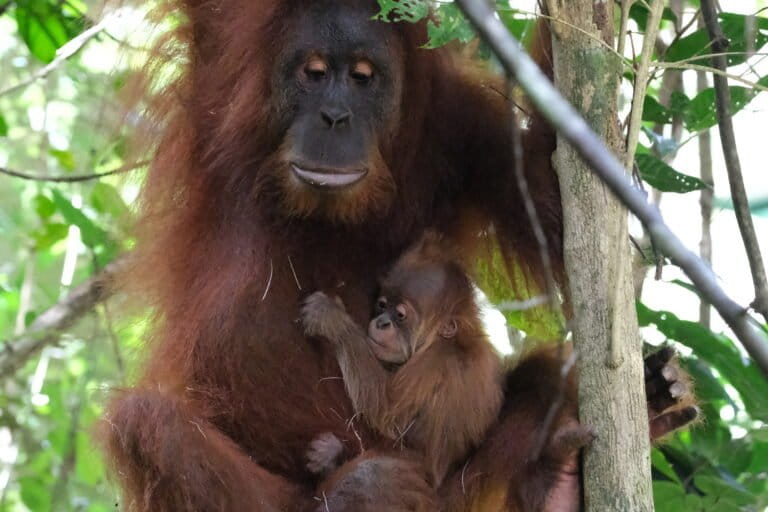
Orangutan Rehabilitant 'Bulan' Becomes Mother in the Wild, Highlighting Reintroduction Success
A female Sumatran orangutan, 'Bulan', who was rescued from illegal trade, rehabilitated, and released back into the wild, has given birth in Aceh, Indonesia. This marks a success for reintroduction programs but highlights the urgent need for enhanced habitat protection.
The Sumatran Orangutan Conservation Programme (SOCP) field monitoring team has confirmed the presence of a male Sumatran orangutan infant, named Badar, born to Bulan, a female orangutan who was a victim of illegal wildlife trade and underwent rehabilitation before being released into the wild in 2018. The discovery was made in late May within the Jantho Nature Reserve in Aceh. Bulan was rescued from the illegal wildlife trade in Kutacane, Southeast Aceh Regency, at the age of two. She then spent four years in a rehabilitation process at the SOCP quarantine center in Sibolangit, North Sumatra, before being reintroduced to her natural habitat in 2018. The finding of Bulan with her offspring signifies a successful reintroduction, though the protection of orangutan habitats outside conservation areas remains a significant challenge. Forestry Minister (likely referring to a relevant official, though the title might be a simplification) named the infant Badar, which in the local dialect refers to the phenomenon of a full moon. M. Yakob Ishadamy, Director of Conservation at the Yayasan Ekosistem Lestari (YEL), stated that Bulan's case is a concrete example of successful reintroduction of endemic wildlife. However, he emphasized that this success must be accompanied by strengthened protection for other orangutan habitats. "Bulan's journey from a victim of illegal trade to a mother in the wild shows the long-term value of orangutan rehabilitation and reintroduction. Successes like this can only continue if the forests on which orangutans depend remain protected," he said. He also highlighted the importance of raising awareness among indigenous communities around the buffer zones to play a role in safeguarding natural wealth. Habitat protection is the primary key to ensuring orangutans can survive and maintain healthy populations. The birth of Badar is an important achievement in species conservation, but the reality on the ground indicates that challenges persist. Anthropogenic pressure has increased dramatically over the last decade, causing land fragmentation that creates isolated 'islands' for orangutans.
多角的分析
ブーランの再導入成功と繁殖は、野生生物保護への投資が長期的に種の存続と生態系サービス(森林保全、観光など)に貢献することを示唆している。これは、保護活動への資金提供や、持続可能な地域経済との連携を促進する可能性を持つ。一方で、生息地の断片化は、オランウータンの移動を阻害し、遺伝的多様性の低下や紛争のリスクを高めるため、経済的損失につながる可能性もある。
このニュースは、ESG(環境・社会・ガバナンス)投資の観点から、インドネシアにおける持続可能な自然保護プロジェクトへの関心を高める可能性がある。成功事例は、関連するNGOや、エコツアーリズム、持続可能な林業を支援する企業への投資機会を示唆する。しかし、土地利用の断片化や密猟のリスクは、直接的な事業投資におけるリスク要因となる。
ブーランの事例は、違法取引の被害者である動物が回復し、野生で子孫を残せることを示す希望の光である。しかし、生息地の断片化は、地域住民とオランウータンとの間の資源を巡る摩擦を増大させる可能性がある。先住民コミュニティの関与は、伝統的知識の活用と保護活動の地域社会への統合という点で重要であり、彼らの生活様式と自然保護との調和が問われている。
このニュースは、インドネシア市民、特にアチェ州周辺の住民にとって、野生生物保護の重要性を再認識させる機会となる。ブーランの物語は、違法取引の悲劇と、保護活動の成功という両面を伝える。しかし、生息地の断片化は、農地拡大やインフラ開発といった地域社会の経済活動と衝突する可能性があり、住民は保護と開発のバランスに直面している。
背景・歴史的文脈
スマトラオランウータンは、生息地の破壊と違法取引により絶滅の危機に瀕している。過去数十年間、アブラヤシプランテーションの拡大、違法伐採、そしてペットとしての密売が、その個体数を激減させてきた。SOCPのような保護団体は、救出されたオランウータンをリハビリし、野生に再導入するプログラムを実施してきた。ブーランの事例は、このような再導入プログラムが成功する可能性を示しているが、同時に、保護区外の断片化された森林環境におけるオランウータンの生存には、依然として大きな課題が残されている。
原文ソース
Mongabay Indonesia