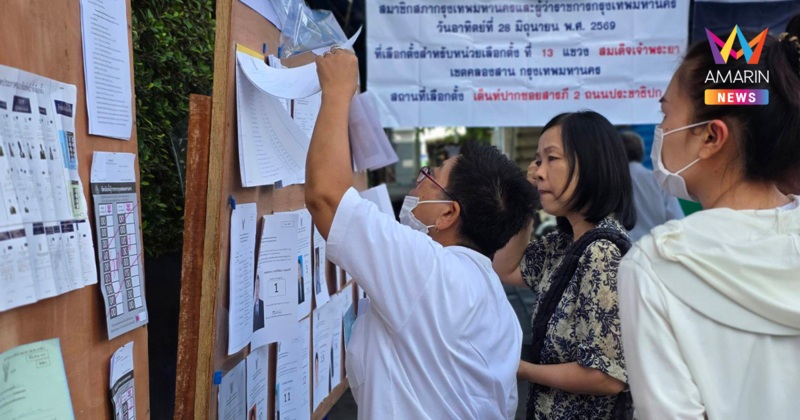
Bangkok City Council Elections: 'Big House' Politics Persists, Says Ex-EC Member
Following the Bangkok City Council election results, former Election Commission member Somchai Srisutthiyakorn stated that the 'Big House' style of politics, where influential families maintain their sway, remains entrenched in the capital. The trend highlights the importance of individual merit and family lineage over party affiliation, with few party-affiliated candidates winning seats.
Following the results of the Bangkok City Council elections, former Election Commission member Somchai Srisutthiyakorn has pointed out that the "Big House" style of politics, characterized by influential families holding sway, remains deeply entrenched in the capital. Srisutthiyakorn shared his analysis on Facebook today, as reported by Naewna newspaper. His assessment suggests that candidates affiliated with political parties did not perform as expected in the elections. Out of a total of 50 city council seats, only 22 were won by candidates from the People's Party, eight by the Democrat Party, and four by Pheu Thai. This outcome indicates that Bangkok city council elections are not solely determined by party affiliation, with individual factors playing a significant role. Srisutthiyakorn noted that the four seats secured by Pheu Thai in Thung Khru, Chom Thong, Min Buri, and Sai Mai districts can be attributed to individual merits. For instance, incumbent councilor Kittipong Ruayfupan, known as Ice, representing Thung Kru, has campaigned diligently daily and possesses a proven track record. In Chom Thong district, incumbent councilor Suthichai Weerakulsunthorn, or Hea Lan, has served for many terms. In Min Buri, the surname Wirat Meenchainant is a dominant presence in the area. All these individuals are considered notable figures. The Democrat Party won eight seats. Srisutthiyakorn suggested that without the popular support of Mr. Pinij Kanjanachusak within the Chinese community in Yaowarat, the party would not have secured the Sampanthawong seat. Similarly, in Pom Prap, the presence of incumbent councilor Ms. Nipaphan Chinglertsiri was crucial for their victory. The remaining seats were won by individuals who have consistently worked within their respective communities. The People's Party secured 22 seats. While they achieved sweeping victories in inner-city areas like Ratchathewi, Phaya Thai, Dusit, Din Daeng, Huai Khwang, and Watthana, where party popularity still holds more weight than individual candidates, seats won in outer areas tell a different story. For example, Mr. Yokpornchai Issarasereepong's win in Nong Chok is considered a result of individual and family merit. Many independent candidates were former Bangkok city councilors who had shed their party affiliations. Mr. Nawarat Ubamrung switched from the "red" camp to "white," and the Muangsiri family, with members winning in Bang Bon and Bang Khun Thian, has been associated with various parties over time. The independent winner in Khun Na Yao, bearing the surname Wipattiphumiprasert, also suggests a party affiliation. These results underscore a persistent trend in Bangkok's city council elections: individual prominence, family background, and a track record of community service often outweigh party politics in determining electoral success.
多角的分析
バンコク市議選の結果は、直接的な経済政策の変更を示唆するものではないが、政治的安定性という観点から間接的に経済に影響を与える可能性がある。有力家系が継続して影響力を持つことは、既存のビジネスネットワークや利権構造が維持される可能性を示唆しており、新規参入者にとっては障壁となるかもしれない。一方で、個人の実績が重視される傾向は、地域密着型のサービス業や中小企業にとって、地域住民との関係構築がビジネス成功の鍵となることを示唆している。
投資家にとって、バンコク市議会の選挙結果は、政治的安定性への安心感をもたらす可能性がある。有力家系(ビッグハウス)の政治が継続することは、既存のビジネス環境の予測可能性を高める。しかし、これは同時に、新しい政治勢力による大胆な政策転換や、既存の利権構造の打破を期待する投資家にとっては、機会の限定を示唆するかもしれない。特に、インフラ開発や公共事業に関する投資判断においては、既存の勢力との関係性が引き続き重要になると考えられる。
バンコク市議選の結果は、都市部における「ビッグハウス」政治の根強さを示しており、これは地域住民の政治参加のあり方や、候補者選出のプロセスに影響を与えている。特に、党のイデオロギーよりも、個々の候補者の地域での長年の活動や、地域社会における家柄の影響力が重視される傾向は、市民が政治家との直接的な繋がりや、身近な問題解決能力を期待していることを示唆している。また、無所属候補者の中にも元議員や有力家系が多く見られることは、政治的影響力が世代や党派を超えて受け継がれている構造を示している。これは、若年層や新しい政治運動を支持する層が、既存の政治構造に変化をもたらすことの難しさを感じさせる可能性がある。
バンコク市民にとって、市議選の結果は、自分たちの代表が誰になるか、そしてその代表が自分たちの生活にどう影響するかという直接的な関心事である。有力家系や長年地域で活動してきた議員が当選する傾向は、市民が政治家との個人的な繋がりや、地域の問題解決能力を重視していることを反映している。しかし、これは同時に、新しいアイデアや政策を掲げる候補者が、既存の政治ネットワークを切り崩すことの難しさを意味する。市民は、自分たちの声が届く政治、そして地域社会の発展に貢献する代表を求めているが、その実現には、個人の実績や家柄といった要素が依然として大きな壁となっている。
背景・歴史的文脈
タイの政治、特にバンコクにおける地方政治では、古くから有力な家系や地域の名士が影響力を行使してきた歴史がある。これは「ビッグハウス」政治と呼ばれ、選挙において政党のイデオロギーよりも、個々の候補者の地域での実績、人脈、そして家柄が重視される傾向を生んできた。過去のバンコク都知事選や市議選でも、こうした傾向はしばしば見られ、新しい政治勢力が台頭する際にも、既存の政治ネットワークとの関係性が問われてきた。今回の選挙結果は、こうした長年の構造が、新しい世代の政治家や政党が登場しても、依然として根強く残っていることを示している。
原文ソース
Thai Newsroom