General articles are free for 24 hours after publish.
Ninh Binh Province Completes Over 90% of DNA Sample Collection for Unidentified Martyrs' Remains
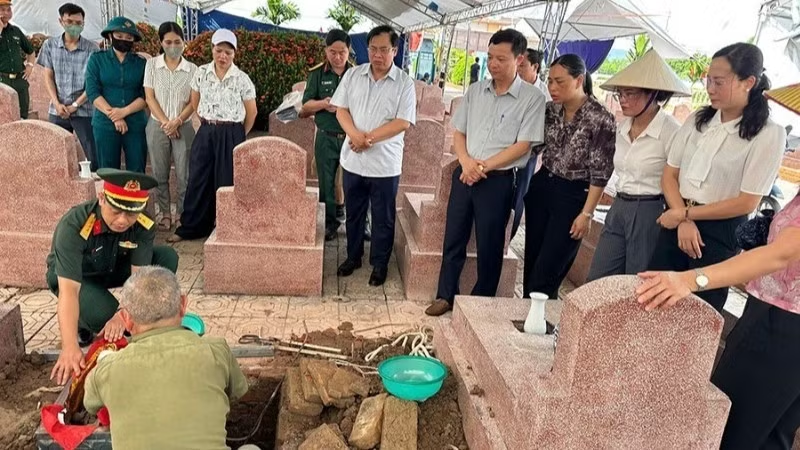
Ninh Binh Province, Vietnam, has completed DNA sample collection for unidentified martyrs' remains in over 90% of its communes and wards (92 out of 104). This initiative is part of a national program to identify and repatriate fallen soldiers.
Ninh Binh Province in north-central Vietnam announced that by the end of July 2026, it had completed the collection of DNA samples from unidentified martyrs' remains in 92 out of 104 communes and wards (approximately 88.5% of the target areas). This effort is part of Project 515, a nationwide initiative aimed at identifying, collecting, and confirming the identities of fallen soldiers. Through this program, Ninh Binh Province has collected 3,959 bone samples from 223 cemeteries for DNA analysis. This work is considered a crucial step in reconnecting soldiers lost in war with their families and honoring their sacrifices. The identification of martyrs' remains has been a long-standing national priority in Vietnam. Many soldiers were buried unidentified following past conflicts, notably the Vietnam War (American War). The government is accelerating identity confirmation using DNA technology to provide closure for families and accurately record national historical memory. Ninh Binh Province's progress marks a significant step towards achieving national targets, with similar operations underway in other provinces. For instance, Hai Phong City has collected 1,461 DNA samples, and Nghe An Province is conducting a campaign called the "500-Day Operation" for collecting and identifying remains. These activities hold considerable importance within the context of national unity and the establishment of historical legitimacy by the Communist Party of Vietnam.
Original source
Nhan Dan