General articles are free for 24 hours after publish.
Tropical Depression Triggers Heavy Rains Across Central and Northern Vietnam
Vietnam is bracing for widespread heavy rainfall due to a tropical depression moving along its central coast and towards the north. Authorities are issuing urgent warnings for potential river flooding and landslides, urging strict vigilance and preparedness measures.
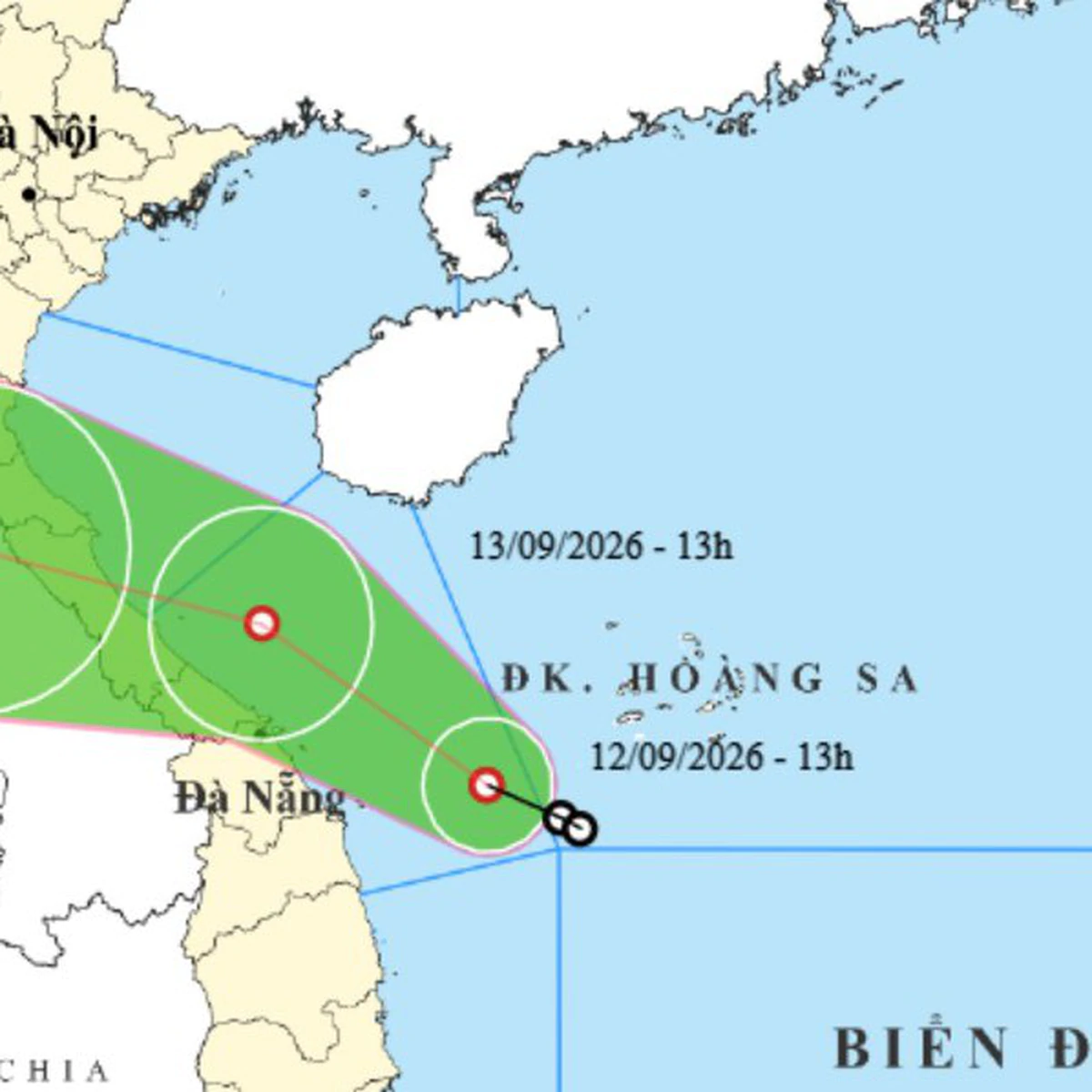
Widespread heavy rainfall is expected across central and northern Vietnam due to the influence of a tropical depression. According to meteorological forecasts, this system is moving northwest from offshore Da Nang towards Quang Tri province, before potentially making landfall and causing significant rainfall in areas from Quang Ngai to Nghe An, and then continuing its movement northward. As of 1 PM on September 12, the center of the tropical depression was located about 230 km southeast of Da Nang, with maximum sustained winds near the center at level 6 (39-49 km/h), gusting to level 8. In the next 24 hours, it is forecast to move northwest at a speed of about 10 km/h, with little chance of strengthening. By 1 PM on September 13, the center of the tropical depression is expected to be over the waters of Quang Tri and Hue, about 130 km east of Quang Tri and 90 km northeast of Hue, maintaining its intensity at level 6 with gusts of level 8. In the afternoon of September 13 and into September 14, it is forecast to move west-northwest, with the possibility of making landfall in Quang Tri province and weakening into a low-pressure area. Due to the combined effects of the tropical depression, the intertropical convergence zone, and the northeast monsoon, heavy rainfall is already occurring and is expected to continue in provinces from Quang Tri to Quang Ngai. Heavy rain is anticipated to persist across the central region until the morning of September 16, with the main rainfall band gradually shifting northward in line with the tropical depression's movement. Specifically, areas from southern Quang Tri to Da Nang and eastern Quang Ngai are expected to experience heavy rainfall of 100-200 mm, with some areas exceeding 300 mm, through the afternoon and night of September 12. Provinces from Ha Tinh to northern Quang Tri may see rainfall of 40-80 mm, with localized areas receiving over 150 mm. Furthermore, on September 13, the rainfall is likely to shift to areas from southern Nghe An province to Hue, with rainfall totals ranging from 80-180 mm, and locally exceeding 300 mm. Thanh Hoa, northern Nghe An, Da Nang, and eastern Quang Ngai provinces could receive 30-70 mm, with some areas exceeding 120 mm. From the night of September 13, rainfall is expected to extend to the northern delta regions, with totals of 20-40 mm, and localized areas receiving over 60 mm. On September 14, heavy rainfall will be concentrated in the North Central and Northern regions. Provinces from Thanh Hoa to Quang Tri could experience 70-150 mm, with some areas exceeding 250 mm. Thunderstorms are also expected to continue in the Central Highlands and southern regions. This heavy rainfall is likely to cause river flooding from Thanh Hoa to Da Nang until September 16. Rivers such as the Ngan Sau and Ngan Pho in Ha Tinh may reach warning levels 2-3, while rivers in Thanh Hoa, Nghe An, and Quang Tri could reach warning levels 1-2 or higher. There is a high risk of flash flooding in low-lying areas along rivers and in urban centers, as well as landslides on slopes in provinces from Thanh Hoa to Da Nang. In response, the National Steering Committee for Natural Disaster Prevention and Control has instructed coastal provinces to inform vessels about the tropical depression's trajectory and ensure safe navigation. Measures are also being implemented to secure fishing facilities, coastal infrastructure, evacuate residents from low-lying and vulnerable areas, expedite the harvest of agricultural products and aquaculture, and ensure safety in mountainous regions against landslides and flash floods, as well as secure dams and reservoirs. Vietnam, while pursuing economic growth under its one-party system, also faces significant vulnerability to natural disasters. Addressing extreme weather events, increasingly linked to climate change, is a national priority. In its foreign relations, Vietnam navigates a complex relationship with China, balancing economic ties with geopolitical concerns, particularly over the South China Sea. Source: The Saigon Times
Original source
The Saigon Times