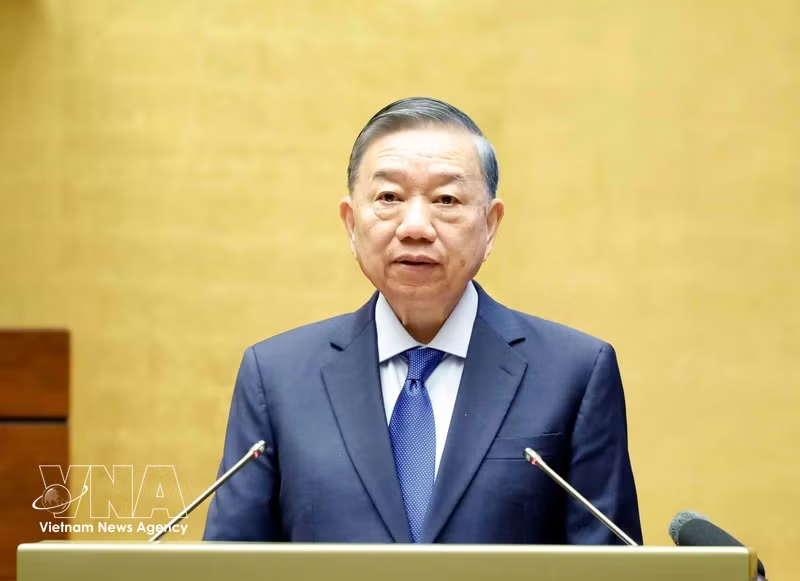
Vietnam Aims to Boost Domestic Capacity and Self-Reliance Through Foreign Investment
Top leader To Lam urged the entire political system, business community, and investors to implement Resolution 10 effectively, aiming for high-quality projects, stronger enterprises, new value chains, and enhanced national capabilities. This signals Vietnam's strategic shift in attracting Foreign Direct Investment (FDI) towards higher quality and greater efficiency.
Top leader To Lam has called on the entire political system, the business community, and both domestic and foreign investors to work together to effectively implement Resolution 10. This resolution, adopted by the Central Committee of the Communist Party of Vietnam, focuses on strengthening domestic capacity and enhancing self-reliance through the effective utilization of foreign investment. This marks a significant shift in Vietnam's strategy for attracting Foreign Direct Investment (FDI). The country is moving away from a focus on quantity and scale towards attracting higher-quality, more efficient investments that contribute to the strengthening of its domestic industries. To Lam emphasized the importance of translating the policies of Resolution 10 into concrete outcomes, such as high-quality projects, more robust domestic enterprises, new value chains, and the creation of quality jobs. The ultimate goal is to enhance Vietnam's overall national capabilities and further bolster its economic self-reliance. Amidst geopolitical shifts in global supply chains and the need for sustained economic growth, Vietnam is accelerating policies to upgrade its domestic industries and promote technology transfer. The nation seeks strategic partnerships with foreign investors, viewing them not just as capital sources but as key enablers for improving domestic technological prowess, production capacity, and fostering new industrial sectors. This strategic pivot is a crucial step for Vietnam in solidifying its position in the global economy and transitioning towards a more value-added industrial structure. Strengthening collaboration between domestic firms and foreign investors will be indispensable for Vietnam's long-term economic development.
多角的分析
ベトナムのFDI誘致戦略は、過去の労働集約型産業から、より高度な技術、知識集約型の産業へとシフトしている。決議10は、この政策転換を法制化し、単なる外資導入にとどまらず、国内産業のサプライチェーンへの統合、技術移転、そして高付加価値化を促進することを目的としている。これは、グローバルサプライチェーンの再編という国際情勢を背景に、ベトナムが経済的自立性を高め、より強固な経済基盤を構築しようとする試みである。
投資家にとっては、ベトナム政府がより質の高い投資を求める姿勢を明確にしたことは、投資判断において重要な要素となる。今後は、単に安価な労働力や広大な市場を求めるのではなく、技術力、イノベーション能力、そして持続可能性といった側面がより重視されるだろう。政府は、これらの質の高い投資を呼び込むために、インセンティブの提供や規制緩和を進める可能性があるが、同時に国内産業保護の観点から、一部の分野では参入障壁が設けられる可能性も考えられる。
この戦略転換は、ベトナム国民の雇用機会にも影響を与える。質の高いプロジェクトや新たなバリューチェーンの構築は、より専門的なスキルを持つ労働者に対する需要を高めるだろう。これにより、教育・研修システムへの投資が促進され、国民全体のスキルアップが期待される。一方で、低スキル労働者向けの雇用機会が減少する可能性も指摘されており、労働市場の二極化を防ぐための政策が求められる。
ベトナム市民、特に若年層にとっては、決議10の実行は将来のキャリアパスに大きな影響を与える。高度な技術や専門知識を習得することで、より良い条件の雇用に就ける機会が増えると考えられる。しかし、教育へのアクセスや、新しい産業分野で求められるスキルを習得するための機会が、地域や社会経済的背景によって不均等である場合、格差が拡大する懸念もある。ハノイやホーチミン市のような都市部では、こうした変化への対応が進む一方、地方では対応が遅れる可能性も考慮する必要がある。
背景・歴史的文脈
ベトナムは1986年のドイモイ(刷新)政策以降、外国直接投資(FDI)を経済成長の牽引役として積極的に誘致してきた。当初は労働集約型産業が中心だったが、近年、グローバルサプライチェーンの再編や地政学的なリスクの高まりを受け、より付加価値の高い産業へのシフトが課題となっていた。特に中国への経済的依存度を低減し、自国の産業基盤を強化する必要性が叫ばれてきた。決議10は、こうした背景を踏まえ、FDIの質的向上と国内産業の能力強化を両立させるための具体的な指針を示すものである。
原文ソース
VietnamPlus English