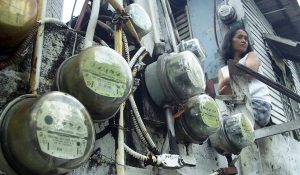
48 Power Distributors Exceed Average Electricity Rates in Philippines: ICSC
Infrastructure
2026年7月23日
5
BusinessWorld Economy

General articles are free for 24 hours after publish.

48 Power Distributors Exceed Average Electricity Rates in Philippines: ICSC

Share
AI Summary

The Institute for Climate and Sustainable Cities (ICSC) reported that 48 power distribution utilities in the Philippines charged residential customers above the national average electricity rate in June, citing supply shortages and reliance on expensive power sources.

POWER CONSUMERS served by 48 distribution utilities (DUs) paid higher electricity prices than the national average in June, according to the Institute for Climate and Sustainable Cities (ICSC). In its latest analysis, ICSC, a think tank, said these DUs serving on-grid areas recorded residential electricity rates above the national average of P12.43 per kilowatt-hour (kWh) last month. The Philippines’ national average rate was the highest among Southeast Asian peers, according to the Department of Energy, which attributed it to tight supply brought about by prolonged power outages and greater reliance on more expensive electricity sources. “Electricity prices are influenced by a range of factors, including power supply agreements, exposure to the Wholesale Electricity Spot Market (WESM), and local operating conditions,” the group said. “The recurrent outages of many coal power plants, particularly in the Visayas region, have driven WESM prices sharply higher, significantly contributing to the recurring grid alerts and the increase in electricity rates,” it added. ICSC said the power providers that buys more from the WESM were particularly affected by these price spikes, highlighting the need to diversify the power mix by utilizing more renewables with more stable pricing. The think tank said DUs that offered lower than average power rates such as Bohol I Electric Cooperative, Inc. and San Jose City Electric Cooperative, Inc. in Nueva Ecija with P10.80 per kWh and P9.85 per kWh, respectively, have prioritized geothermal energy in their power procurement strategy, allowing them to shield consumers from higher electricity costs. “While recent public discussions have focused on the various charges reflected in electricity bills, the generation charge consistently accounts for the largest share of what consumers pay,” ICSC Energy Transition Advisor Alberto Dalusung III said. Mr. Dalusung highlighted the need for a more diversified power mix focusing on indigenous renewable energy resources and improved power procurement strategies that prioritize affordability, energy security, and resilience. Electricity providers should develop more resilient power portfolios over the long term by reducing dependence on imported fuel to better protect their customers from price fluctuations, ICSC said. “Beyond reducing exposure to imported fuel price volatility, a more diversified power mix can strengthen the country’s long-term economic competitiveness, enhance resilience to external shocks, and improve the well-being of Filipino consumers,” it said. — Sheldeen Joy Talavera

0

Original source

BusinessWorld Economy

原文を読む