General articles are free for 24 hours after publish.
Ungaran Geothermal Project Proceeds Amidst Local Opposition
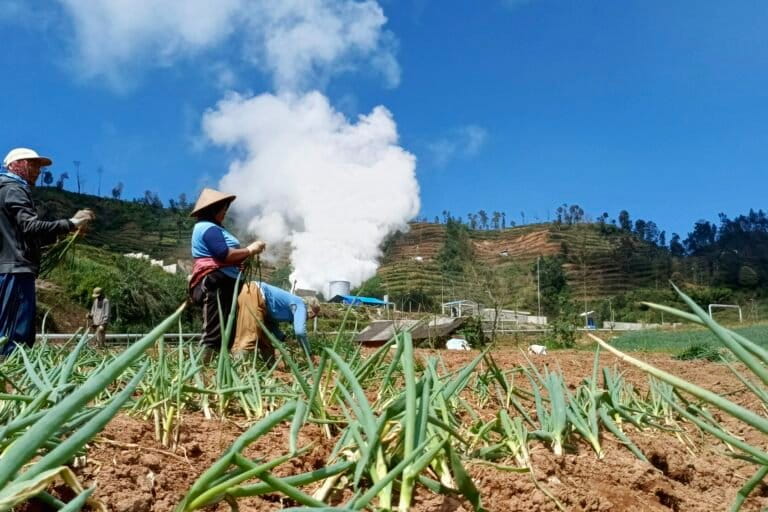
A geothermal power plant development project on Mount Ungaran in Central Java, Indonesia, is set to proceed despite local resident opposition. The government targets operation by 2031, but residents fear impacts on water sources, contamination, and cultural heritage sites.
A plan to develop a Geothermal Power Plant (PLTP) on Mount Ungaran in Central Java, Indonesia, is set to proceed despite strong opposition from local residents. The Ministry of Energy and Mineral Resources has tasked PLN (Indonesia's state electricity company) with continuing the exploration and utilization of geothermal resources in the area. The government aims to complete exploration by 2029 and have the plant operational by 2031. The project involves drilling to depths of 1,900-2,200 meters to find reservoirs of hot water and steam that can be used as a power source. However, residents around Mount Ungaran express that this plan revives long-standing concerns. Opposition has been ongoing since the area was designated as a geothermal working area in 2007. Rahman, Coordinator of the Semarang Menggugat (Semarang Sues) Alliance, stated that the lives of residents are highly dependent on springs and agriculture. He fears that geothermal drilling could reduce water discharge or contaminate it. "We are already prosperous through farming. If geothermal enters, our water sources will decrease and be polluted. As a result, agriculture will be disrupted," he said. Residents also worry about gas leaks and the possibility of drilling impacting active fault lines. According to Rahman, the project makes residents' lives more vulnerable, despite their current peaceful existence. Another concern relates to the Gedongsongo Temple Complex, designated as a national cultural heritage area. For the community, this complex is not just a tourist attraction but a part of their cultural identity and spiritual space that must be preserved. "This temple area is the identity of the residents, part of our culture that must be preserved," Rahman stated. The Central Java Provincial Government has expressed its readiness to bridge the aspirations of the community. Taj Yasin, Deputy Governor of Central Java, said that energy activities intersecting with the environment and settlements must prioritize safety, environmental sustainability, and the welfare of the residents.
Original source
Mongabay Indonesia