General articles are free for 24 hours after publish.
Over 13,500 Martyr Remains Transported to Hanoi for DNA Identification
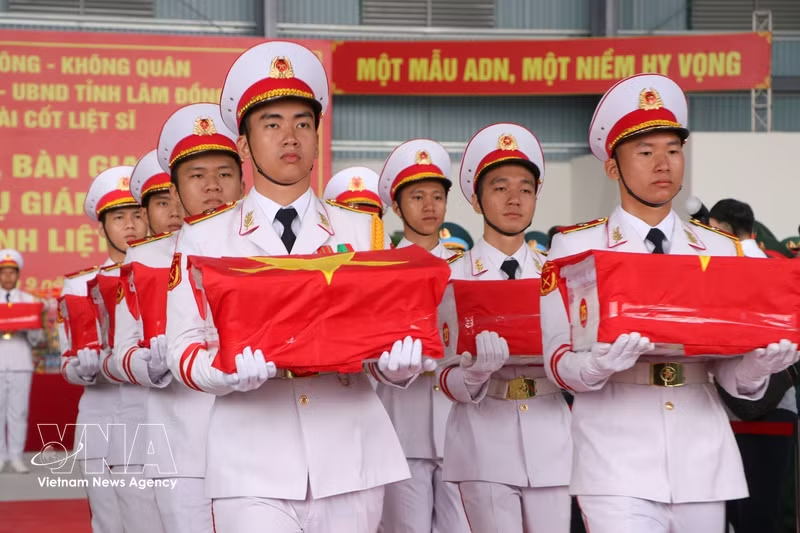
More than 13,500 samples of martyrs' remains from three southern provinces have been transported to Hanoi for DNA identification, part of a national effort to identify war victims and return them to their families.
More than 13,500 samples of martyrs’ remains collected from the southern provinces of Dong Nai, Tay Ninh and Lam Dong were transported to Hanoi on September 11 for DNA testing. The handover and transportation ceremony was organized at Tan Son Nhat International Airport in Ho Chi Minh City by Military Region 7 in coordination with the Air Defence-Air Force Service and local authorities. This initiative is part of a national project aimed at identifying soldiers who perished in past conflicts, including the Vietnam War, and honoring their contributions to their families. Under Vietnam's one-party system, respect and commemoration for national contributors, especially those who died in war, are positioned as crucial elements for fostering national unity and patriotism. While Vietnam continues its economic growth, the memories of past wars remain a significant part of society, and such remains identification projects resonate deeply with the public, also serving to emphasize the nation's historical continuity. In recent years, the Vietnamese government has intensified its efforts in identifying war martyrs, strengthening activities utilizing DNA testing technology with support from both domestic and international sources. This can be seen as an indication of Vietnam's emphasis on domestic social stability and national solidarity, even as it maintains and develops relations with the international community. Particularly concerning relations with China, while historical perceptions can be complex, the organization of national heritage and consideration for public sentiment may indirectly influence Vietnam's foreign policy. The transported remains will undergo detailed DNA analysis at a national institute in Hanoi. Once identified, they will be handed over to their families. This process requires considerable time and effort, but it represents the fulfillment of a long-held aspiration for many families and a moment to deepen national remembrance.
Original source
VietnamPlus English