General articles are free for 24 hours after publish.
South Kalimantan's Swamp Fishermen Struggle Amid Declining Catches, Seek Livelihood Revival
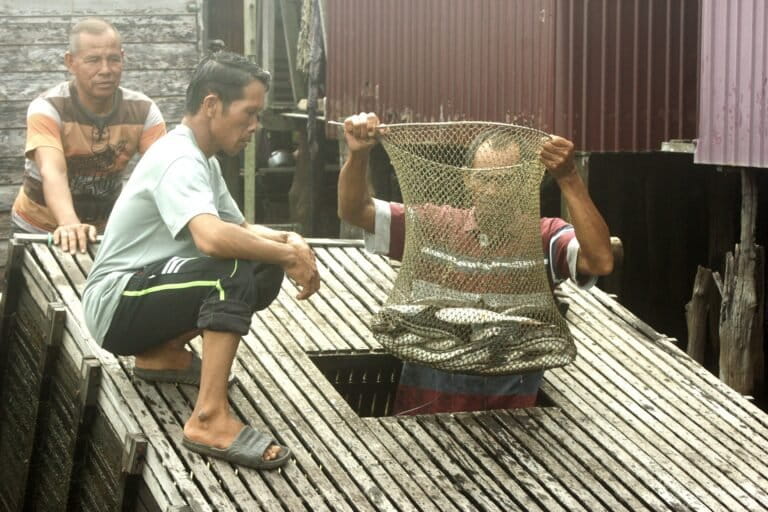
Swamp fishermen in Paminggir, Hulu Sungai Utara, South Kalimantan, are facing a significant decline in fish catches over the past five years. What once yielded dozens of kilograms with ease now struggles to produce even a few, threatening their livelihoods.
Swamp fishermen in Paminggir, Hulu Sungai Utara Regency, South Kalimantan, are facing significant challenges as fish catches have drastically declined over the past five years. The vast swamp area, once a rich habitat for various freshwater fish, is now yielding much less for the local fishing communities. Lamsah, a 50-year-old fisherwoman from Bararawa Village, has been struggling to make ends meet. Despite working since dawn, by midday, she had only managed to catch four kilograms of small fish. "It's been difficult to catch many fish since morning," she said in late June. Paminggir is a giant swamp, spanning 156 square kilometers, equivalent to one and a half times the size of Banjarmasin City. This region is home to diverse freshwater fish species, including puyau, papuyu, haruan, seluang, sepat, sanggi, sanggang, lais, pipih, biawan, baung, and jelawat. "The catch has been decreasing for the last five years. This year, it's even harder," Lamsah stated. She recalled a time when catching dozens of kilograms of fish was easy, but now, even five kilograms is a struggle. "Previously, I could earn Rp100,000 to Rp150,000 a day, even when fish prices were low. Now, earning Rp50,000 is difficult." The swamp is the primary source of livelihood for the majority of Paminggir's residents. Lamsah has been a fisherwoman since her teenage years, initially helping her mother before becoming independent. As a mother of three, she continues to fish to supplement her husband's income, who is also a fisherman. "If we only rely on my husband's income, it's not enough for our living expenses." Her neighbor, Rusmiati, 53, faces a similar fate. Despite setting her gillnet (rengge) before sunrise, she collected only about 2.5 kilograms of fish. "I'm grateful even for Rp25,000. It's indeed hard to find fish in the last five years. Some species, like lais, pipih, and sanggang, are even rarely found now," she said, also a mother of three. Information Source: Mongabay Indonesia
Original source
Mongabay Indonesia