Battambang Rice Fields Saved by Emergency Irrigation Amid El Niño Drought
Environment
2026年7月21日
4
Phnom Penh Post

General articles are free for 24 hours after publish.

Battambang Rice Fields Saved by Emergency Irrigation Amid El Niño Drought

Share
AI Summary

Emergency water releases from the Battambang Multipurpose Reservoir have successfully reached over 100,000 hectares of drought-stricken rice fields in Battambang province, saving the crucial wet-season rice crop from the impacts of El Niño.

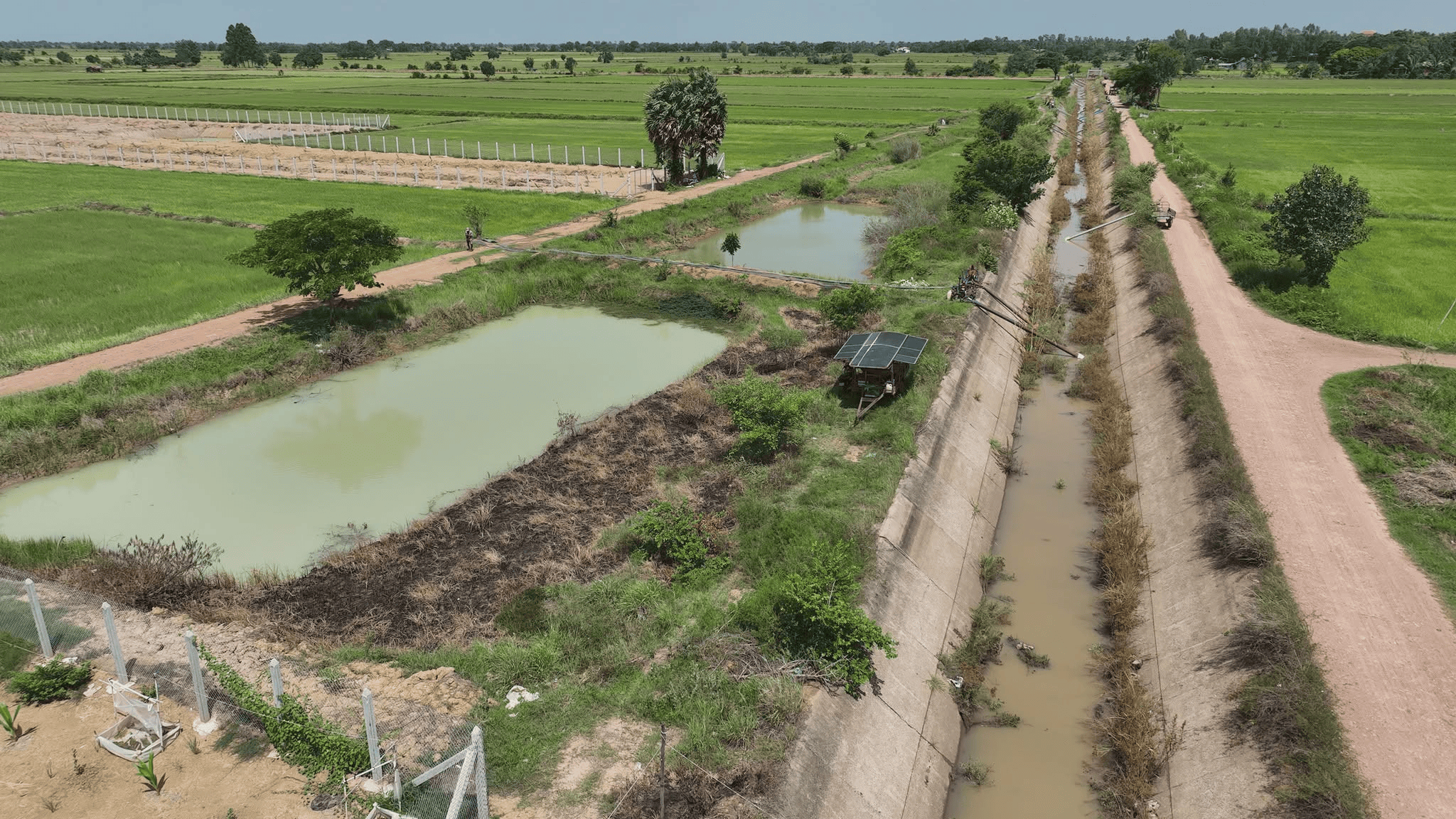
Emergency irrigation had reached all drought-hit rice-growing areas in Battambang province as of Tuesday, July 21, after water was released from the Battambang Multipurpose Reservoir (Sek Sak). The province was the hardest hit by the current dry spell linked to the El Niño weather phenomenon, officials said. Minister of Water Resources and Meteorology Thor Chetha told media that the water resources ministry, together with relevant authorities, had spent the past several days coordinating emergency interventions by releasing water to save wet-season rice crops, with Battambang receiving priority due to the scale of the damage. According to ministry assessments, more than 100,000 hectares of rice fields in Battambang have been affected by the current dry spell, out of at least 180,000 hectares of wet-season rice under cultivation in the Kingdom. “The water has been released, but it did not arrive immediately because it takes time to travel through the irrigation system and reach every affected area, some of which are many kilometres away,” Chetha said. “However, as of today, we have received confirmation that the water has reached all of the target locations,” he added. The minister explained that while the upper catchment areas have received abundant rainfall, central lowland areas have remained short of water, prompting farmers to appeal for government assistance. In Battambang, runoff from heavy rainfall in the upper reaches is stored in the Sek Sak reservoir, which has a storage capacity of more than 100 million cubic metres. The reservoir is used to channel water downstream to lowland farming areas experiencing shortages. Chetha noted that water must travel hundreds of kilometres from the Cardamom Mountains into the reservoir and then onward through the irrigation network before reaching drought-stricken fields, making immediate delivery impossible. Water is first discharged into the Sangke River, the province’s main waterway, before being diverted through a series of control structures and canals to supply downstream farming communities. “Along the Sangke River alone, there are 14 main canals, along with hundreds, even thousands, of secondary and tertiary canals, covering a combined distance of more than 1,000 kilometres,” the minister explained. Battambang provincial governor Sok Lou noted that after rainfall replenished water supplies in Samlot district, the provincial Department of Water Resources and Meteorology diverted water along the Sangke River to irrigate approximately 30,000 hectares of rice fields in Ek Phnom district. The water was then distributed through irrigation control structures to support rice cultivation across Sangke, Banan, Battambang town, Koas Krala and Moung Ruessei districts, covering more than 100,000 hectares in total. Farmers thanked the authorities for responding quickly to address the irrigation shortages affecting this year’s wet-season rice crop.

0

Original source

Phnom Penh Post

原文を読む