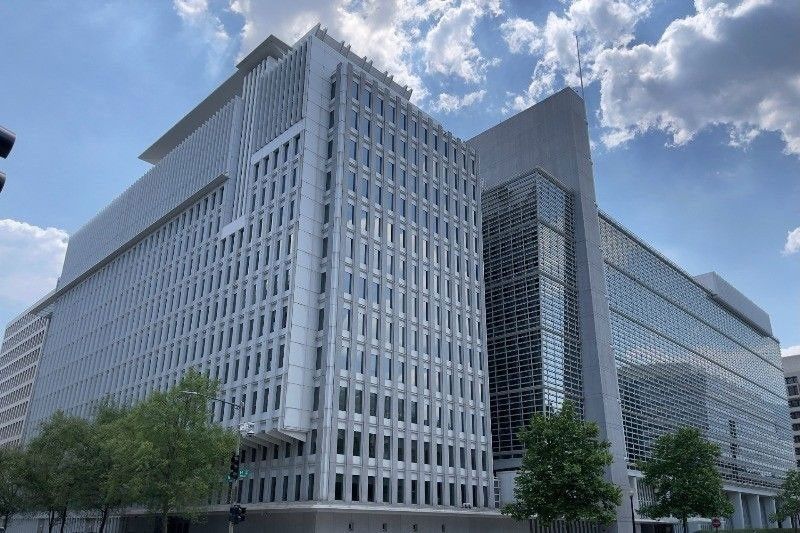
World Bank Lowers Philippines Growth Outlook Amid Global Uncertainties
Business
2026年8月4日
5
Philstar Business

General articles are free for 24 hours after publish.

World Bank Lowers Philippines Growth Outlook Amid Global Uncertainties

Share
AI Summary

The World Bank maintained its economic growth forecast for the Philippines in 2026 but revised down projections for 2027 and 2028, citing global uncertainties and the Middle East conflict impacting the investment climate. Inflation is expected to exceed the target band this year but return within it from next year onwards.

The World Bank has maintained its economic growth forecast for the Philippines for the current year but has lowered its projections for 2027 and 2028, citing an uncertain global environment. In its Philippine Economic Update released yesterday, the multilateral lender said that it is forecasting full-year 2026 economic growth at 3.7 percent. This is unchanged from the forecast it provided in the Global Economic Prospects report released in June. The 2026 growth forecast is also within the government’s revised 3.5 to 4.5 percent growth target. For next year, the World Bank now expects the economy to grow by 5.2 percent, lower than the 5.6 percent forecast it provided in June. As for 2028, the World Bank’s economic growth projection is at 5.5 percent, slightly lower than the 5.6 percent forecast it provided in June. Both the 2027 and 2028 growth forecasts are within the government’s revised five to six percent growth target. World Bank senior country economist Jaffar Al-Rikabi attributed the revised growth forecast for 2027 to expectations that the investment climate would remain challenging due to continued global uncertainties. “We think that the external environment is still highly uncertain, highly challenging. That combined with the conflict in the Middle East. In our earlier forecasts, our baseline was for a shorter conflict. Now, we’re kind of in a wait and see and look and see what it’s likely to be,” he said. The World Bank said this year’s growth is expected to be slower than last year’s 4.4 percent due to two compounding shocks: policy uncertainty that has reduced investment and affected private sector confidence, and a surge in global energy prices that pushed up inflation and weighed on consumption and jobs. Philippine economic growth slowed to a five-year low of 2.8 percent in the first quarter. Data on second quarter economic performance will be released on Aug. 7. The World Bank expects inflation to average 5.8 percent this year, above the Bangko Sentral ng Pilipinas (BSP)’s target band of two to four percent. However, it expects inflation to return to the BSP’s target and average 3.9 percent next year and ease further to 3.4 percent in 2028. Inflation eased to 6.4 percent in June from the previous month’s 6.8 percent. This brought average inflation in the first half to 4.8 percent. With the Philippines’ recent move to upper-middle income status, World Bank division director for the Philippines Zafer Mustafaoglu said that moving up would require continued reforms. “Moving fast, moving within the upper-middle income depends a lot on how the country can upgrade its production, infrastructure and human capital structure. You need to add more value to your products. That requires technology. But adopting technology requires getting the right skills. So the economy as a whole will need to upgrade itself,” he said. The faster the economy upgrades and reforms are adopted, he said the faster the economy can move up. He said electricity is an area that can be transformative for the Philippines. For the World Bank, lowering electricity costs - among the highest in Southeast Asia - would help boost firms’ competitiveness and improve living standards. If the country’s renewable energy reaches 35 percent of the energy mix by 2030, consistent with government targets and investments in transmission, storage and grid flexibility and market competition reforms are put in place, the World Bank said residential electricity prices could go down by as much as 28 percent in the near term. This scenario would also create approximately 161,000 new jobs and lift around 730,000 Filipinos out of poverty.

0

Original source

Philstar Business

原文を読む