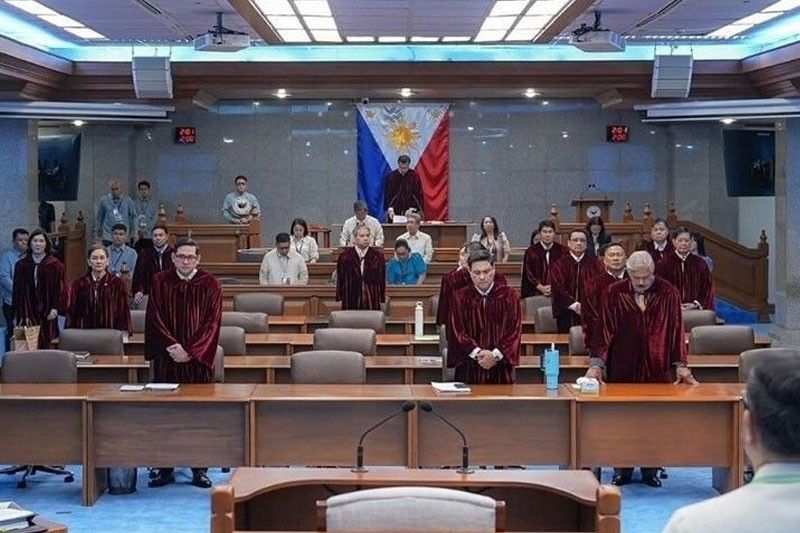
Impeachment Trial of Vice President Bogged Down by Technicalities, Former Senate President Notes
Former Senate President Franklin Drilon expressed concern that technical arguments over Vice President Sara Duterte's alleged "grave threats" are slowing down her impeachment trial. He suggested focusing the proceedings on whether her actions constitute an impeachable offense of "betrayal of public trust" rather than on the authenticity of the remarks.
MANILA, Philippines — Technical arguments surrounding Vice President Sara Duterte's alleged "grave threats" are slowing down her impeachment trial, according to former Senate President Franklin Drilon. He suggested that the proceedings should focus on whether her actions constitute an impeachable offense of "betrayal of public trust" rather than getting bogged down in the authenticity of her remarks. Drilon expressed the public's frustration with the slow pace of the trial, noting that both parties have been objecting to each other's questions regarding the authenticity of Duterte's November 23, 2024, press briefing statement, where she claimed to have hired an assassin against President Marcos, the First Lady, and the former speaker if they succeeded in killing her first. He argued that the authenticity of the statement is not in question, as the Vice President herself referred to her controversial remarks. Drilon emphasized that the impeachment trial's purpose is not to determine guilt for "grave threats" but to ascertain if her conduct amounts to an impeachable offense like "betrayal of public trust." He also questioned Senator Alan Peter Cayetano's line of questioning, which sought to establish whether Duterte's remark was merely a "conditional threat." Drilon stated that whether the threat was conditional or not, the core issue is whether her actions are acceptable for a Vice President and if telling someone "you'll kill me" constitutes a betrayal of public trust. Furthermore, Drilon disagreed with restricting the questions that senator-judges can ask. He asserted that they possess the power and discretion to ask questions as they see fit to uncover the truth, and should not be limited. Regarding the tax records of the Vice President and her husband, Drilon stated that the Senate impeachment court can order their opening and submission as evidence. While he prefers the Senate impeachment court to decide, he suggested that the President could order the records opened to appease public sentiment, recalling how the refusal to open the "second envelope" during the 2000 impeachment trial of former President Joseph Estrada led to his ouster. Drilon served as a senator-judge in both the Estrada impeachment trial and that of the late Chief Justice Renato Corona in 2012.
多角的分析
弾劾裁判の長期化は、副大統領の職務遂行能力への懸念から、フィリピン経済の不確実性を増大させる可能性がある。特に、投資家心理に影響を与え、国内および海外からの直接投資の鈍化を招くリスクがある。また、裁判の進展によっては、政府の政策遂行能力への疑念が生じ、経済成長の見通しにも影を落とすことが考えられる。
副大統領の弾劾裁判における技術的な論争は、投資家にとって政策の予見可能性の低下を意味する。裁判の長期化は、政治的リスクプレミアムの上昇につながり、フィリピンへの新規投資を躊躇させる要因となりうる。特に、副大統領が担当する分野(教育など)に関連する投資案件は、不透明感から見送られる可能性が高い。
弾劾裁判の遅延は、国民の政治プロセスへの信頼を損なう可能性がある。特に、裁判の焦点が「重大な脅迫」の真偽といった技術的な側面に留まり、公衆の信頼の裏切りというより本質的な問題から逸れることへの不満が高まるだろう。また、裁判官の質問権限を巡る議論は、司法の独立性や公正性に対する国民の疑問を増幅させる恐れがある。
副大統領の弾劾裁判における技術論争は、マニラ首都圏の市民にとって、日々の生活に直接的な影響を与えるものではないかもしれないが、政府の機能不全や政治的混乱への懸念を増幅させる。特に、裁判の遅延が経済停滞につながる場合、物価上昇や雇用機会の減少といった形で、市民の生活を圧迫する可能性がある。また、裁判の公平性への疑問は、市民の政治への関心を低下させる要因にもなりうる。
背景・歴史的文脈
フィリピンでは、過去にも大統領や最高裁判事の弾劾裁判が行われてきた。2000年のジョセフ・エストラダ元大統領弾劾裁判では、「第二の封筒」と呼ばれる証拠の開示を巡る論争が、国民の不信感を募らせ、最終的にEDSA人民革命2世による大統領罷免につながった。2012年のレナト・コロナ元最高裁判事弾劾裁判では、宣誓供述書の開示や資産公開に関する技術的な争点が裁判を複雑化させた。これらの事例は、弾劾裁判における証拠の真正性や質問の範囲に関する技術的な論争が、裁判の進行を遅延させ、国民の関心を本質から逸らす可能性があることを示唆している。
原文ソース
Philstar Nation