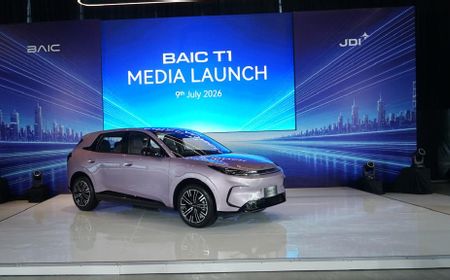
BAIC T1 Set to Enter Indonesian EV Market with 425 Km Range
Chinese automaker BAIC is launching its new EV model, the T1, in the Indonesian market. Boasting a range of 425 km, fast-charging capabilities, and V2L features, the vehicle is expected to be priced around Rp 300 million. Local production is also being considered, aiming to invigorate the EV market.
Chinese automaker BAIC is preparing to introduce its new electric vehicle (EV) model, the T1, to the Indonesian market, marking a significant development in the country's automotive sector. Dhani Yahya, COO of PT JIO Distribution Indonesia, stated that the launch of the BAIC T1 signifies the company's long-term commitment to continuous innovation and building a comprehensive portfolio of new energy vehicles (NEVs). "Of course, we provide relevant mobility solutions for the Indonesian people," he said in an official statement. Pre-booking for the T1 has commenced, with an estimated price range of Rp 300 million. The official pricing will be unveiled at the upcoming GAIKINDO Indonesia International Auto Show (GIIAS) 2026. In terms of specifications, the BAIC T1 is equipped with a 42.3 kWh battery, enabling it to travel up to 425 kilometers on a full charge, according to CLTC calculations. It also supports fast charging technology, capable of recharging the battery from 30% to 80% in just 25 minutes. The vehicle features Vehicle-to-Vehicle (V2V) Charging, allowing power sharing between EVs, and a Vehicle-to-Load (V2L) function with a capacity of up to 3,500 watts, enabling it to serve as a portable power source. For safety, the T1 is equipped with various modern driving assistance features, including 12 types of ADAS, to enhance driving comfort and security. Initially, the T1 will be imported as a completely built unit (CBU). BAIC plans to transition to local production next year with a target of up to 60% local content. The company aims to sell 1,000 units of the T1 by the end of this year.
多角的分析
BAIC T1のインドネシア市場参入は、国内のEV普及を促進する可能性を秘めている。3億ルピアという価格設定は、中所得者層にとって手が届きやすい範囲であり、EVの選択肢を広げる。425kmの航続距離は、日常的な使用に加え、都市間移動にも十分対応できるため、EVに対する「航続距離不安」を軽減するだろう。V2L機能は、停電が多いインドネシアにおいて、家庭用電源としても活用できるユニークな付加価値となる。
BAIC T1の導入は、インドネシアのEV市場における競争を激化させる。既存の自動車メーカーや新興EV企業にとって、価格、性能、付加機能の面で新たなベンチマークとなる可能性がある。BAICが計画する国内生産への移行は、サプライチェーンの現地化と雇用創ちを意味し、長期的な投資機会を生み出すかもしれない。ただし、GIIAS 2026での最終価格発表と、現地生産の進捗が、投資判断の鍵となるだろう。
BAIC T1の導入は、インドネシアにおける環境意識の高まりと、より持続可能な交通手段への関心を反映している。特にV2L機能は、電力インフラが不安定な地域や災害時の非常用電源として、市民の生活の質を向上させる可能性がある。しかし、充電インフラの整備状況や、EVのメンテナンス体制が、一般市民の普及を左右する重要な要素となる。また、3億ルピアという価格は、依然として多くのインドネシア人にとっては高額であり、EVの「エコ」なイメージと「高価」な現実とのギャップをどう埋めるかが課題となる。
BAIC T1の登場は、ジャカルタのような大都市の通勤者にとって、ガソリン代の節約と環境負荷の低減という魅力的な選択肢を提供する。しかし、多くの市民は、自宅や職場での充電設備の設置、公共の充電ステーションの数と利便性について懸念を抱くだろう。特に、地方都市に住む人々にとっては、インフラの整備が追いついていない現状では、EVへの移行はまだ遠い夢である可能性がある。V2L機能は、停電が多い地域で生活する人々にとっては、災害時の安心材料となり得る。
背景・歴史的文脈
インドネシア政府は、2060年までにカーボンニュートラル達成を目指し、EV普及を国家戦略の柱の一つとしている。2022年には、EV購入に対する補助金制度や、EV生産のための現地企業との提携を奨励する方針を発表した。これを受け、多くの自動車メーカーがインドネシアでのEV生産・販売に意欲を示している。BAICのような中国メーカーの参入は、こうした政府の政策と、インドネシアの巨大な消費市場を背景に加速している。
原文ソース
VOI English