Vietnam, France Deepen Comprehensive Strategic Partnership
Vietnam and France confirmed progress on their Comprehensive Strategic Partnership implementation plan and agreed to strengthen cooperation in energy, infrastructure, and advanced technology. Nuclear power, high-speed rail, and space technology were highlighted.
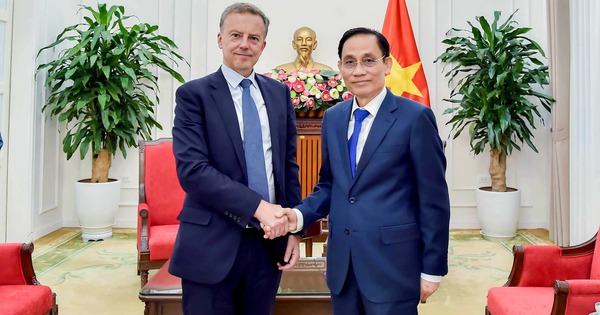
SOCIALIST REPUBLIC OF VIET NAM Government News Kim Anh Vietnamese Minister of Foreign Affairs Le Hoai Trung (R) and Secretary General of the French Ministry for Europe and Foreign Affairs Martin Briens, Ha Noi, July 8, 2026 - Photo: Baoquocte The agreement was reached during talks between Vietnamese Minister of Foreign Affairs Le Hoai Trung and Secretary General of the French Ministry for Europe and Foreign Affairs Martin Briens in Ha Noi on July 8. Minister Le affirmed that Viet Nam attaches great importance to strengthening relations with France, its first Comprehensive Strategic Partner in the European Union. He welcomed the positive progress achieved since the two countries upgraded their ties and described the entry into force of the Action Plan implementing the Joint Declaration on the Comprehensive Strategic Partnership as a significant milestone in translating shared strategic orientations into practical cooperation programs and projects. The Vietnamese minister suggested the two sides maintain regular high-level exchanges and contacts while maximizing the coordinating role of the two foreign ministries to effectively implement the new partnership framework. He also invited French Minister for Europe and Foreign Affairs Jean-Noël Barrot to visit Viet Nam soon. Regarding future cooperation priorities, Le suggested the two countries expand collaboration in defense, security, energy and strategic infrastructure. He highlighted the potential for cooperation on the Ninh Thuan 2 Nuclear Power Plant project and other major infrastructure initiatives. He also called on France to soon ratify the UN Convention against Cybercrime, adopted in Ha Noi, and to send a delegation to the East Sea Conference hosted by Viet Nam. On economic cooperation, Le called for stronger efforts to fully tap bilateral trade and investment potential. He urged France to complete the ratification of the EU–Viet Nam Investment Protection Agreement (EVIPA), continue supporting the removal of the IUU "yellow card" against Vietnamese seafood exports, and assist Viet Nam in being removed from the OECD list of non-cooperative jurisdictions for tax purposes. In reply, Briens reaffirmed France's determination to translate bilateral priorities into tangible outcomes. He said France is working closely with Vietnamese partners on civil nuclear energy and expressed hope that French companies would participate in Viet Nam's strategic infrastructure projects, including the North–South high-speed railway and the Ha Noi–Hai Phong railway, while continuing efforts to address outstanding issues related to Ha Noi's Metro Line 3 project. Both sides agreed to broaden cooperation in emerging sectors such as critical minerals, science and technology, innovation and space technology. Le proposed the early implementation of the intergovernmental agreement on science, technology and innovation, accelerated progress on the VNREDSat-2 satellite project, and closer cooperation in culture, healthcare, people-to-people exchanges and sub-national partnerships, including preparations for the 13th Viet Nam–France Decentralized Cooperation Conference in 2026. Briens said France has made positive progress in the EVIPA ratification process and reaffirmed France's readiness to support Viet Nam on OECD-related issues while continuing to advocate within the European Union for the early lifting of the IUU yellow card. Briens noted France's strengths in rare earth technologies and the space sector and expressed his country's interest in expanding cooperation with Viet Nam in these fields, alongside culture, healthcare and local-level cooperation. Describing Viet Nam as a trusted partner and a strategically important country for France in the Asia-Pacific region, Briens said the elevation of bilateral ties to a Comprehensive Strategic Partnership has opened up new momentum for bilateral cooperation. The two sides also agreed to strengthen coordination through bilateral and multilateral mechanisms and work closely together at regional and international forums to uphold multilateralism, promote dialogue, respect international law, and contribute to peace, stability, cooperation and sustainable development in the region and beyond./. ONLINE NEWSPAPER OF THE GOVERNMENT OF THE SOCIALIST REPUBLIC OF VIET NAM Editor-in-chief: Nguyen Hong Sam License: No. 102/GP-BTTTT dated on April 15, 2024. Head office: No. 16, Le Hong Phong - Ba Dinh - Ha Noi Tel: 080 43162 – 080 48440; Fax: 080 48924 Email: [email protected]
多角的分析
ベトナムとフランスは、EVIPAの早期批准やIUU漁業のイエローカード撤廃など、経済関係の深化に向けた具体的な課題に取り組むことで一致した。これは、ベトナムがEU市場へのアクセスを拡大し、国際的な貿易基準への準拠を強化する上で重要である。また、重要鉱物や先端技術分野での協力は、ベトナムの産業高度化とサプライチェーンの多様化に貢献しうる。
フランス企業がベトナムの戦略的インフラプロジェクト、特に高速鉄道や原子力発電に関与する可能性は、外国直接投資(FDI)をさらに呼び込む触媒となりうる。EVIPAの批准は、投資家保護の枠組みを強化し、フランスからの投資を促進するだろう。OECDの税務非協力地域リストからの除外に向けた支援は、ベトナムの投資環境の透明性と信頼性を向上させる可能性がある。
ニントゥアン2原子力発電所プロジェクトや北~南高速鉄道などの大型インフラ開発は、地域経済の活性化と雇用創出に寄与する可能性がある。一方で、これらのプロジェクトは環境への影響や土地収用、地域住民の移転といった社会的な課題も伴うため、慎重な計画と実施が求められる。サイバー犯罪条約の批准は、デジタル社会における安全性の向上に貢献する。
市民生活への直接的な影響としては、インフラ整備による交通利便性の向上や、先端技術分野での新たな雇用機会の創出が期待される。しかし、原子力発電所の建設や大規模鉄道プロジェクトは、環境問題や安全保障への懸念を抱かせる可能性もある。また、OECDの税務非協力地域リストからの除外は、間接的に国民の経済活動や税制に影響を及ぼす可能性がある。
背景・歴史的文脈
ベトナムとフランスは、2013年に包括的戦略的パートナーシップを樹立して以来、関係を深化させてきた。フランスはEU域内でベトナムにとって重要なパートナーであり、特に原子力、インフラ、文化、教育分野で協力関係を築いてきた。今回の会談は、2023年11月に両国がパートナーシップを格上げした後の具体的な協力枠組みの実施に向けた重要な一歩である。ベトナムは、経済成長の持続と国際社会での地位向上を目指す中で、欧米諸国との関係強化を通じて、中国への経済的・地政学的な依存度を分散させる戦略をとっている。
原文ソース
Bao Chinh Phu