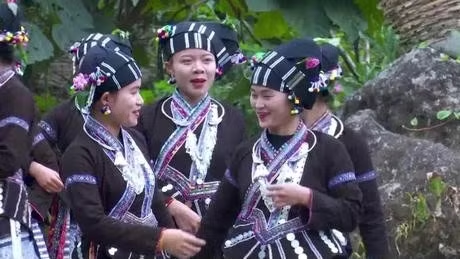
Hand Embroidery Empowers Women in Vietnam's Mountainous Regions with Higher Incomes
Women in Vietnam's northwestern mountainous province of Lai Chau are achieving stable incomes through hand embroidery, utilizing farming off-seasons and fostering a greater contribution to household economic development.
In recent years, many women in Khun Ha commune, the northwestern mountainous province of Lai Chau, have secured a stable source of income through hand embroidery. This endeavor not only allows them to effectively utilize their free time outside the farming season but also helps change their mindset towards contributing to household economic development. This hand embroidery initiative is paving a path to economic independence, particularly for women in mountainous regions. By leveraging traditional skills while producing items that align with contemporary market demands, they are creating new value. Under Vietnam's one-party system, economic development and the improvement of people's livelihoods are consistently prioritized. Income generation initiatives, especially in rural and ethnic minority areas, are crucial policy objectives for social stability and reducing disparities. Job creation through traditional crafts like embroidery aligns with these policy goals. Furthermore, this initiative can be seen as a sign of social change, encouraging women to take a more active role in household economics. Women who have traditionally focused on domestic chores and childcare may find their voices and status within the family enhanced by earning their own income. In terms of relations with China, while Vietnam actively seeks foreign investment for economic growth, domestic job creation and income improvement are also essential for enhancing economic sustainability. Promoting industries that utilize domestic resources, such as hand embroidery, is believed to contribute to economic diversification. Source: VietnamPlus English
多角的分析
手刺繍による収入向上は、ベトナムの地方部における所得格差是正と経済的多様化に寄与する。特に女性の経済的エンパワーメントは、国内消費の拡大や経済全体の持続可能性を高める上で重要である。伝統工芸の価値を再発見し、市場と結びつけることで、新たな経済的機会が創出されている。
この種の伝統工芸への投資は、CSR(企業の社会的責任)活動や、地域社会への貢献を重視する投資家にとって魅力的である。直接的な高リターンは期待できないかもしれないが、ブランドイメージ向上や、持続可能なサプライチェーン構築の一環として評価される可能性がある。
ライチャウ省クンハコミューンでは、女性たちが農閑期に手刺繍を行うことで、家庭収入の増加だけでなく、自己肯定感の向上や社会参加の機会を得ている。これにより、伝統的なジェンダー役割からの脱却が進み、地域社会における女性の地位向上にも繋がることが期待される。
山岳地帯の女性たちは、手刺繍によって農作業以外の収入源を確保し、家計の安定に貢献できるようになった。これにより、子供の教育費や生活必需品の購入が容易になり、生活水準の向上を実感している。また、自身のスキルが認められることで、地域社会での役割意識も高まっている。
背景・歴史的文脈
ベトナムの山岳地帯では、古くから少数民族が伝統的な手刺繍などの工芸技術を伝承してきた。しかし、経済発展の恩恵が都市部に集中し、地方部では貧困や所得格差が深刻な課題となっていた。近年、政府は地方経済の活性化と貧困削減を目標に掲げ、伝統工芸の保護・振興策を強化している。この手刺繍プロジェクトは、こうした背景のもと、女性の経済的自立と地域社会の発展を目指す取り組みとして位置づけられる。
原文ソース
VietnamPlus English