General articles are free for 24 hours after publish.
Philippines Reopens Metro Manila to New IT Parks, Boosting IT-BPM Sector Growth
The Philippines has reopened Metro Manila to new IT centers and IT parks for the first time in seven years with Administrative Order No. 45. This move aims to remove supply constraints that have hampered the IT and Business Process Management (IT-BPM) industry and attract foreign investment.
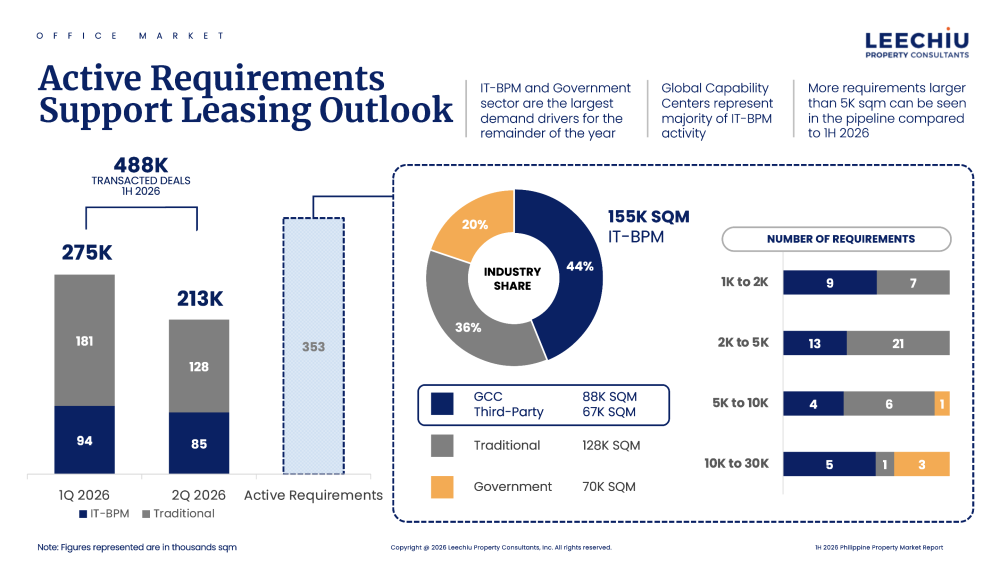
On July 23, President Ferdinand R. Marcos Jr. issued Administrative Order No. 45, reopening Metro Manila to new IT Centers and IT Parks for the first time since the AO No. 18 moratorium. In my view, this removes the single biggest supply constraint on Manila’s office market and unlocks expansion decisions that the IT and business process management (IT-BPM) sector has been deferring for years. Demand was never the issue. The Philippine IT-BPM industry generated $40 billion in revenues and employed 1.9 million Filipinos as of end-2025, making it one of the country’s largest sources of foreign exchange and formal employment. But the incentivized, Philippine Economic Zone Authority (Peza)-accredited space that sector occupiers require had grown critically scarce in prime Metro Manila districts. The AO 18 freeze was intended to redirect growth to provincial corridors, and it did. Areas like Clark, Cebu, Iloilo, and Davao all saw accelerated development as a result. AO No. 45 preserves that dynamic. The moratorium on all other zone types remains in place, as do the incentives for regional development. What changes is the ceiling on Metro Manila itself, where the concentration of talent, infrastructure, and global connectivity continues to drive the highest value mandates. Office space take-up in the first half of 2026 fell 32 percent to 488,000 sqm from a year ago. But the composition of that demand tells a more important story. Global capability centers, the in-house offshore operations of multinationals in finance, technology, healthcare, and professional services, have overtaken traditional outsourcers as the primary demand engine. GCCs typically require larger, higher-specification floors in well-located, Peza-accredited buildings. That is precisely the product that had become difficult to find in Makati, Bonifacio Global City (BGC), and Ortigas. The IT and Business Process Association of the Philippines (IBPAP) noted that Metro Manila continues to serve as the country’s largest concentration of digital talent, business infrastructure and global delivery operations, making the policy significant for investors seeking to expand in the Philippines. “It restores an important location option for IT-BPM companies while giving both global investors and existing locators greater flexibility as they expand their operations in the country,” IBPAP said. The association added that it remains committed to accelerating the industry’s growth across emerging cities nationwide, stressing that the reopening applies only to IT parks and IT centers and does not alter the government’s broader regional development strategy. This is an important clarification. AO No. 45 is not a reversal of provincial development policy. It is a targeted correction that restores Metro Manila’s role without dismantling the regional growth agenda that AO No. 18 had set in motion. For IT-BPM locators evaluating the Philippines against India, Vietnam, or Malaysia, the availability of incentivized, Grade A space in the capital region is a material factor in the decision. Removing that constraint strengthens the country’s competitive position at a moment when the GCC wave is accelerating globally. Five buildings have already filed Peza applications under the new order: Triumvirate’s One Trium Tower in Muntinlupa; MJ Landtrade’s Altaire in Makati; House of Investments and Sojitz Corp.’s The Yuchengco Centre, also in Makati; Aseana Holdings’ Parqal in Parañaque; and Ayala Land’s Arca South 1 in Taguig. The Peza Board is still finalizing implementing guidelines, meaning the accreditation process is actively being shaped, and the edge will go to those who move while the queue is still short. Peza Director General Tereso O. Panga called the order “a major policy breakthrough,” noting that it strengthens the country’s ability to compete for the next wave of IT-BPM and global capability center investments. The agency also noted that 44 percent of available Peza office space in Metro Manila is already considered aging, underscoring the need to replenish and modernize the pipeline. Metro Manila currently hosts 178 IT parks and centers with over 1,000 registered locator companies, a base that AO No. 45 is now positioned to expand. For landlords and developers, the priority is confirming asset eligibility and initiating the Peza application process before the queue deepens. First-movers into the accreditation pipeline will be positioned to capture occupier interest as mandates re-enter the market. For IT-BPM occupiers, the order restores negotiating leverage in districts where options had effectively disappeared. Companies that had settled for non-accredited space or deferred Metro Manila expansion should revisit their footprint strategy now, while the pipeline is still forming and before the best locations are committed. For investors, the order strengthens the long-term demand case for well-located Metro Manila assets and opens a clearer path for value-add plays through accreditation. Buildings that previously could not access the IT-BPM tenant pool may now qualify. The industry is not without headwinds. IBPAP has recalibrated its 2028 growth targets to account for the accelerating role of artificial intelligence, slower enterprise investment cycles, and intensifying competition from emerging outsourcing destinations. But these are industry-wide pressures, not Philippines-specific vulnerabilities. What AO No. 45 does is remove a self-imposed constraint at precisely the moment the country needs every competitive advantage it can offer. For seven years, the Philippines’ most important engine of office demand operated within a progressively tightening supply constraint. AO No. 45 removes it and signals something broader: the government’s recognition that keeping the Philippines competitive for the IT-BPM sector is a national economic priority. The industry underwrites millions of middle-income jobs, contributes significantly to GDP, and positions the Philippines as a global services hub. An order that clears the path for its expansion in the country’s primary business district is significant well beyond the real estate market. I expect AO No. 45 to be remembered as a turning point in Metro Manila’s office story and in the Philippines’ broader pitch to the world’s most sophisticated service operations. The author is a co-founder and executive director at Leechiu Property Consultants Inc.
Original source
Inquirer Business