General articles are free for 24 hours after publish.
Thailand Intensifies Vape Ban Enforcement, Catching Tourists at Airports
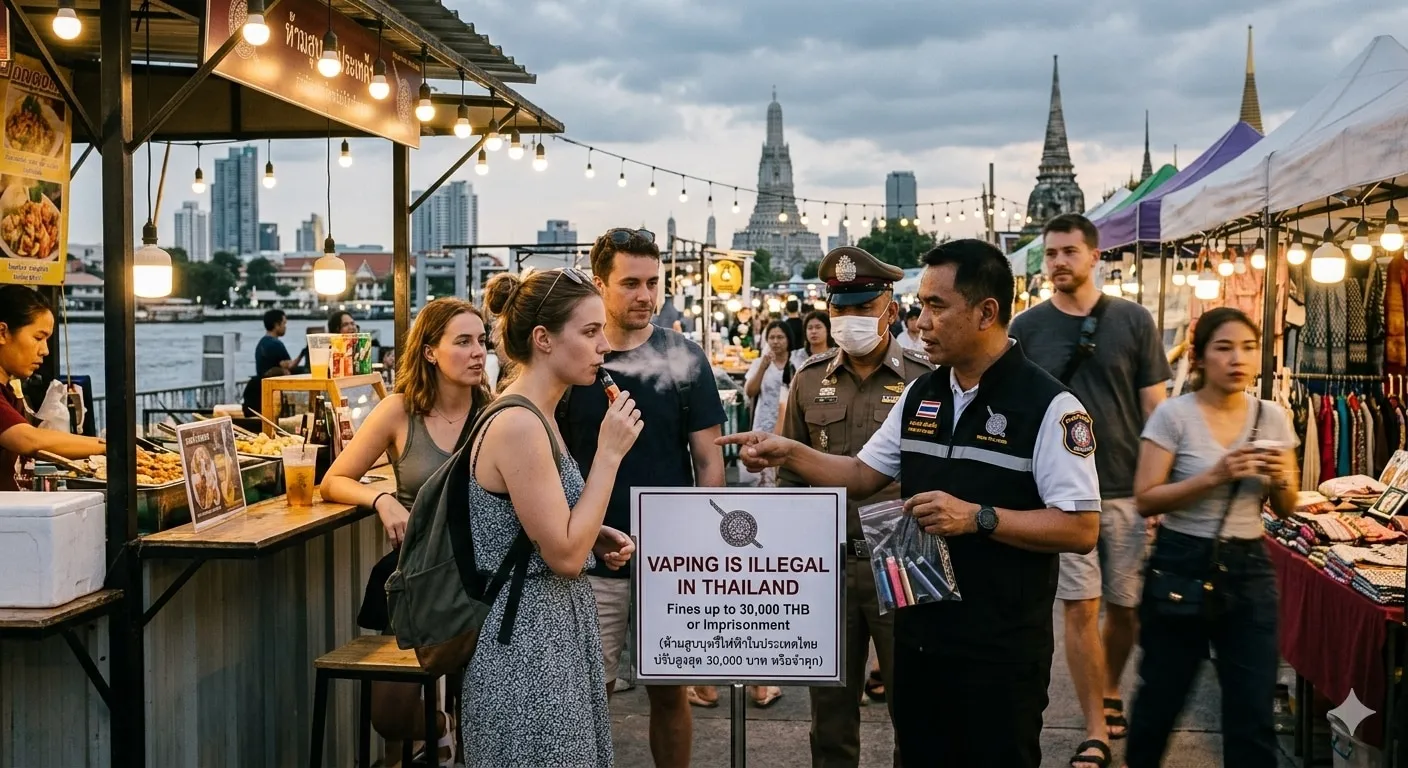
Thailand strictly prohibits the import, possession, and use of electronic cigarettes (vapes), with severe penalties including fines and imprisonment. Tourists are not exempt, and the risk of detection at airports is increasing.
Thailand treats vaping as an illegal activity, not a permitted personal habit for visitors. As of September 2026, tourists carrying a vape can face confiscation, questioning, fines, and possible criminal charges before they even leave the airport. The rules on vaping in Thailand cover more than public use. Bringing in, possessing, using, selling, or distributing vape products can create legal trouble, and tourists don’t receive a personal-use exception. Rules and enforcement can change, so check official Thai sources close to departure. Thai government guidance treats electronic cigarettes, vape devices, refill liquids, and baraku products as prohibited goods. That rule applies at the border and continues after arrival. A sealed device or a claim that it is only for personal use doesn’t make it lawful to bring into the country. The Thai government’s e-cigarette prohibition guidance describes import restrictions and serious criminal penalties. Informal travel posts often suggest otherwise, but they don’t override Thai law or Customs rules. Thai Customs can treat a vape in checked baggage, carry-on luggage, or a pocket as a prohibited import. The official maximum penalty connected with importation is up to 10 years in prison, a fine of up to five times the product’s value, or both. Authorities may also seize the device, refill liquids, containers, and even vehicles used to carry prohibited goods. Those are maximum penalties, not automatic outcomes for every traveler. Still, the legal risk starts when the item enters Thailand. A traveler doesn’t need to run a shop to face trouble. Official guidance links possessing, accepting, or receiving prohibited vape goods to Section 246 of the Customs Act 2017. Possible penalties include up to five years in prison, a fine of up to four times the goods’ value, or both. The charge and outcome depend on the evidence, the circumstances, and the authorities handling the case. Public smoking of electronic cigarettes containing nicotine can lead to a fine of up to 5,000 baht under the Tobacco Products Control Act of 2017. That fine is separate from risks connected to importation or possession. Avoiding public vaping doesn’t remove the wider legal exposure. A hotel room or other private setting is not a guaranteed exception to the ban. Confiscation is often the first problem a visitor sees, but it may not be the last. Officers can question a traveler, prepare a report, refer the case to Customs or police, and begin a process that affects a visa or travel plans. Online claims about a universal 2,000 to 5,000 baht on-the-spot vape fine are unreliable. Thai law sets different penalties for different conduct. These official maximums show why the details of each case matter: These figures are legal ceilings, not fixed tourist penalties. However, they show why a seemingly minor item can become a serious holiday disruption. Thai enforcement has focused heavily on shops, online sellers, supply networks, and sales near schools. Sellers and service providers can face up to three years in prison, a fine of up to 600,000 baht, or both. Police in northern Thailand have also acted outside major tourist cities. A recent arrest over e-cigarette sales near a Chiang Rai school shows that local enforcement reaches community businesses as well as Bangkok markets. Selling even a small number of devices is far riskier than being treated as an ordinary user. When officers find a vape, they may seize the device and liquid, record the incident, and question the traveler. They can then refer the matter to Customs officials or local police, depending on where and how they found the item. Stay calm and don’t argue, conceal facts, or offer false information. If you are detained or formally charged, request an interpreter and contact your embassy or consulate. A qualified Thai lawyer can explain the process and protect your rights. Tourist Police can provide general assistance through hotline 1155, which has multilingual support. They do not replace legal representation in a criminal or customs case. Airports are a common discovery point because bags and travelers pass through screening and Customs controls. Thai Customs lists e-cigarettes and baraku as prohibited imports. Don’t assume a device will be missed because it is in checked luggage, taken apart, or stored beside toiletries. Separating a vape into pieces doesn’t change the import rule, and it can make an encounter with authorities more difficult. Enforcement is not limited to international airports or Bangkok. Police have pursued physical shops, online sales operations, delivery networks, and sellers targeting students. For example, a Chiang Rai online vape business raid involved allegations tied to illegal sales and improperly imported goods. For visitors, a casual purchase from a street vendor or online seller can expose both buyer and seller to legal risk. Before traveling, leave the device and refill bottles outside Thailand. Don’t use, sell, give away, mail, or hide the products after learning about the ban. If you are already at an airport or inside Thailand, contact Thai Customs or airport authorities for instructions rather than guessing. Voluntary surrender may be relevant to the situation, but it doesn’t guarantee that authorities will end the matter without further action. The safest approach is simple: don’t bring vape products to Thailand. Check current Thai government and Customs information shortly before departure because rules, interpretations, and enforcement priorities can change. Remove devices, pods, batteries, refill bottles, and related accessories before packing. Tell travel companions about the restriction, especially if they share luggage or use the same travel bag. Ordinary cigarettes and vaping products fall under different rules. Don’t assume a product is allowed because it resembles something legally sold elsewhere. Available official guidance doesn’t state a general tourist allowance for personal use. A short vacation, airport transit, sealed packaging, or a hotel room does not guarantee protection from import or possession rules. Travelers with complex itineraries should ask Thai Customs or their airline for direct guidance before flying. This is especially important if a connection requires entering Thailand or collecting checked baggage. Nicotine dependence can make travel planning difficult. Speak with a doctor or pharmacist before departure about lawful options that may fit your health needs. Check Thai import rules for any medicine or nicotine product before arrival. A substitute product should never be assumed legal merely because it isn’t an electronic cigarette. No general tourist personal-use exemption appears in official Thai guidance. Thai Customs treats electronic cigarettes and baraku as prohibited imports, so even one device can cause a customs or possession problem. No. Public vaping can bring a separate fine, but importation and p
Original source
Chiang Rai Times