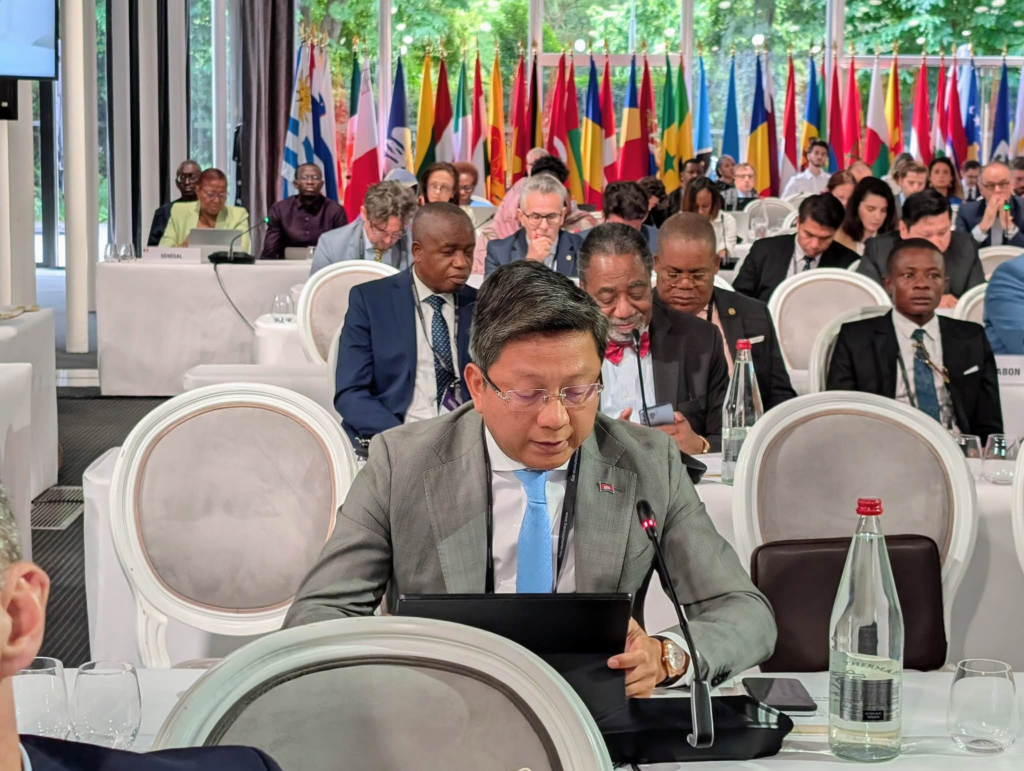
Cambodia Urges Francophonie on Fragile Border Ceasefire with Thailand
Diplomacy
2026年7月3日
3
Kampuchea Thmey English
Relations
🇰🇭Cambodia🇹🇭Thailand

Cambodia Urges Francophonie on Fragile Border Ceasefire with Thailand

AI サマリー

Cambodia informed the International Organization of La Francophonie (OIF) that its border ceasefire with Thailand remains fragile, accusing Bangkok of repeated violations of sovereignty. Phnom Penh also highlighted attempts to unilaterally alter border lines and discussed legal actions for maritime dispute resolution.

Cambodia has informed the International Organization of La Francophonie (OIF) that its border ceasefire with Thailand remains fragile, accusing Bangkok of repeated violations of sovereignty and territorial integrity despite a truce agreed in December 2025. Ambassador Louy David delivered the remarks during a meeting of the Permanent Council of La Francophonie in Paris on July 1, chaired by OIF Secretary‑General Louise Mushikiwabo. He outlined what Cambodia described as unlawful actions by Thailand, including preventing civilians from returning to their homes, maintaining what Phnom Penh considers an illegal occupation of Cambodian territory, and attempting to unilaterally alter the border line. The envoy said Cambodia rejected any attempt to change boundaries through force or faits accomplis, referring to unilateral changes made on the ground to establish new realities. He thanked Mushikiwabo for visiting Cambodian refugees in March, calling the gesture a demonstration of solidarity by La Francophonie. On maritime issues, Louy David said Cambodia had launched compulsory conciliation proceedings under the United Nations Convention on the Law of the Sea (UNCLOS) after Thailand withdrew from a 2001 Memorandum of Understanding. He said the move was intended to secure a fair, equitable and lasting settlement in line with international law. Cambodia has repeatedly stressed that compulsory conciliation under UNCLOS is now its only peaceful legal option to resolve overlapping maritime claims and offshore resource disputes in the Gulf of Thailand. Officials say the objective is to establish a clearly defined maritime boundary while pursuing mutually beneficial development of oil and gas resources. The ambassador’s intervention underscores Cambodia’s efforts to rally international support through multilateral forums, highlighting both the fragility of the land border ceasefire and its reliance on international law to settle maritime disputes.

多角的分析

経済的影響

タイとの国境紛争は、カンボジアの経済活動、特に国境貿易や物流に直接的な影響を与える可能性がある。停戦の脆弱性は、越境経済特区やインフラ開発プロジェクトの遅延や中止につながり、外国からの直接投資(FDI)を鈍化させるリスクがある。特に、タイ湾における海洋資源開発に関する紛争解決の遅れは、潜在的なエネルギー収入の機会損失を意味する。

投資家心理

投資家にとって、国境の不安定さはリスク要因となる。タイとの国境における紛争の継続は、カンボジアの政治的安定性に対する懸念を高め、特に国境付近での事業展開を検討している企業にとっては、投資判断を慎重にさせる。海洋資源開発の遅延も、エネルギーセクターへの投資意欲を減退させる可能性がある。

社会的影響

国境付近でのタイによる民間人の帰還阻止や領土占拠とされる状況は、国境地帯に居住するカンボジア市民の生活基盤を脅かし、避難民の発生や人道問題を引き起こす可能性がある。また、海洋紛争の長期化は、漁業従事者や沿岸コミュニティの生計に影響を与え、社会的不安を増大させる要因となりうる。

市民の声

国境付近の住民は、タイ側からの圧力を受け、自宅に戻れなかったり、生活空間が制限されたりする状況に直面している可能性がある。また、タイが一方的に国境線を変更しようとする動きは、土地所有権や生活圏に関する住民の不安を増幅させる。海洋紛争は、漁業に依存する地域社会の生活に直接的な影響を及ぼす懸念がある。

背景・歴史的文脈

カンボジアとタイの間には、過去にも国境紛争の歴史があり、特にプレアヴィヒア寺院周辺の係争地を巡っては、2008年から2011年にかけて武力衝突も発生している。2025年12月の停戦合意は、この長年の対立に一時的な沈静化をもたらしたが、根本的な国境線の画定や領土問題は未解決のままである。タイが2001年のMOUから撤退し、カンボジアがUNCLOSに基づく調停を求めた背景には、タイ湾における石油・ガス資源の潜在的な埋蔵量に対する両国の関心と、それに伴う領有権主張の複雑化がある。

原文ソース

Kampuchea Thmey English

原文を読む