General articles are free for 24 hours after publish.
Hanoi Adjusts Traffic on Tran Hung Dao, Tran Khanh Du Streets for Underground Cable Work
Hanoi is implementing traffic adjustments on sections of Tran Hung Dao and Tran Khanh Du streets due to the construction of a 110kV underground cable. The project, scheduled until September 30, 2026, will involve temporary road closures and one-way traffic in certain areas.
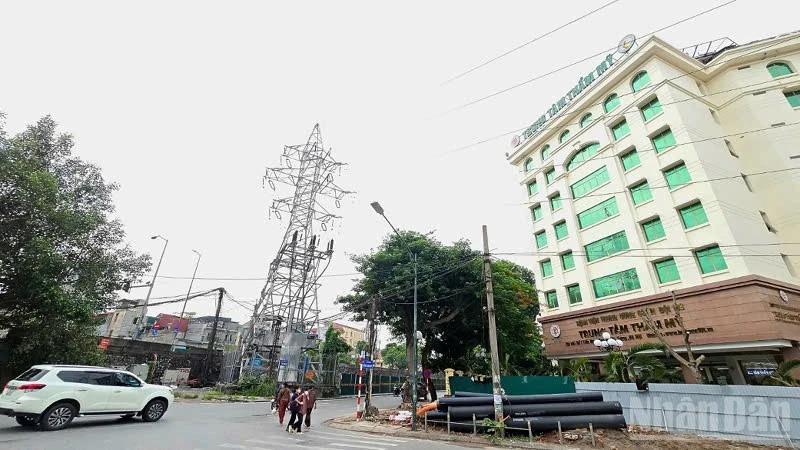
Hanoi City has announced adjustments to traffic organization on sections of Tran Hung Dao and Tran Khanh Du streets to facilitate the construction of a 110kV underground cable. This project is part of the Mai Dong - Tran Hung Dao 110kV power line renovation. According to the Hanoi Department of Construction, these traffic adjustments will be in effect from August 1, 2026, to September 30, 2026. The construction aims to build an underground cable trench from the Tran Hung Dao 110kV substation to existing pole 19. Specifically, on Tran Hung Dao street, the section from the Tran Hung Dao 110kV substation, opposite the entrance of the Military Central Hospital 108, to the intersection with Tran Khanh Du street will be cordoned off with movable hoarding. Hoarding will be installed from 10 PM and must be removed, restoring the road surface and ensuring traffic safety before 5 AM. Approximately 8 meters of road width will remain, allowing for two-way traffic. At the cross-road excavation points on Tran Hung Dao street, particularly near the entrance of the Military Central Hospital 108, construction units are permitted to cordon off no more than half of the road width. Upon completion, the road surface must be restored smoothly and safely for vehicles before the remaining section is worked on. On Tran Khanh Du street, at the intersection with Tran Hung Dao street, a portion of the road will be cordoned off, leaving approximately 8.5 meters of road width for two-way traffic. Notably, on the section from the Tran Khanh Du - Tran Hung Dao intersection to the Tran Khanh Du - Nguyen Huy Tu intersection, where the road width is reduced to about 4.5 meters, Hanoi will implement one-way traffic for automobiles from Tran Hung Dao to Nguyen Huy Tu. Vehicles will be prohibited from traveling in the opposite direction and will be rerouted via Nguyen Huy Tu - Tran Thanh Tong - Tran Hung Dao - Tran Khanh Du. On Tran Khanh Du street, from the Nguyen Huy Tu intersection to the Van Don intersection, the road width will be narrowed to about 6 meters, with two-way traffic organized. At the Tran Khanh Du - Van Don intersection itself, approximately 8-8.5 meters of road width will remain for two-way traffic. Opposite the Tran Khanh Du - Le Quy Don intersection, the construction area will be cordoned off, leaving about 14 meters of road width for two-way traffic. The Hanoi Department of Construction has instructed the Hanoi Power Project Management Board to erect hoarding only when construction is actively underway and to remove it and restore the road surface immediately after completion or temporary suspension of work. The unit must arrange traffic guides at construction sites and coordinate with traffic police and local authorities to regulate and direct traffic, minimizing congestion, especially during peak hours. Crucially, construction units are forbidden from simultaneously excavating at intersections and on Tran Hung Dao street to prevent severe traffic jams. Throughout the construction period, unimpeded passage for ambulances entering and exiting the Military Central Hospital 108, as well as for fire fighting, rescue, and emergency vehicles, must be ensured. The Traffic Police Department of Hanoi City, along with the People's Committees of Cua Nam and Hai Ba Trung wards, and other functional units, are requested to coordinate in guiding, directing, inspecting, and handling violations of traffic order and safety in the area. The Hanoi Department of Construction urges relevant units to proactively inform and publicize the traffic diversion plan and construction progress to residents, organizations, schools, and road users, enabling them to plan their routes and contribute to ensuring safe and smooth traffic during the construction period.
Original source
Nhan Dan