General articles are free for 24 hours after publish.
Vietnamese Delegation Meets Vietnamese Community in New Zealand, Discusses New Policies
A delegation from Vietnam's Ministry of Foreign Affairs visited New Zealand, holding meetings with the Vietnamese community in Auckland and Wellington. The meetings focused on explaining the latest resolutions and policies from the Communist Party and the State regarding overseas Vietnamese, aiming to strengthen community ties.
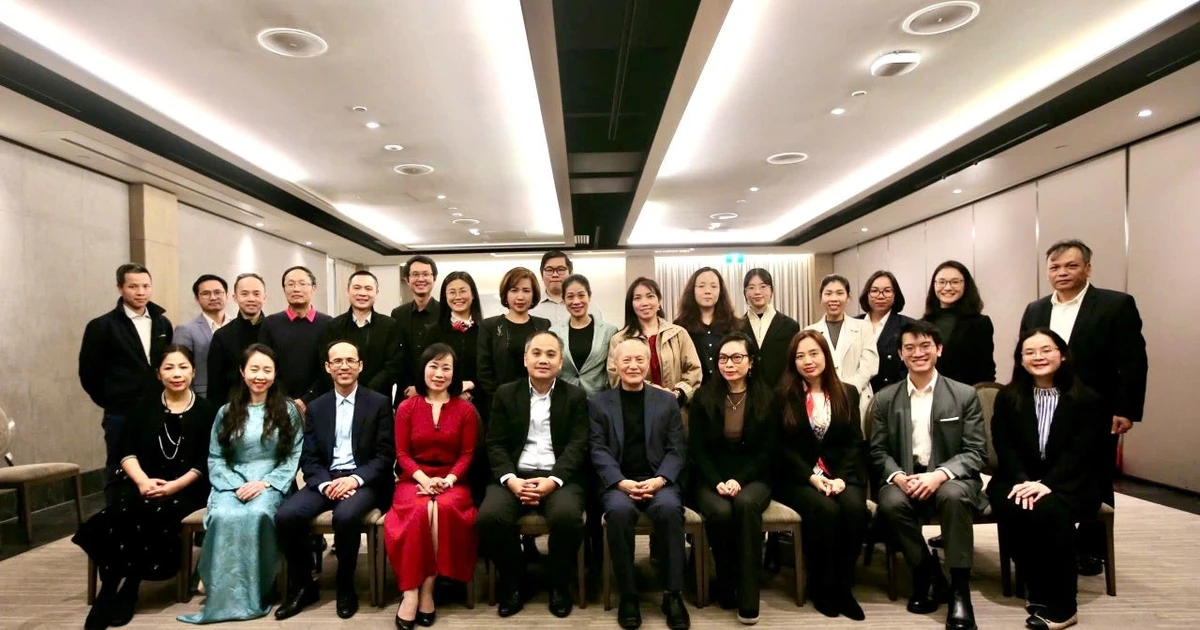
A delegation from Vietnam's Ministry of Foreign Affairs has undertaken a visit to New Zealand, engaging with the Vietnamese expatriate community in Auckland and Wellington. This initiative is framed within the implementation of the 2026 community work plan and serves to disseminate the latest resolutions and policies enacted by the Communist Party and the Vietnamese State concerning overseas Vietnamese citizens. New Zealand is home to an estimated 15,000 Vietnamese nationals, with a significant concentration, around 10,000 individuals, residing in Auckland. Ambassador Phan Minh Giang highlighted that the community generally maintains a stable livelihood and exhibits strong integration into the host society. Concurrently, there is a pronounced commitment to preserving national traditions and cultural identity, coupled with a sense of connection to the homeland. The community actively participates in local cultural, social, and charitable endeavors. Led by Ms. Nguyen Quynh Mai, Deputy Head of the State Committee for Overseas Vietnamese Affairs, the delegation provided detailed information on key Party and State policies. A central focus was Resolution No. 23-NQ/TW, adopted on August 2, 2026, by the Politburo of the Communist Party of Vietnam, which addresses the affairs of overseas Vietnamese. This resolution signifies a strategic shift, recognizing overseas Vietnamese not only as an integral part of the Vietnamese nation but also as a vital strategic resource capable of bolstering the nation's overall strength. Ms. Nguyen Quynh Trang, Deputy Director of the Party Committee's Agency of the Ministry of Foreign Affairs, elaborated on several pivotal resolutions recently issued by the Central Committee. These resolutions address critical national development priorities for the new era, including scientific-technological advancement and digital transformation, international integration, energy security, legislative development, healthcare, education, and culture. Specific attention was drawn to Politburo Resolution No. 06-NQ/TW (May 19, 2026) on implementing the foreign policy of the 14th Party Congress, and Central Committee Resolutions No. 19-NQ/TW and No. 20-NQ/TW (both dated July 28, 2026) concerning the innovation of Vietnam's development model and the development of Vietnam as a strong maritime nation, respectively. Ms. Nguyen Quynh Trang emphasized that the 14th Party Congress identified the intensification of foreign affairs and international integration as a "crucial and regular" task. The outlined resolutions propose concrete measures to augment national synergy, expand development horizons, and safeguard national interests. These efforts aim to foster foreign relations commensurate with the nation's historical stature, cultural heritage, and international standing, thereby contributing to the realization of strategic national objectives. Ms. Nguyen Quynh Mai underscored the significant and practical contributions expected from overseas Vietnamese communities, including those in New Zealand, to realize the nation's aspirations for prosperity and development. These contributions are vital for advancing science and technology, fostering innovation, driving digital transformation, and attracting advanced maritime technologies and management expertise. Regarding Resolution 23 on overseas Vietnamese affairs, Ms. Nguyen Quynh Mai affirmed its comprehensive inheritance of the national unity spirit from Resolution 36 and its representation of a strategic mindset evolution. She highlighted that overseas Vietnamese are considered a key strategic resource for enhancing national strength. In line with the principle of "accompanying and co-creating," the Party and State are committed to refining institutional frameworks, mechanisms, and policies. These reforms aim to be synchronized, transparent, and breakthrough-oriented, facilitating the connection, attraction, and effective utilization of resources from overseas Vietnamese, particularly intellectuals, experts, entrepreneurs, scientists, and the younger generation. Ms. Nguyen Quynh Mai expressed pride in the positive assessment of the Vietnamese community in New Zealand by the host government, noting their strong integration, contributions to socio-economic life, and successful preservation of traditional cultural identity and the Vietnamese language. She acknowledged and appreciated the proactive efforts of various Vietnamese organizations in New Zealand, such as the Vietnamese Association, the Vietnamese Women's Association, the Vietnamese Students' Association, VietNZ, and the Vietnam-New Zealand Intellectual Network, in serving the community and supporting diplomatic missions. Vietnamese Buddhist temples in New Zealand were also recognized for their role in fostering community cohesion and spiritual activities. Ms. Nguyen Quynh Mai conveyed the State Committee for Overseas Vietnamese Affairs' deep appreciation for the community's contributions, regardless of their scale or form. She expressed confidence that the Vietnamese community in New Zealand will continue to uphold mutual support, strive for prosperity, build a cohesive, civilized, and culturally rich community, and enhance their standing and reputation in New Zealand society. She particularly urged them to continue serving as "ambassadors of Vietnamese culture, country, and people," promoting Vietnam's image and acting as a robust bridge to further strengthen the Comprehensive Strategic Partnership between Vietnam and New Zealand. During the meetings, Mr. Pham Hoang Tung, Deputy Director of the Consular Department, provided information to the community on recent new policies relevant to overseas Vietnamese. Source: Nhan Dan
Original source
Nhan Dan