General articles are free for 24 hours after publish.
Cù Lao Chàm's 'Underwater Forests' Revitalized, Restoring Ocean's Carbon Sink
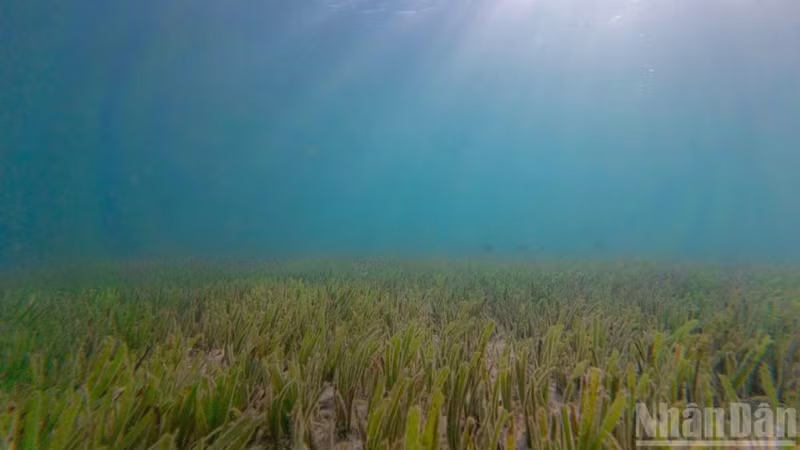
A project is underway in Vietnam's Cù Lao Chàm archipelago to restore seagrass beds, known as 'underwater forests,' which have declined by 70% over the past two decades. This initiative aims to restore biodiversity, revitalize the local economy, and pave the way for commercializing green carbon credits.
In Vietnam's Cù Lao Chàm archipelago, off the coast of Quảng Nam province, a crucial project is actively underway to restore seagrass beds, which are vital carbon sinks and the core of marine ecosystems, often referred to as 'underwater forests.' These valuable marine ecosystems have declined by approximately 70% over the past two decades, making their restoration an urgent priority. The restoration project aims not only to recover lost biodiversity but also to contribute to the livelihoods of local residents. Furthermore, it envisions the future commercialization of green carbon credits, based on the amount of carbon dioxide absorbed by the restored seagrass beds. This represents a significant step towards achieving Vietnam's sustainable development goals. Cù Lao Chàm is also known as a 'rough diamond being polished' for its beautiful natural landscapes, making it a notable tourism resource. However, its rich marine ecosystem has been endangered by development and environmental pressures. The current seagrass bed restoration is an effort to polish this 'diamond' and further enhance its value. Marine environmental conservation is a challenge that the entire local community must address. This project demonstrates the determination of local residents, the administration, and relevant agencies to work together to revive the lost 'underwater forests' and build a sustainable future.
Original source
Nhan Dan