Vietnam Promotes Awareness for Sustainable Use and Protection of Transboundary Water Resources
Technology
2026年7月10日
5
Nhan Dan
Relations
🇻🇳Vietnam🇰🇭Cambodia🇱🇦Laos🇨🇳China

Vietnam Promotes Awareness for Sustainable Use and Protection of Transboundary Water Resources

AI サマリー

Vietnam held a symposium on July 10 in Lai Chau province to enhance awareness of sustainable use and environmental protection of transboundary water resources. Emphasis was placed on water security, improved urban water management, wastewater reuse, and water quality monitoring.

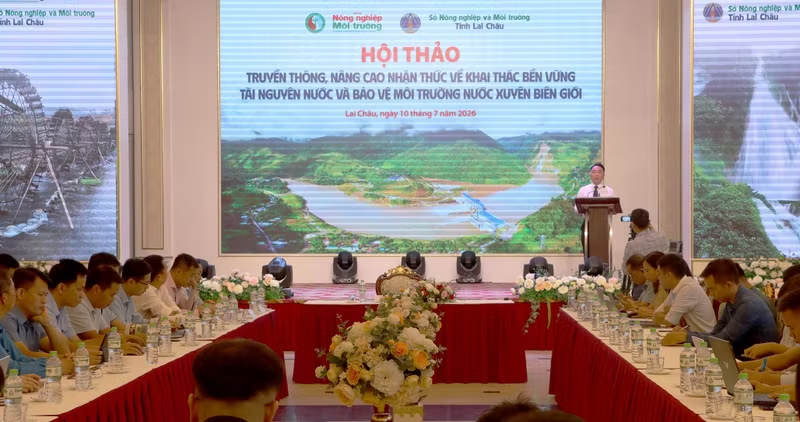
Vietnam is strengthening awareness regarding the sustainable use and environmental protection of transboundary water resources. On July 10, a symposium themed "Media, Raising Awareness on Sustainable Use of Transboundary Water Resources and Protection of Water Environment" was jointly organized by the Agriculture and Environment Magazine and the Department of Agriculture and Environment of Lai Chau province in Lai Chau province. The symposium focused on water resource security, particularly ensuring water supply during the dry season. The importance of water resource management in urban areas was also highlighted, with Ho Chi Minh City banning the landfilling of 67 reservoirs and ponds. This measure aims to advance urban water resource management to a new stage. Discussions also covered the reuse of urban wastewater as a sustainable resource for agricultural production and the necessity of increasing the frequency of water quality monitoring to protect precious water resources like Dai Lai Lake. Furthermore, advancements in water resource management utilizing the latest technologies were mentioned. These initiatives are part of Vietnam's national efforts to achieve efficient and sustainable management of its water resources, holding significant importance in balancing economic growth with environmental protection. In particular, the management of transboundary rivers shared with countries like China, Laos, and Cambodia is an issue that concerns regional stability.

多角的分析

経済的影響

ベトナム経済は農業と工業の発展に大きく依存しており、水資源の安定供給はこれらの基幹産業にとって不可欠である。特に、メコンデルタ地域は農業生産の要であり、上流国でのダム建設や水利用の変化は、ベトナムの食料安全保障と輸出に直接的な影響を与えうる。今回のシンポジウムは、こうした経済的脆弱性を認識し、持続可能な水利用を通じて経済的レジリエンスを高めようとする動きと見られる。汚水再利用や技術導入は、水資源の効率化だけでなく、新たな産業機会の創出にも繋がる可能性がある。

投資家心理

水資源管理の強化と持続可能な利用へのシフトは、インフラ投資、水処理技術、環境コンサルティング分野への投資機会を示唆する。特に、都市化が進むベトナムでは、高度な水管理システムや廃水処理プラントへの需要が高まることが予想される。投資家は、これらの分野で技術力と実績を持つ企業を評価するだろう。一方で、越境水資源の利用に関する国際的な合意形成の遅れや、気候変動による水不足リスクは、投資における不確実性要因となりうる。

社会的影響

水資源の持続可能な利用と保全は、国民生活の質に直結する。特に都市部での水不足は、生活用水の供給だけでなく、衛生環境にも影響を及ぼす。ホーチミン市における貯水池埋め立て禁止は、市民の生活用水確保への懸念の表れと言える。また、水質汚染は、農業生産者や漁業従事者の生計を脅かすだけでなく、一般市民の健康リスクを高める。越境水資源の管理は、上流国での開発や汚染物質の流入といった問題が、下流のベトナム国民の生活に直接影響を与えるため、国際協力と国内での意識啓発が不可欠である。

市民の声

ホーチミン市で貯水池の埋め立てが禁止されたことは、市民にとって安心材料となるだろう。特に、都市部では水不足への懸念が常に存在するため、水資源の確保は生活の安定に直結する。しかし、地方では依然として水質汚染や水不足に悩む地域も少なくなく、シンポジウムで議論されたような技術や管理手法が、地方の実情に合わせてどれだけ普及するかが課題となる。また、越境水資源の問題は、一般市民が直接関与しにくい側面もあるが、その影響は間接的に食料価格や環境問題として現れるため、意識啓発は重要である。

背景・歴史的文脈

ベトナムは、メコン川をはじめとする多くの河川が他国を流れてくる越境河川に依存している。特に中国、ラオス、カンボジアとの国境を接しており、これらの国々での水力発電開発や灌漑用水の取水は、ベトナムの水供給に影響を与えてきた。過去には、メコン川の水位低下による漁業や農業への影響が報告されており、水資源の持続可能な利用と保全は、ベトナムの国家安全保障、経済、そして国民生活にとって喫緊の課題となっている。今回のシンポジウムは、こうした背景を踏まえ、国際協力と国内での意識啓発を通じて、水資源の安定確保を目指すベトナム政府の姿勢を示すものと言える。

原文ソース

Nhan Dan

原文を読む