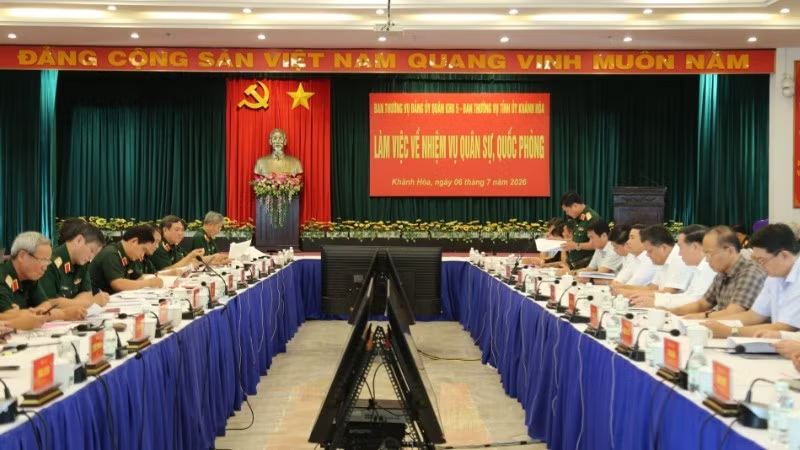
Vietnam's Southern Coast: Military and Local Government Enhance Economic and Defense Cooperation
In Vietnam's south-central province of Khanh Hoa, the Party Committee of Military Region 5 and the Provincial Party Committee met to align strategies on integrating defense with socio-economic development, aiming to strengthen regional defense capabilities and sustainable growth.
In Vietnam's south-central province of Khanh Hoa, the Party Committee of Military Region 5 held a meeting with the Provincial Party Committee to discuss and agree on policies and solutions for coordinating defense and socio-economic development. This collaboration aims to achieve both strengthened regional defense capabilities and sustainable development. The meeting emphasized the importance of mutual cooperation in leading and directing the execution of military and defense tasks. This reflects the Vietnamese Communist Party's overarching strategy to integrate national security with economic growth under its one-party system. Specifically, the enhancement of regional defense capabilities is a crucial element for maintaining national sovereignty and territorial integrity, particularly in light of Vietnam's geopolitical challenges, including its relationship with China. Concurrently, socio-economic development contributes to improving the lives of citizens and overall national stability. Furthermore, the meeting reviewed efforts to maximize the search and repatriation of remains of fallen soldiers and the preparations for the 3rd Vietnam-Laos Border Defense Friendship Exchange Program. The activities of the Vietnam People's Army in rescuing and transporting 54 bodies from earthquake debris in Venezuela were also shared. These initiatives demonstrate Vietnam's commitment not only to maintaining domestic stability but also to actively contributing to international humanitarian aid and fostering friendly relations.
多角的分析
ベトナム経済は、製造業と輸出に牽引され、近年目覚ましい成長を遂げている。しかし、この成長は、グローバルサプライチェーンへの依存度を高め、外部経済ショックの影響を受けやすくしている。今回の軍と地方政府の連携は、国防と経済開発を一体で進めることで、経済の安定的な成長基盤を強化し、外部からの潜在的な圧力に対するレジリエンスを高める狙いがあると見られる。具体的には、軍が地域開発プロジェクトに協力することで、インフラ整備が加速し、投資環境が改善される可能性がある。
ベトナムへの投資家にとって、国防と経済開発の連携強化は、政治的安定性の向上とインフラ投資の加速という二重の恩恵をもたらす可能性がある。特に、カインホア省のような沿岸地域は、戦略的な重要性が高く、軍との連携が円滑に進めば、港湾施設や物流網の整備が進み、サプライチェーンの効率化が期待できる。ただし、一党体制下における政策決定の不透明性や、地政学リスクは依然として注視すべき点である。
軍と地方政府の連携は、地域防衛力の強化を通じて、住民の安全保障意識を高める一方で、開発プロジェクトの進展が地域経済の活性化や雇用創ちにつながる可能性がある。しかし、開発に伴う環境への影響や、土地利用に関する住民との調整が課題となることも考えられる。また、戦没者の遺骨捜索・送還といった活動は、国民の愛国心や国家への帰属意識を醸成する上で重要な役割を果たす。
今回の軍と地方政府の連携は、直接的には地域防衛力の強化と経済発展の促進を目的としている。市民にとっては、国防力の向上による安全保障の向上や、経済発展に伴う雇用機会の増加、生活水準の向上が期待される。特に、カインホア省のような沿岸地域では、インフラ整備が進むことで、物流の効率化や観光業の発展も期待できる。一方で、開発プロジェクトによっては、土地の収用や環境問題が発生する可能性もあり、地域住民との丁寧なコミュニケーションが求められる。
背景・歴史的文脈
ベトナムは、1975年のベトナム戦争終結以降、共産党による一党支配体制を維持しつつ、1986年のドイモイ(刷新)政策以降、市場経済化を進めてきた。この過程で、経済成長と国家の安全保障の維持は、常に両輪として推進されてきた。特に、南シナ海を巡る中国との緊張関係は、ベトナムにとって国防力強化の重要な動機となっている。今回の軍と地方政府の連携は、こうした歴史的背景と現在の地政学的な状況を踏まえ、国家全体の発展戦略の一環として位置づけられる。
原文ソース
Nhan Dan