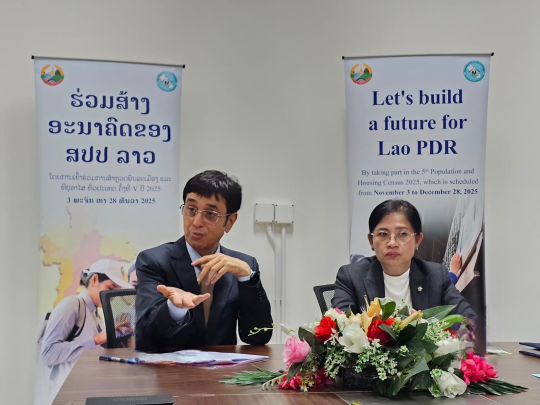
Laos Population Census Advances to Data Processing and Analysis Phase with AI Integration
The Lao Statistics Bureau announced the transition of the 2025 Population Census to the data processing and analysis phase. Training utilizing AI for data editing and processing, supported by UNFPA, has concluded, with a comprehensive report expected soon. This census is crucial for providing foundational data for Laos' development planning.
The Lao Statistics Bureau (LSB) has announced the transition of the 2025 Population and Housing Census (PHC) to the data processing and analysis phase. This marks a significant step towards the final dissemination of comprehensive reports on the country's demographics and housing conditions, expected in the coming months. A two-week training on data processing and analysis, held from June 16-26, was co-chaired by Ms. Phetsamone Sone, Head of the LSB and standing member of the National Steering Committee for the 2025 PHC, and Dr. Bakhtiyor Kadyrov, UNFPA Representative. The training, supported by UNFPA and development partners, focused on strengthening the capacity of LSB staff in data editing and processing methodologies, including the use of Artificial Intelligence (AI). "The training aimed to strengthen the capacity of LSB staff in methodologies and practices for data editing and processing using AI through hands-on opportunities with an international expert," stated Ms. Phetsamone. Trainees learned advanced techniques for data editing, imputation, coding, and validation of the extensive datasets collected during the nationwide field enumeration in late 2025 and the Post Enumeration Survey (PES) conducted in March 2026. Further training on data analysis is scheduled for July under the LSB-UNFPA work plan. The completion of these training sessions will pave the way for the preparation of the comprehensive report on the 2025 PHC findings. These results are anticipated to serve as a crucial foundation for evidence-based policymaking, development planning, resource allocation, and monitoring progress towards national development priorities and the Sustainable Development Goals (SDGs). The 2025 PHC, the first-ever digital census in Laos, was launched after four years of extensive planning and logistical preparations. Technical support was provided by UNFPA, with financial and technical contributions from key development partners, including the Australian Government (DFAT), China Aid, the Swiss Agency for Development and Cooperation (SDC), Luxembourg Development Cooperation, the United States of America, and GIZ. Mr. Lienthong Souphany, Director General of the Economic-Social Statistic Department at the LSB, noted that the census has progressed in line with international standards and objectives, reflecting strong commitment and collaboration among the Government of the Lao PDR, UNFPA, development partners, and all stakeholders. He emphasized that the census results will provide critical evidence to inform national development planning, policymaking, and resource allocation. Dr. Bakhtiyor Kadyrov of UNFPA reaffirmed the organization's continued commitment to supporting the Lao PDR throughout the census process, highlighting its role in ensuring the timely dissemination and use of high-quality data to inform evidence-based policies and development planning. He stressed that the census is ultimately about people, providing critical evidence to guide investments and development decisions that improve the lives of all Lao citizens, particularly women, girls, young people, older persons, and those who are often left behind. "By ensuring that everyone is counted, we can better ensure that everyone is seen, heard, and included in the development journey," he added. Information Source: KPL Laos News
多角的分析
ラオス経済は、インフレの鈍化傾向が見られるものの、依然として脆弱な状況にあります。2025年国勢調査で得られる正確な人口統計データは、今後の経済政策立案、特に消費動向や労働力供給の予測において極めて重要です。中国やベトナムからの投資への依存度が高いラオスにとって、国内の経済状況を正確に把握することは、対外的な交渉力強化にも繋がります。AIを活用したデータ処理は、分析の精度とスピードを向上させ、経済政策の迅速な実施を支援する可能性があります。
投資家にとって、ラオスの国勢調査結果は、市場規模、消費者の購買力、労働力の質といった基礎的な投資環境を評価する上で不可欠な情報源となります。特に、インフラ開発、観光、一次産業といった分野への投資を検討する際、正確な人口分布や年齢構成データは、事業計画の妥当性を判断する上で重要です。AIによるデータ処理の進展は、より迅速かつ信頼性の高い情報提供を期待させ、投資リスクの低減に寄与する可能性があります。
国勢調査のデータは、ラオス社会の構造的な課題、例えば都市部と地方の格差、貧困層の分布、教育・医療へのアクセス状況などを明らかにする上で不可欠です。AIを活用したデータ処理は、これらの課題に対するより精緻な分析を可能にし、政府がターゲットを絞った社会政策を策定するのを支援します。国勢調査の結果が、国民一人ひとりの生活向上、特に脆弱な立場にある人々の包摂的な開発にどのように貢献するかが、社会的に問われています。
ラオス市民、特に地方住民にとっては、国勢調査の結果が、インフラ整備(道路、電力、水道)、教育、医療サービスなどの公共サービスの配分に直接影響します。正確な人口データに基づいた政策決定は、彼らの生活環境の改善に繋がる可能性があります。AIによるデータ処理の進展は、調査結果の早期公表を期待させ、政府の対応を促す一因となるでしょう。しかし、データがどのように活用され、国民生活に具体的にどう反映されるかが、市民の関心事となります。
背景・歴史的文脈
ラオス人民民主共和国は、1975年のラオス人民革命党による政権掌握以来、社会主義一党体制を維持しています。国家開発においては、経済成長と国民生活の向上を最重要課題として掲げていますが、その実現のためには、正確な人口動態、経済状況、社会インフラに関するデータが不可欠です。過去の国勢調査は、主に国際機関や近隣国(特にベトナム)の支援を受けて実施されてきました。2025年の国勢調査が初のデジタル化であり、AI技術の導入は、データ収集・処理の効率化と精度向上を目指すものです。これは、ラオスが経済発展と国際社会との連携を深める上で、データに基づいた政策決定能力を高めようとする姿勢の表れと言えます。特に、中国やベトナムとの経済関係が深いラオスにとって、これらの国々との開発協力や経済連携を進める上で、信頼性の高い統計データは、交渉や計画策定の基盤となります。
原文ソース
KPL Laos News