General articles are free for 24 hours after publish.
Abhisit Urges Govt to Expedite US Tariff Talks, Criticizes Energy Policy
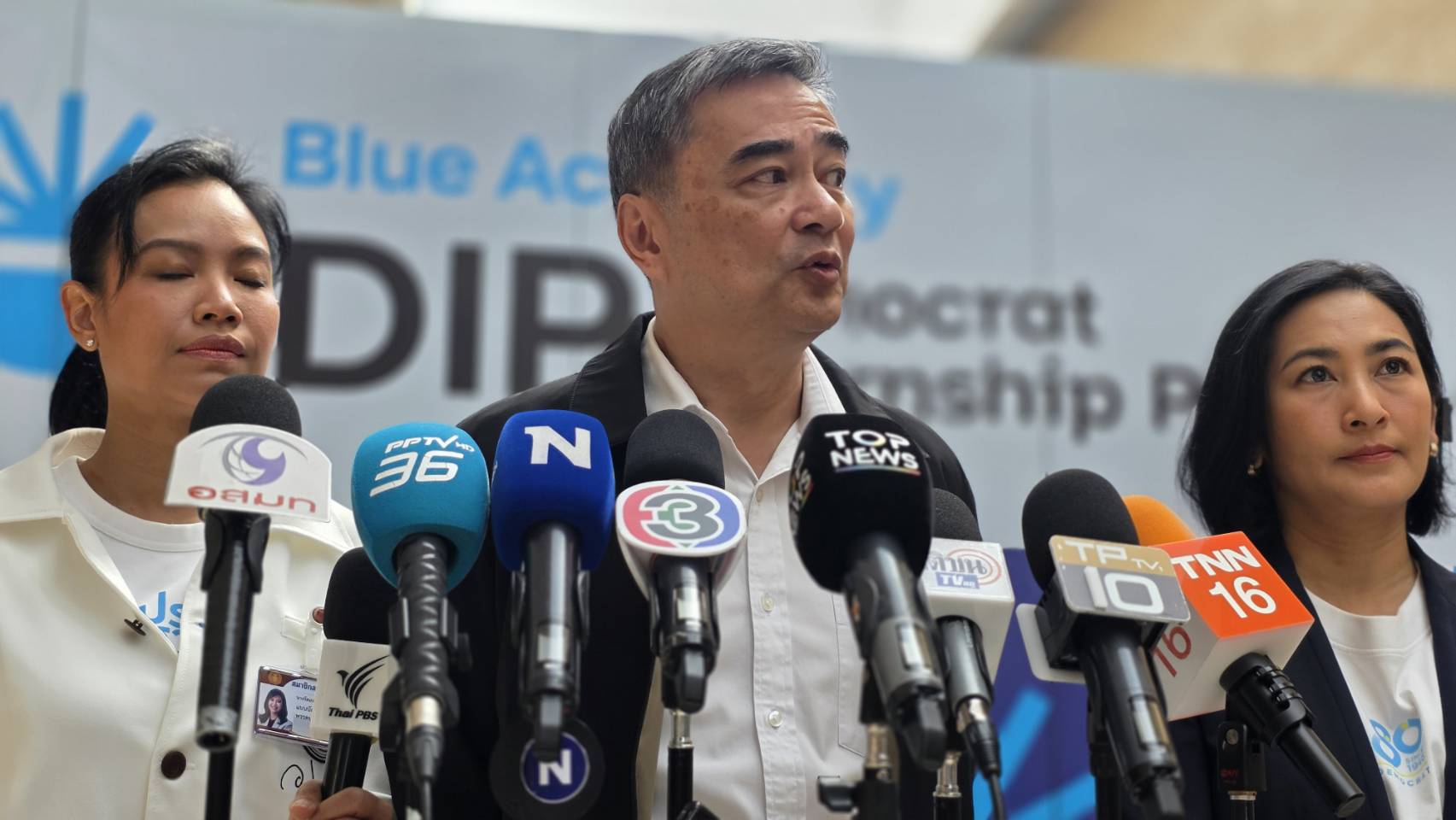
Former Thai PM and Democrat Party leader Abhisit Vejjajiva criticized the government's delayed negotiations regarding the US decision to impose a 12.5% tariff on Thai products. He also pointed out that the Ministry of Energy's policies are not addressing structural issues that increase the burden on citizens, demanding fundamental reforms.
Abhisit Vejjajiva, former Prime Minister and current leader of the Democrat Party, has expressed concern over the US decision to impose a 12.5% tariff on Thai imports, questioning the government's negotiation pace. He pointed to Malaysia, Cambodia, and Indonesia, which face a lower 10% tariff, and urged the Thai government to accelerate negotiations through the Ministry of Commerce to alleviate this burden. Vejjajiva acknowledged the unpredictable nature of the current US administration's policies but suggested that the tariff hike could stem from delayed negotiations. He also mentioned efforts to pursue a Free Trade Agreement (FTA) with the EU as an alternative, but stressed the need for careful consideration of gains and losses in negotiations with the US. Furthermore, he emphasized that Thailand's foreign policy should strengthen cooperation with powerful nations that respect the international order. He dismissed any connection between the current tariff issue and Deputy Prime Minister and Interior Minister Anutin Charnvirakul's visit to China, analyzing that the US is seeking laws that grant it the authority to raise tariffs, a continuation of former President Trump's policies. Regarding energy policy, Vejjajiva criticized the perceived lack of progress in addressing structural issues over several months. He specifically pointed to the request for refineries to reduce their refining margin to 2.40 baht per liter as a departure from fundamental reforms, such as establishing clear calculation formulas or introducing future "floating taxes." He stated that this reduction alone is insufficient to cover the 7-8 baht shortfall that citizens are bearing through the oil fund. Concerning electricity tariffs, he noted that proposed revisions to the calculation formula during periods of high natural gas prices have not progressed sufficiently. While supporting aid for low-electricity consumers, he questioned the unclear funding sources. Vejjajiva urged the Minister of Energy to focus on genuine structural reforms and fairness rather than "left pocket or right pocket" considerations. Source: INN News
Original source
INN News