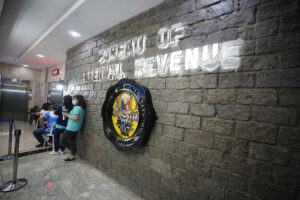
BIR Completes Korea-Aided Electronic Invoicing System Upgrade
The Philippines' Bureau of Internal Revenue (BIR) has completed a 14-month project, supported by the Korea International Cooperation Agency (KOICA), to enhance its Electronic Invoicing and Sales Reporting System (EIS). This upgrade is expected to streamline tax administration and advance the BIR's digital transformation.
The Bureau of Internal Revenue (BIR) said it completed a 14-month project to enhance its Electronic Invoicing and Sales Reporting System (EIS), which it expects to strengthen tax administration and support the BIR’s digital transformation efforts. In a statement on Thursday, the BIR said the Korea International Cooperation Agency (KOICA) formally turned over the enhanced EIS during a ceremony on July 7, marking the completion of the 14-month technical assistance project. “The EIS Post Management Support Project is proof of our steadfast commitment to modernizing our tax administration,” Finance Secretary Frederick D. Go said. “By contributing to the development of our tax systems, doing business in the Philippines is becoming easier, more cost-efficient, and more predictable for all,” he added. BIR Commissioner Charlito Martin R. Mendoza said the project also developed the agency’s capability to independently sustain, operate and further improve the system. “Under our BIR DARES reform agenda, digital and data transformation has always meant strengthening both our systems and our people. This project is a good reminder that every investment in technology must also be an investment in people,” he said. Finance Undersecretary Rolando T. Ligon, Jr. said the completion of the project means the BIR is now fully equipped to sustain and maximize the system independently. “As this project is formally turned over to the Bureau, we do so with complete confidence that the BIR will build on these operational gains to advance its long-term digital transformation,” he added. KOICA Philippines Country Director Jung Youngsun said the enhancements include automatic invoice matching and validation, which significantly enhance the value-added tax refund investigation process. “As we conclude this project, our focus now turns to maximizing the value and sustainability of the EIS. With our Philippine partners’ strong leadership and improved technical capacity, we are confident that the EIS will continue to evolve and deliver even greater value in the years ahead,” Mr. Jung added. South Korean Ambassador to the Philippines Lee Sang-hwa said the enhanced EIS builds on the agreements reached at the Korea–Philippines Bilateral Summit held in March and “supports continuing efforts to address the investment-related concerns of Korean companies operating in the country.” — Justine Irish D. Tabile
多角的分析
電子請求書システムの強化は、フィリピンの税務行政の効率化と透明性向上に寄与する。これにより、脱税や不正請求の抑制が期待され、政府の歳入増につながる可能性がある。また、企業にとっては、請求書発行・管理プロセスのデジタル化により、事務コストの削減やコンプライアンスの容易化が図られる。これは、特に中小企業にとって事業運営の負担軽減となる。韓国からの技術支援は、フィリピンのデジタルインフラ整備への国際協力の成功例とも言える。
電子請求書システムの近代化は、フィリピンにおけるビジネス環境の改善を示す兆候であり、投資家にとってプラス要因となり得る。税務手続きの簡素化と予測可能性の向上は、外国企業、特に韓国企業にとって、フィリピンでの事業展開におけるリスクを低減させる。これは、直接投資(FDI)を促進する可能性があり、特にBPO(ビジネス・プロセス・アウトソーシング)産業など、手続きの効率性が重視される分野で恩恵が大きいと考えられる。
電子請求書システムは、納税者と政府間のやり取りをデジタル化することで、透明性を高め、不正行為の機会を減らす。これは、国民がより公平な税負担を享受できる社会の実現に繋がる可能性がある。また、システム運用能力の向上は、税務職員のスキルアップにも繋がり、公共サービスの質向上に貢献する。一方で、デジタル化への適応が難しい層への配慮や、システム導入・運用におけるサイバーセキュリティ対策の重要性も浮き彫りになる。
電子請求書システムの強化は、国民の日常生活に直接的な変化をもたらすわけではないが、間接的な恩恵が期待される。税務行政の効率化は、政府の歳入増を通じて、公共サービス(教育、医療、インフラ整備など)の質向上に繋がる可能性がある。また、企業活動がより円滑になることで、雇用機会の創出や物価の安定に貢献することも考えられる。しかし、デジタル化の恩恵が一部の層に偏ることなく、広く国民に行き渡るような配慮が求められる。
背景・歴史的文脈
フィリピンでは、長年にわたり税務行政の効率化と徴税率向上が課題とされてきた。特に、複雑な手続きや紙ベースのシステムは、脱税や不正の温床となりやすく、政府の歳入を圧迫してきた。このため、デジタル化は喫緊の改革課題と認識されており、近年、国内外からの技術支援を活用したシステム改善が進められている。韓国国際協力団(KOICA)は、フィリピンのインフラ開発やガバナンス強化に積極的に貢献しており、今回の電子請求書システム強化プロジェクトもその一環として実施された。
原文ソース
BusinessWorld Economy