MMDA Warns Public Against AI-Generated Flood Photos on EDSA
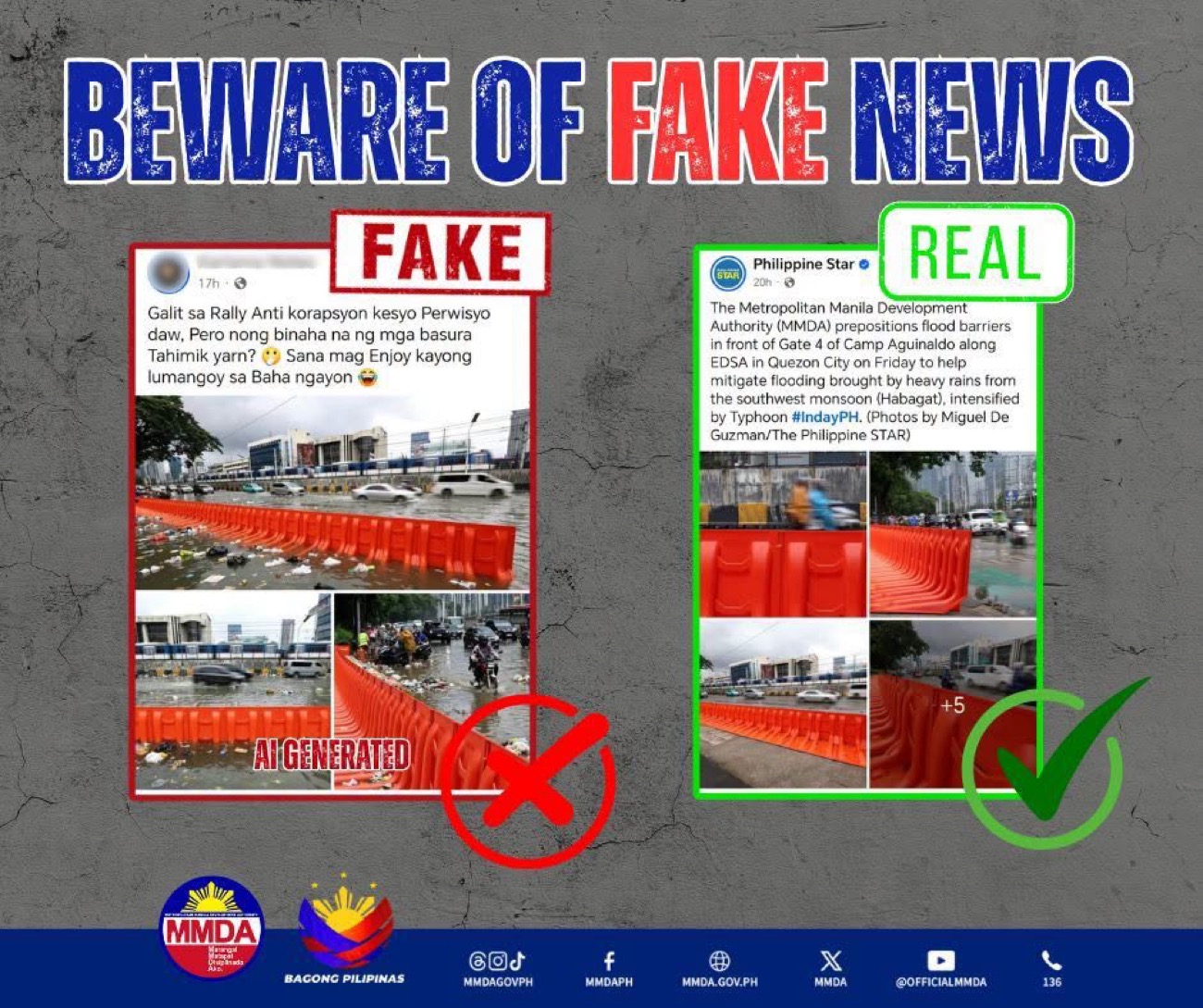
The Metropolitan Manila Development Authority (MMDA) in the Philippines has announced that an image of flood barriers along EDSA circulating on social media was AI-generated or digitally manipulated, urging the public to verify information.
The Metropolitan Manila Development Authority (MMDA) has warned that a photo of its L-shaped flood barriers along Epifanio de los Santos Avenue (EDSA) that circulated online was either generated by Artificial Intelligence (AI) or digitally manipulated, noting that the image may create a false impression. In a Facebook post on Saturday, July 11, the MMDA stated that the photo, which depicted gutter-deep flood with floating trash on the road, shows clear signs of being AI-generated or digitally manipulated. According to the agency, the original photo was taken from a Philippine Star post about prepositioned flood barriers in front of Camp Aguinaldo in preparation for Typhoon Inday. Furthermore, the MMDA claimed that the photo was cropped and altered, including the addition of garbage, which could give the public the wrong impression. "The original image is from a Facebook post by the Philippine Star. It has been cropped and altered, including adding garbage that was not in the original photo, which may give the public the wrong impression," the agency said. The agency advised the public to remain vigilant and to verify the authenticity of information found online through official and reliable sources before sharing. "The public is encouraged to be discerning regarding information found on social media and to verify it through official and reliable sources before sharing," the MMDA added. This incident highlights the growing concern over the spread of disinformation in the Philippines, particularly content generated using AI technology. The accuracy of information related to disasters and infrastructure is critically important as it can directly impact public safety and order.
多角的分析
AI生成コンテンツの拡散は、偽情報による市場の混乱リスクを高める。特に、インフラや公共事業に関する偽情報は、投資家心理を悪化させ、関連企業の株価に影響を与える可能性がある。MMDAのような公的機関が迅速に否定声明を出すことは、市場の過剰反応を防ぐ上で重要だが、一度広まった偽情報は完全に払拭するのが難しい。
投資家は、フィリピンのインフラ開発や災害対策関連プロジェクトへの投資を検討する際、公開される情報の信頼性を一層慎重に評価する必要がある。AIによる画像操作などの技術は、プロジェクトの進捗や状況に関する偽情報を容易に作り出すため、デューデリジェンスのプロセスがより複雑化する。信頼できる情報源からの直接的な確認が不可欠となる。
AIによって生成された洪水写真の拡散は、マニラ首都圏の住民にとって、実際のインフラの脆弱性や災害対策の不備に対する不安を煽る可能性がある。特に、EDSAのような主要幹線道路での深刻な洪水は、通勤・通学への影響が大きく、住民生活に直接的な打撃を与える。MMDAが事実を訂正したとしても、一度広まった不安感は残りやすく、情報リテラシーの重要性が改めて浮き彫りになる。
SNSで流れてきた洪水写真がAI生成だと知って、市民は情報への不信感を抱くだろう。特に、マニラ首都圏の住民は、EDSAでの洪水被害を日常的に経験しているため、写真の真偽が気になるところだ。MMDAが訂正したとはいえ、このような偽情報が簡単に広がる状況は、災害時の情報伝達にも影響を与えかねず、市民はより一層、公式発表を注意深く確認する必要に迫られる。
背景・歴史的文脈
フィリピンでは、特にソーシャルメディアを通じた偽情報(ディスインフォメーション)の拡散が長年の課題となっている。2016年以降、政治的なプロパガンダや世論操作を目的とした偽情報が横行し、国民の政治的判断や情報リテラシーに影響を与えてきた。近年、AI技術の進歩により、画像や動画を巧妙に生成・加工する技術が悪用されるケースが増加しており、公的機関やメディアは、より高度な偽情報への対策を迫られている。今回のMMDAの事例は、AIがインフラや公共サービスに関する偽情報生成に利用される可能性を示唆しており、フィリピン社会における情報環境の複雑化を浮き彫りにしている。
原文ソース
Inquirer NewsInfo