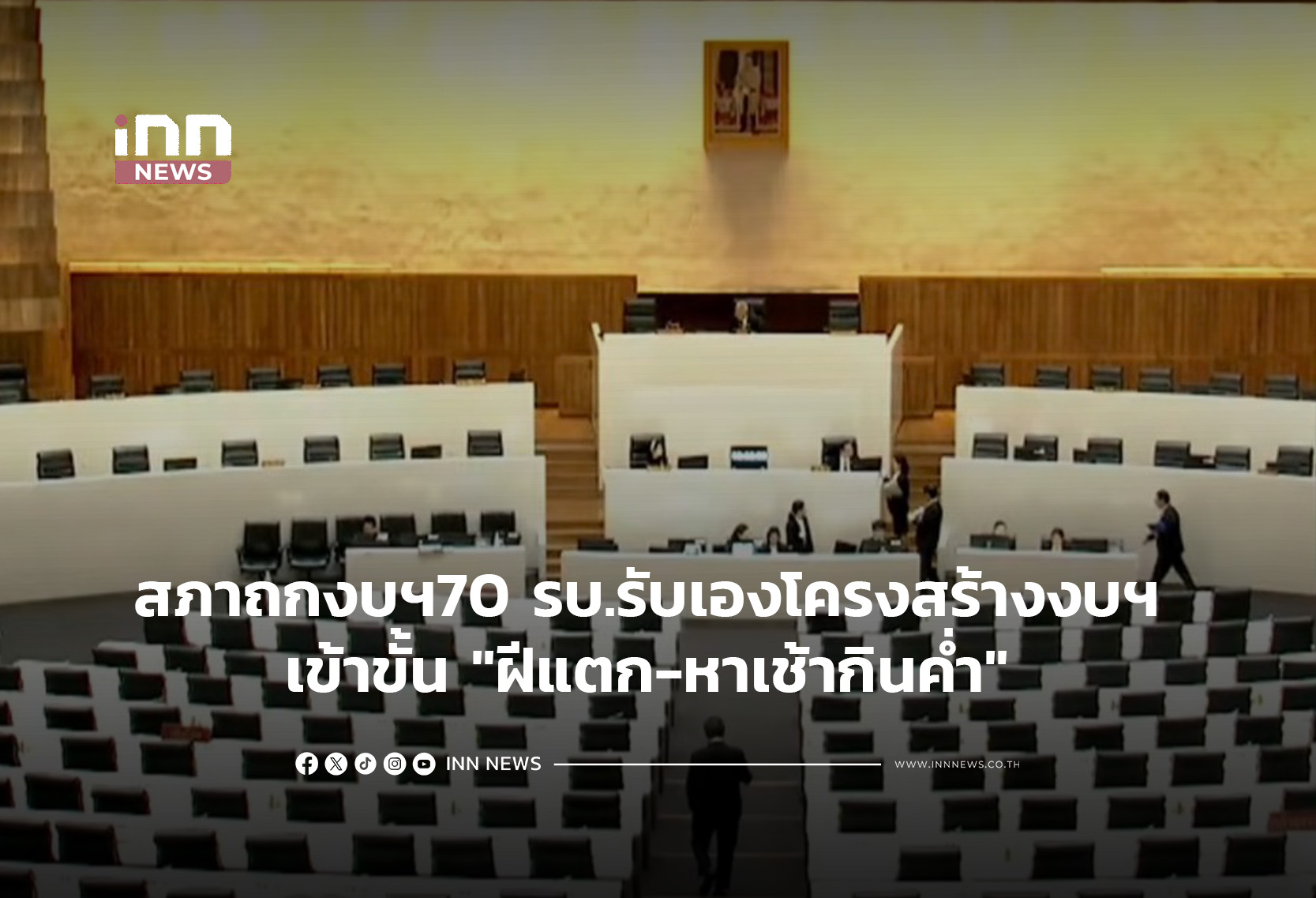
Thailand's FY2570 Budget Debate Highlights Fiscal Structural "Pus" Amid Revenue Shortfall and Rising Expenditures
Thailand's House of Representatives deliberated the FY2570 budget, with the government admitting the fiscal structure is "sick" and operating on a "day-to-day" basis due to revenue shortfalls and rising expenditures. The debate highlighted that most of the budget is allocated to recurrent expenses and debt repayment, squeezing room for development investment.
The Thai House of Representatives continued deliberations on the fiscal year 2027 (October 1, 2027 - September 30, 2028) budget for the second day. Government representatives acknowledged the opposition's critique that the budget structure suffers from "pus" and operates on a "day-to-day" basis, admitting these are long-standing structural issues. Mr. Paradorn Prisnanantakul, Minister Attached to the Prime Minister's Office overseeing the Budget Bureau, explained that while the FY2027 budget is set at 3.788 trillion baht, national revenue is only around 3 trillion baht, necessitating borrowing of 788 billion baht to cover the deficit. He further elaborated that a significant portion of revenue is allocated to recurrent expenses and debt repayment, leaving considerably less for national development investments. To maintain fiscal discipline, the government has decided to keep borrowing levels unchanged from the previous year, resulting in a reduction of approximately 70 billion baht in investment budgets and decreased allocations for most ministries. Mr. Paradorn called for comprehensive reform of the entire budget structure from all stakeholders, including the government, opposition, private sector, and public agencies. This reform should focus on expanding the tax base, enhancing revenue collection efficiency, reducing project redundancies, and reviewing extra-budgetary expenditures. He emphasized that the increase in the central budget does not imply arbitrary spending by the government; rather, it primarily covers legal obligations such as civil servant pensions, gratuities, and contributions to the civil servant pension fund, with emergency funds increasing by only 1 billion baht. Ms. Supachai Suthumpun, Deputy Prime Minister and Minister of Commerce, outlined four major challenges the government faces: global geopolitical tensions, the energy price crisis stemming from the Middle East situation, the transition to an aging society, and the struggle to escape the middle-income trap. She stated that despite limited budgetary resources, the government must simultaneously address short-term problems and lay the groundwork for long-term development. Examples of initiatives include cost-of-living reduction measures, stabilizing agricultural product prices, upgrading supply chains, promoting model agricultural communities, fostering SMEs, and cracking down on nominee businesses, all requiring inter-ministerial cooperation. The Ministry of Commerce affirmed its commitment to exploring new export markets while maintaining existing ones, and to leveraging technology and AI to enhance service delivery and data management, thereby improving national transparency and competitiveness. Source: INN News
多角的分析
タイの2570年度予算案審議で浮き彫りになったのは、慢性的な歳入不足と増加する歳出の構造的なジレンマである。国家歳入が歳出を大きく下回る状況は、借入依存を恒常化させ、国の開発投資に必要な財源を圧迫している。これは、タイ経済が中間所得国から抜け出せない「中所得国の罠」とも関連が深く、歳入基盤の拡大と歳出の効率化という、両面からの大胆な財政改革が急務であることを示唆している。特に、歳入の大部分が経常支出や債務返済に充てられている事実は、将来への投資余力を削いでおり、経済成長の持続可能性を脅かす要因となりうる。
タイ政府が財政構造の「病巣」を認め、歳入不足と歳出増のジレンマに直面しているという事実は、投資家にとって警戒信号となる。歳出の大部分が経常支出に回され、開発投資が削減されることは、長期的な経済成長ポテンシャルへの懸念を生じさせる。特に、借入依存の継続は、将来的な財政悪化リスクや金利上昇リスクを高める可能性があり、国債の格付けや為替レートにも影響を与えうる。政府が財政規律を重視し、借入額を据え置く姿勢は評価できるものの、歳入拡大策が具体的に進展しない場合、投資環境の不確実性は増すだろう。
タイの予算構造が「日銭稼ぎ」状態にあるという政府自身の認識は、国民生活への直接的な影響を懸念させる。開発投資の削減は、教育、医療、インフラ整備といった公共サービスの質や機会の均等性に長期的な影響を及ぼす可能性がある。また、歳入不足を補うための緊縮財政は、社会福祉プログラムの縮小や、国民が負担する税金や手数料の増加につながることも考えられる。政府が掲げる生活費削減や農産物価格維持といった施策は、その財源確保の持続可能性が問われる。特に、地方部や低所得者層は、公共サービスへのアクセスや生活必需品の価格変動の影響をより強く受けるため、予算構造の歪みが社会的な格差を拡大させる懸念がある。
今回の予算審議で政府が「日銭稼ぎ」状態を認めたことは、バンコク市民の生活実感と直結する。物価上昇が続く中で、公共サービスへの投資が滞れば、交通インフラの混雑緩和や、医療・教育の質の維持・向上といった恩恵を受けにくくなる。また、歳入不足を補うための増税や、既存の社会保障給付の削減があれば、家計への直接的な負担増につながる。政府が掲げる輸出市場開拓やAI活用といった経済活性化策が、市民の生活水準向上にどれだけ早く、そして確実に結びつくかが、今後の信頼を左右するだろう。屋台で働く人々にとっても、農産物価格の安定は死活問題であり、政府の施策の行方が注視される。
背景・歴史的文脈
タイの財政構造問題は、長年にわたる構造的な課題である。国家歳入の対GDP比が低迷する一方、歳出は社会保障費や債務返済などで増加傾向にある。特に、タイは中間所得国でありながら、先進国のような税制基盤の整備が遅れており、所得格差の拡大も財政運営を複雑化させている。過去の政権でも財政赤字の削減や歳入基盤の拡大は課題として挙げられてきたが、抜本的な改革には至っていない。今回の2570年度予算案審議における政府の認識は、この長年の課題が依然として深刻であることを示している。
原文ソース
INN News