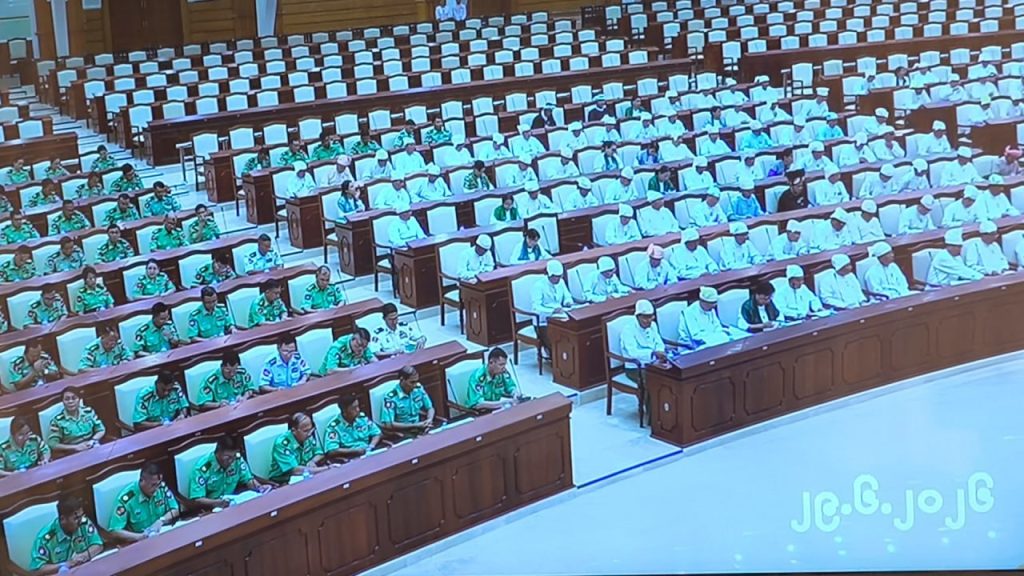
No specific arrangements yet for retired staff to reside
While there are no specific arrangements being made as a plan to provide housing for civil servants upon their retirement after completing their service, rental accommodations are being provided at affordable rates to re
While there are no specific arrangements being made as a plan to provide housing for civil servants upon their retirement after completing their service, rental accommodations are being provided at affordable rates to retired civil servants, serving civil servants, and the public on a proportional basis, said Union Minister U Myo Thant of the Ministry of Construction. Union Minister U Myo Thant responded in this manner to a starred question posed by U Moe Myint, a People's Parliament representative for the Thanlyin constituency in Yangon Region, during the 15th day of the second regular session of the third People's Parliament held on June 29, asking whether there are plans to arrange housing and employment opportunities for military personnel, members of the Myanmar Police Force, and civil servants upon their retirement after completing their service. Union Minister U Myo Thant further stated that retired civil servants, serving civil servants, and the public can apply for housing units to the respective regional government bodies to rent at affordable prices, and these are being allocated and approved for rent on a proportional basis. The Ministry of Construction is implementing projects in densely populated cities such as Yangon, Mandalay, and Nay Pyi Taw, and has built and approved 5316 housing units for rent between 2021 and 2025, it was also said. Furthermore, it was stated that an additional 400 housing units at the Sukhadagon public housing project in Yangon and 224 housing units at the Mingalar Yakin public housing project in Mandalay, totaling 624 housing units, are currently being undertaken for the 2026-2027 fiscal year, and these will be further rented out on a proportional basis under the management of the respective regional government bodies.
多角的分析
直接の経済ニュースではありませんが、治安と司法の信頼は地域経済の土台です。職場での暴力や未成年者保護への不安が強まると、夜間営業、観光、雇用、地域サービス業のリスク認識が高まります。
投資家目線では、個別事件よりも法執行の予見可能性が焦点です。加害者への対応が曖昧になれば、ローカルビジネスの統治リスクや従業員保護の弱さとして評価されやすくなります。
ヤンゴン管区で問われるのは、加害者個人だけでなく、雇用主、警察、近隣社会が被害のサインをどう扱ったかです。軍が声を上げたことで、事件は噂話ではなく、記録され検証される公共問題に変わります。
市民にとっては、自分や家族が被害に遭った時に公正な手続きへアクセスできるのかが最大の関心です。地域団体が声を上げることで、事件の風化を防ぎ、被害者側の孤立を和らげる意味があります。
背景・歴史的文脈
このニュースは、ミャンマーの地域社会で法の支配と弱者保護がどこまで機能しているかを映す事案です。暴力事件そのものに加え、女性団体や市民社会が司法手続きを求めて声を上げている点が重要です。軍政下では警察・司法への信頼が揺らぎやすく、個別事件が地域の不安や統治への不信に直結します。
原文ソース
ONE NEWS