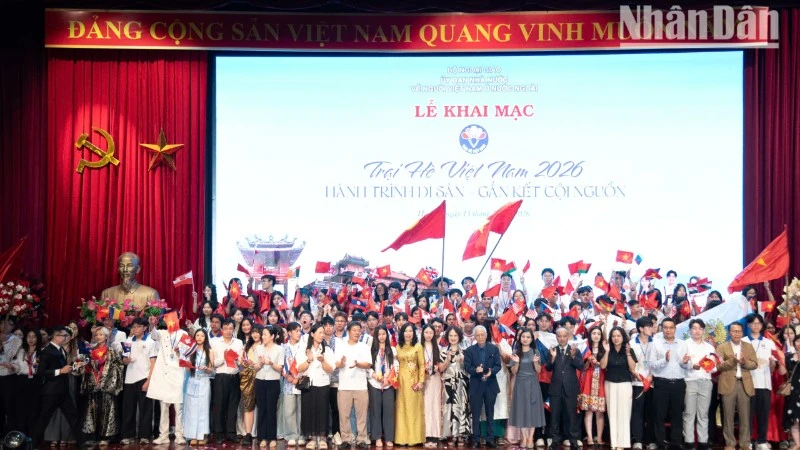
ベトナム、若き在外同胞の帰郷促す「サマーキャンプ」開催
ベトナム外務省は、在外ベトナム人若者らが祖国の歴史や文化に触れる「ベトナム・サマーキャンプ2026」をハノイで開幕。13回目となる今年は「遺産の旅、故郷との絆」をテーマに、約100名が14日間、ベトナム各地を巡る。
ベトナム外務省は7月13日、ハノイで「ベトナム・サマーキャンプ2026」の開会式を開催した。今年のテーマは「遺産の旅、故郷との絆」。32の国と地域から集まった100名以上の在外ベトナム人若者、大学生が参加した。
開会式には、レ・ティ・トゥ・ハン外務次官、グエン・チュン・キエン国家海外ベトナム人委員会委員長、ホーチミン共産青年同盟の代表者らが出席した。
ハン次官は開会の挨拶で、2026年がベトナムにとって第14回党大会以降の新たな発展段階の始まりであり、行政区画再編による新たな発展空間が開かれる年であると強調した。これは、国の潜在能力を発揮し、創造性を刺激し、より速く持続可能な開発目標を目指すための新たな原動力となると述べた。
今年のサマーキャンプでは、参加者は14日間で約1,500キロメートルを移動し、ハノイからカインホアまでベトナム各地を巡る。ホー・チ・ミンの生家訪問、民族の歴史遺跡や文化遺産、各地の人々との交流、ボランティア活動、国内の若者との交流などを通じて、ベトナム語の維持・普及に貢献する。また、クイニョン科学発見センター訪問、海軍士官学校の未来の将校との交流、ガーマ戦没者慰霊碑への献香、ホアンサ展示館訪問も予定されている。
ハン次官は、各訪問地が「ベトナムへの理解を深め、歴史を知ることで誇りを持ち、文化を知ることで愛着を深め、人々を知ることで絆を強め、今日のベトナムを知ることで国の未来をより信じられるようにする」という願いを込めて選ばれたと説明した。そして、参加者には多くのことを観察し、話し、体験してほしいと願った。サマーキャンプで最も貴重なのは、どれだけ多くの場所を訪れたかではなく、ベトナムの国と人々について何を感じたかであると付け加えた。
さらにハン次官は、参加者がどこにいてもベトナム人であることを誇りに思い、ベトナム語と民族文化のアイデンティティを維持し、常に祖国を思うことを望んだ。「機会があれば、平和で友好的、そしてダイナミックに発展するベトナムについて国際的な友人に話してください。条件が整えば、得た知識、経験、そしてつながりをベトナムに持ち帰ってください。そして、もし将来、祖国で学び、研究し、起業し、働くことを選ぶなら、ベトナムは常に皆さんを温かく歓迎してくれると信じています」と述べた。
在外ベトナム人若者、大学生を代表して、マイ・ハイ・コイさん(ポーランド出身)は、外務省、国家海外ベトナム人委員会、そして主催者に感謝の意を表した。彼は、「私たちは真剣に旅をし、注意深く聞き、楽しく遊びます。たくさんの写真を撮り、たくさんのビデオを撮ります。そして、住んでいる場所に戻ったら、ベトナム語で友人やコミュニティの子供たちに話します。どこまで遠くに行っても、私たちは常に家に帰る道を見つけられると信じています」と語った。
ベトナム・サマーキャンプは2004年から毎年開催されており、国家海外ベトナム人委員会と外務省が主導し、各省庁や地方自治体と連携して実施されている。20年以上にわたり、このプログラムには数千人の在外ベトナム人若者、大学生が帰郷し、コミュニティの結束強化、民族文化のアイデンティティ確立、そして在外同胞の若い世代の祖国への愛情と責任感を育むことに貢献してきた。
情報源: Nhan Dan
多角的分析
The "Vietnam Summer Camp" program itself has a limited direct economic impact, primarily involving travel and accommodation costs within Vietnam for participants and organizers. However, its broader economic implication lies in fostering a connection that could lead to future investment or skilled labor returning to Vietnam. The Vietnamese government's emphasis on development phases and administrative reforms in 2026 suggests an ongoing focus on economic growth, and programs like this aim to tap into the global Vietnamese diaspora for potential human capital and investment. The inclusion of visits to scientific centers and future naval officers hints at a desire to align the diaspora's interests with national development priorities, potentially in high-tech or defense-related sectors, which are key to Vietnam's long-term economic strategy.
From an investor's perspective, programs like the "Vietnam Summer Camp" are indirect indicators of the government's long-term strategy to engage its diaspora. While not a direct investment incentive, it signals an effort to build cultural and emotional ties that could translate into future investment, remittances, or skilled talent repatriation. Investors look for stability, growth potential, and a skilled workforce. By fostering a sense of belonging and pride among overseas Vietnamese, the government is cultivating a potential pool of future investors or entrepreneurs who understand the Vietnamese market and culture. The emphasis on national development and innovation within the camp's activities also aligns with sectors attractive to foreign direct investment.
The "Vietnam Summer Camp" directly addresses the social aspect of maintaining cultural identity and national cohesion among overseas Vietnamese youth. By immersing them in historical sites, cultural traditions, and interactions with local communities, the program aims to strengthen their connection to their roots. This is particularly relevant in a globalized world where younger generations might feel disconnected from their heritage. The explicit goal of preserving and promoting the Vietnamese language is a crucial social objective, as language is a cornerstone of cultural identity. The program also fosters a sense of pride and belonging, which can lead to greater engagement with Vietnam's development and a stronger sense of shared national identity across geographical boundaries. The inclusion of volunteer activities further promotes social responsibility and civic engagement among the participants.
For Vietnamese citizens, especially those in regions visited by the camp participants, the program offers an opportunity for cultural exchange and to showcase their local heritage. It can foster a sense of national pride and unity, reinforcing the idea of a connected Vietnamese community, both within and outside the country. The participants' engagement in volunteer activities can also provide direct benefits to local communities. Furthermore, the camp's theme of 'connecting to roots' and the emphasis on preserving the Vietnamese language resonate with the broader societal goal of maintaining cultural heritage in the face of modernization and globalization. The presence of overseas Vietnamese youth can also serve as a reminder of the nation's global reach and the potential contributions of its diaspora.
AI Expert Roundtable
AI 専門家による深層討論会
※ この議論は記事内容に基づき AI エージェントによって自動生成されたシミュレーションです
背景・歴史的文脈
ベトナム政府は、海外に住むベトナム人(キエウ・バオ)との関係強化を長年にわたり重視してきた。特に、1975年のベトナム戦争終結後、多くのベトナム人が国外へ移住し、その子孫はベトナムとの繋がりが希薄になる傾向があった。これに対し、1990年代以降、ベトナム政府はキエウ・バオ政策を積極的に推進し、彼らの帰郷を奨励し、投資や文化交流を促進してきた。2004年から始まった「ベトナム・サマーキャンプ」は、この政策の一環として、若い世代に祖国の歴史、文化、そして国民との絆を体験させることを目的としている。2026年という年は、ベトナムが第14回党大会を経て新たな発展段階に入る年であり、行政区画の再編も行われることから、国の将来像を若い世代に示し、彼らの関与を促すための重要な時期と位置づけられている。
原文ソース
Nhan Dan