General articles are free for 24 hours after publish.
Philippines Halts Fresh Ube Exports to Boost Domestic Cultivation
The Philippines has indefinitely suspended exports of fresh purple yam (ube) to address a shortage of planting materials for domestic cultivation, aiming to scale up commercial production and meet local demand.
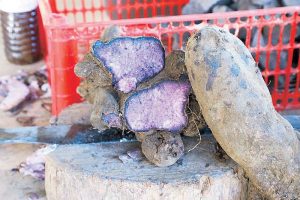
By Marron Joshua F. Mendoza THE Department of Agriculture’s (DA) decision to suspend exports of fresh purple yam (ube) indefinitely serves as an opportunity to develop sufficient scale in the supply of planting materials to enable commercial cultivation of the in-demand crop, industry officials said. Former Agriculture Secretary William D. Dar said ube tubers are also planting materials, and called for the mass-production of quality inputs through the tissue culture method to encourage more intensive commercial-scale production. Mr. Dar said farmers need to make the leap from backyard farming to commercial cultivation, noting that domestic demand for ube and ube products remains strong even if exports markets are cut off. “The idea is to encourage more production areas so you have volume and quality products,” Mr. Dar told BusinessWorld via Viber. Mr. Dar said the government must link farmers that have achieved commercial-scale production to good markets, train farmers to process ube tubers for both domestic and export markets, and sustain research and innovation in order to improve productivity in the ube industry He also supported the breeding of new and more resilient ube varieties and organizing farmers as entrepreneurs through continuous training and capacity building. Danilo V. Fausto, president of the Philippine Chamber of Agriculture and Food, Inc., welcomed the export suspension, adding that it should be limited to raw ube exports. “We welcome this policy to preserve our ube planting materials and have added value to our ube industry’s productions,” Mr. Fausto told BusinessWorld via Viber. The Bureau of Plant Industry (BPI) imposed the suspension in mid-August. The freeze applies to fresh ube and propagative planting materials whether used for consumption, planting, or research. BPI Director Gerald Glenn F. Panganiban said he notified the Bureau of Customs of the export suspension and ordered plant quarantine stations to stop issuing phytosanitary certificates for ube shipments. Mr. Panganiban said the suspension is an interim safeguard while the government works out policy and regulatory changes to govern the export regime for fresh purple yam. Agriculture Secretary Francisco P. Tiu Laurel, Jr. said the restrictions are intended to keep planting materials in the country while the ube industry builds production capacity. “We severely lack planting material ourselves, and we don’t want to export it to countries that could use Philippine ube varieties to compete with us,” Mr. Laurel said in a statement. Demand for ube continues to rise worldwide, leading to a supply squeeze in an industry with limited production capacity. President Ferdinand R. Marcos, Jr. approved a P300-million budget for the ube industry in 2027, with the government and industry organizing United Ube PH Association, Inc., bringing together farmers, processors, traders, exporters, researchers, and other industry participants. The BPI, along with researchers from the University of the Philippines at Los Baños (UPLB) are working on genetically mapping Philippine ube varieties for registration, with the aim of protecting native varieties from biopiracy, establishing crop authenticity in export markets, and supporting the development of higher-yielding and more resilient varieties.
Original source
BusinessWorld Economy