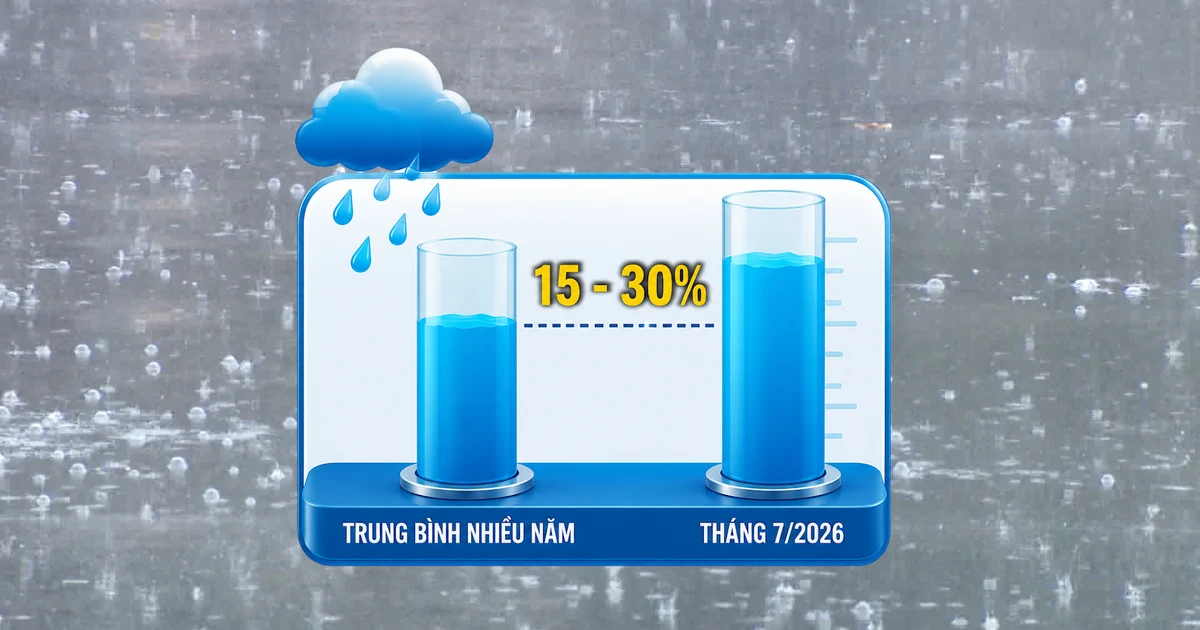
Northern Vietnam Braces for Heavy Rains in July, Increased Flood and Landslide Risks
Northern Vietnam is forecast to experience above-average rainfall in July, increasing the risk of flash floods and landslides. Concerns are particularly high for mountainous and hilly areas, prompting authorities to issue warnings.
Northern Vietnam is entering the peak of its rainy season in July. This year, rainfall in July is forecast to exceed the average, significantly increasing the risk of flash floods and landslides, particularly in the midland and mountainous regions. According to assessments by the National Center for Hydro-Meteorological Forecasting, total rainfall in the northern region during July is expected to be 15-30% higher than the multi-year average. This increased rainfall heightens the likelihood of extreme downpours occurring over short periods, leading to flash floods in small rivers and streams, landslides in hilly and mountainous areas, and waterlogging in urban centers. Vietnam, while pursuing economic growth under its one-party system, faces recurrent challenges from natural disasters. Addressing these requires robust infrastructure development and disaster preparedness measures. Geopolitical factors, including relations with neighboring China and other regional players, also play a role in the broader stability of Southeast Asia. Preparedness for such natural calamities is an urgent task for ensuring public safety and the sustainability of economic activities. Source: Nhan Dan
多角的分析
7月の降雨量増加予測は、農業生産に直接的な影響を与える可能性があります。特に、水田地帯での浸水や、農作物の生育不良が懸念されます。また、インフラへの被害は、物流コストの上昇や、復旧にかかる経済的負担を増加させる要因となり得ます。ベトナム経済は製造業と輸出に依存していますが、これらの自然災害はサプライチェーンの寸断リスクを高めます。
投資家にとって、鉄砲水や土砂崩れのリスクは、インフラ関連企業や、被害を受けやすい地域に工場を持つ企業の事業継続計画(BCP)に影響を与えます。保険料の上昇や、プロジェクトの遅延・中止のリスクも考慮する必要があります。一方で、防災・減災関連技術への投資機会も生まれる可能性があります。
鉄砲水や土砂崩れは、特に山間部や丘陵地帯に居住する住民の生活に壊滅的な影響を与える可能性があります。家屋の損壊、避難生活、生計手段の喪失といった直接的な被害に加え、インフラの寸断による孤立や、食料・物資の不足も懸念されます。都市部での浸水は、交通網の麻痺や衛生問題を引き起こし、市民生活に混乱をもたらします。
記事は7月の降雨増による鉄砲水・土砂崩れリスクに言及していますが、これはハノイやホーチミンといった大都市に住む市民だけでなく、地方の山間部に住む人々にも直接的な影響を与えます。特に、インフラが脆弱な地域では、家屋の流出や土砂に埋まる危険が現実のものとなります。また、都市部では、長雨による交通渋滞や、下水道の機能不全による浸水被害が、日常生活の質の低下につながります。住民は、避難計画の策定や、自宅の安全対策を講じる必要に迫られます。
背景・歴史的文脈
ベトナム北部では、夏期(特に7月、8月)にモンスーンの影響で雨量が多くなるのが常である。しかし、近年の気候変動により、降雨パターンが変化し、短期間に集中豪雨が発生する頻度が増加している。これにより、過去には発生しなかったような地域での鉄砲水や、斜面の緩い場所での土砂崩れのリスクが高まっている。ベトナム政府は、防災・減災計画を国家戦略に組み込んでいるが、国土の約7割が山岳地帯であるため、インフラ整備や住民への情報伝達には依然として課題が多い。中国との国境を接する地域では、地政学的な緊張も、災害時の対応に影響を与える可能性がある。
原文ソース
Nhan Dan