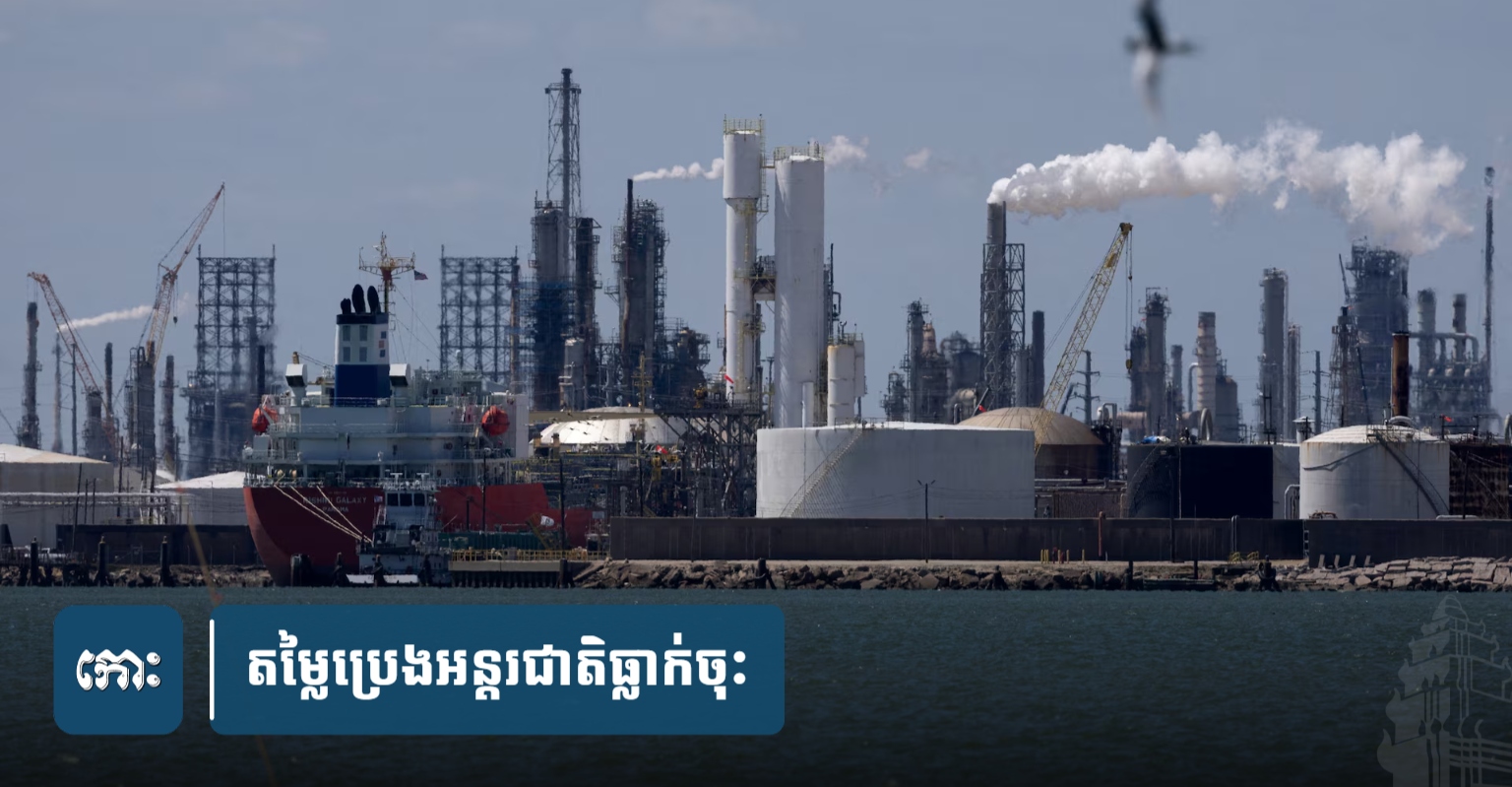
Oil Prices Drop After OPEC+ Agrees to Increase Production, Limited Impact on Cambodia Expected
International crude oil prices have fallen after OPEC+ agreed to increase production targets starting in August. While uncertainties surrounding Iran remain, the direct impact on Cambodia's economy is expected to be limited. Domestic fuel price trends are being closely watched.
International crude oil prices fell in the first week of June after the Organization of the Petroleum Exporting Countries (OPEC) and its allies (OPEC+) agreed to further increase their production targets starting in August. However, the prospect of recovering exports from major producers via the Strait of Hormuz could lead to increased supply to the global market. Benchmark Brent crude fell 73 cents, or 1.01%, to $71.39 a barrel at 3 p.m. Cambodia time, after rising 0.45% last Friday. U.S. West Texas Intermediate (WTI) crude was at $68.15 a barrel, down 54 cents, or 0.79%. There was no weekly closing price for WTI on Friday due to the U.S. market being closed before the national Independence Day holiday on Saturday. Both oil contracts saw little change last week after falling for most of the preceding weeks, as investors closely monitored negotiations between the United States and Iran over the fate of shipments through the Strait of Hormuz, as well as the recovery of oil exports in the Persian Gulf region. OPEC and its allies, including Russia, agreed on Sunday to increase their production target by an additional 188,000 barrels per day starting in August, on top of similar increases for June and July. However, much of this increase is "on paper" as the conflict between the U.S.-Israel and Iran has blocked the Strait of Hormuz, preventing tankers from major OPEC producers like Saudi Arabia, Kuwait, and Iraq from passing through, thus limiting their oil output. A Reuters survey found that OPEC output in June rose by 3.3 million barrels per day from the previous month to 19.43 million barrels per day, recovering from its lowest level in more than two decades. Data also showed that Persian Gulf oil exports in June increased by more than 3 million barrels per day compared to May, bringing total exports to over 10 million barrels per day. However, this volume remains 40% below pre-Iran conflict levels. While the fluctuation in oil prices could impact domestic fuel prices in Cambodia, the direct impact on the Cambodian economy is currently seen as limited. The government is expected to monitor international market trends and consider appropriate responses if necessary. Source: Koh Santepheap Khmer
多角的分析
OPEC+による生産目標引き上げは、原油価格下落の直接的な要因である。これは、世界的なインフレ圧力の緩和に寄与する可能性がある。カンボジアは原油の純輸入国であり、国際原油価格の低下は、燃料費の抑制を通じてインフレ率の低下に貢献しうる。しかし、国内の燃料価格への反映には、流通マージンや政府の税制などの国内要因も影響するため、その度合いは変動しうる。過去、原油価格の急落はカンボジアの輸入物価を押し下げ、家計の負担を軽減する効果が確認されている。
原油価格の下落は、エネルギー関連企業、特に石油・ガス生産企業の収益性を圧迫する。投資家は、OPEC+の生産方針の持続性や、地政学リスク(特に中東情勢)の動向を注視する必要がある。カンボジア国内の投資環境への直接的な影響は限定的だが、グローバルな投資センチメントの悪化は、新興国市場への資本流入に影響を与える可能性がある。過去、原油価格の急激な変動は、新興国市場のボラティリティを高める傾向がある。
原油価格の下落は、カンボジア国民の生活費、特に輸送費や電力料金に間接的な影響を与える可能性がある。燃料価格の安定または低下は、家計の可処分所得を増加させ、消費を刺激する可能性がある。しかし、OPEC+の決定が必ずしも国内燃料価格に迅速かつ完全に反映されるとは限らず、その恩恵が国民に行き渡るかどうかが問われる。過去、燃料価格の変動は、特に都市部での交通費や、地方での農産物輸送コストに直接的な影響を与え、市民生活に摩擦を生じさせた例がある。
OPEC+の生産増強合意による原油価格下落は、カンボジアの一般市民にとって朗報となる可能性がある。燃料価格の安定は、日々の生活費、特に移動や日用品の購入にかかる費用を軽減する。しかし、この恩恵がどれだけ速やかに、そしてどの程度、国内の小売価格に反映されるかが重要である。過去の事例では、国際市場の価格変動が国内価格に反映されるまでにタイムラグが生じたり、一部が吸収されたりすることもあった。市民は、政府が価格安定策を講じることを期待している。
背景・歴史的文脈
国際原油市場は、OPEC+の生産調整に大きく影響されてきた。OPEC+は、市場の安定化と価格維持を目的として、生産量を調整してきた。特に、中東地域における地政学的な緊張は、原油供給への懸念を高め、価格変動の要因となってきた。2026年7月時点の状況は、イラン情勢の不確実性と、OPEC+の増産決定が交錯し、市場の動向を複雑にしている。カンボジアは原油の純輸入国であり、国際原油価格の変動は、国内のインフレ率や経済活動に影響を与える構造を持っている。
原文ソース
Koh Santepheap Khmer