General articles are free for 24 hours after publish.
Hanoi Plans 109-Story Tower Along Red River as New Landmark
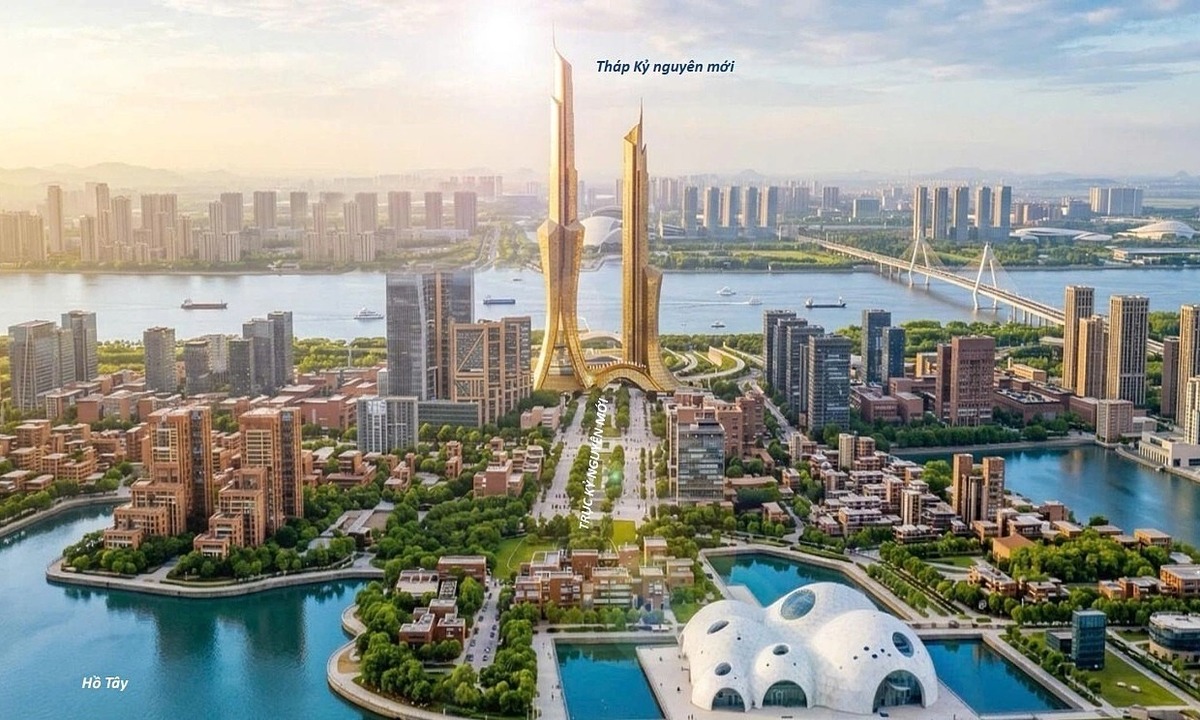
Hanoi, Vietnam's capital, has unveiled plans to construct a 109-story Era Tower along the Red River as part of a major urban development project. The tower is envisioned as a landmark for a new urban axis connecting West Lake to the ancient Co Loa citadel, with development prioritizing natural terrain and flood control.
Hanoi, Vietnam's capital, has unveiled plans to construct a 109-story "Era Tower" as a landmark for a new urban axis along the Red River. This ambitious project is part of a broader urban development initiative for the capital, aligning with its 100-year master plan that designates the Red River corridor as one of nine growth axes. The Red River zoning area spans approximately 40 km through the city center, covering about 11,418 hectares, and is projected to accommodate between 800,000 and 1.2 million residents. The central segment, from Thang Long Bridge to Thanh Tri Bridge, is earmarked for the most intensive redevelopment, envisioned as the "urban living room" with clusters of financial services, commerce, and innovation around landmark buildings. The Era Tower is planned to symbolize this new axis, running from West Lake to the ancient citadel of Co Loa. Renderings from the Hanoi Construction Planning Institute depict the tower situated on the right bank of the Red River, with West Lake in the background. However, specific details regarding the tower's exact location, intended use, size, construction timeline, and height in meters have not yet been released. The city emphasizes that the development will proceed with maximum respect for the natural terrain and will preserve flood discharge space in compliance with approved flood control and dike plans. The plan explicitly rules out narrowing the flood corridor or building new dikes within existing ones. The Red River's course through the capital is approximately 120 km, with the study corridor representing roughly one-third of this length. Future phases of the development aim to link both banks to southern growth centers and urban chains in Hung Yen province through new river crossings on ring roads. This project signifies Hanoi's drive for modernization and economic growth, likely seeking to attract international investment and enhance the city's global standing. Under Vietnam's one-party system, such large-scale developments are typically driven by strong government directives, though community engagement and environmental impact assessments will be crucial as details emerge.
Original source
VnExpress International