General articles are free for 24 hours after publish.
Nursing institutes opened in Naypyitaw and 14 regions and states, President attended and opened
■ The nursing institutes opened today in Naypyitaw and in regions and states across the country will become important health education centers for the further development of the nation's healthcare human resources. The o
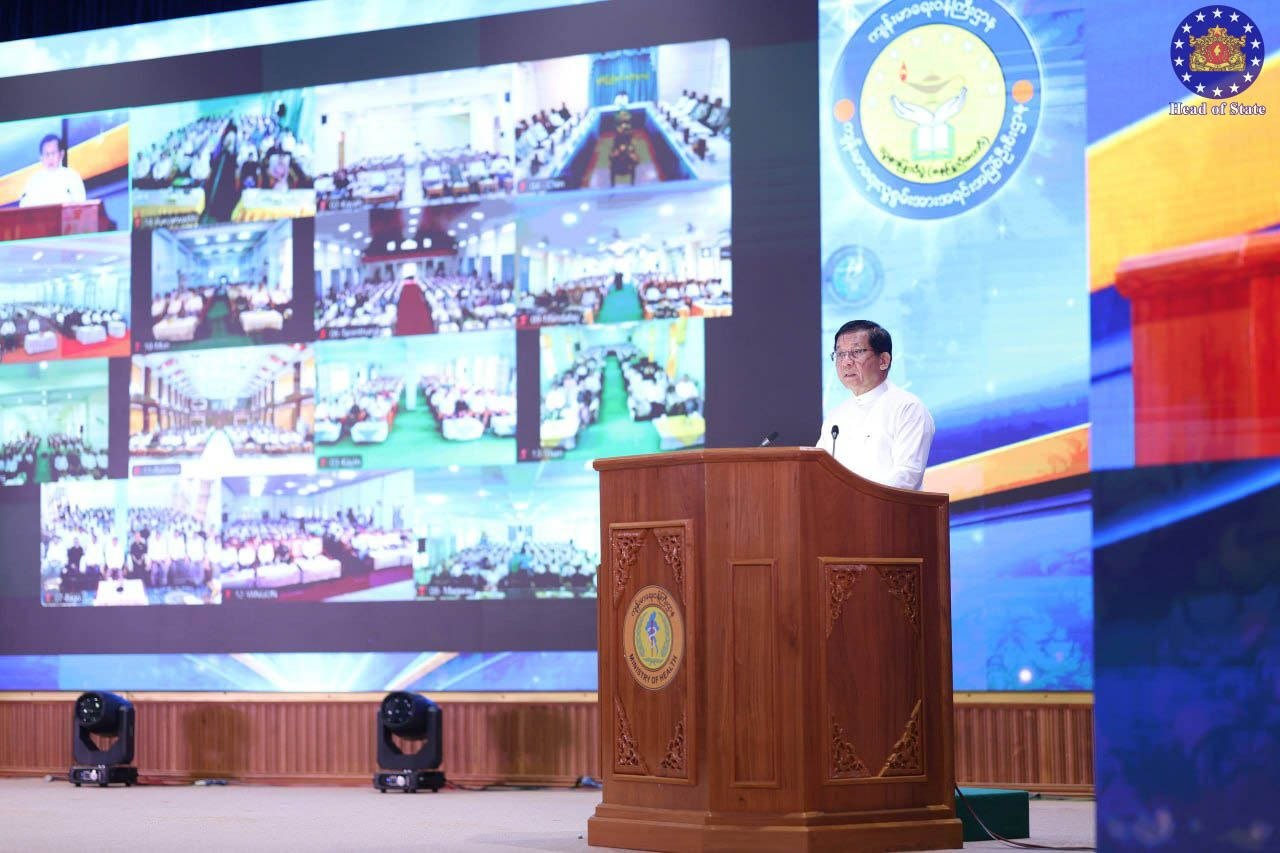
■ The nursing institutes opened today in Naypyitaw and in regions and states across the country will become important health education centers for the further development of the nation's healthcare human resources. The opening ceremony of the Nursing Institute (Naypyitaw) and nursing institutes in 14 regions and states was held on the morning of July 16 at the Nursing Institute (Naypyitaw), and was attended and opened by State President U Min Aung Hlaing. The ceremony was attended by Vice President U Nyo Soe, Commander-in-Chief (Army) General Ye Win Oo, Union Ministers, Chairman of the Naypyitaw Council, senior military officers from the Office of the Commander-in-Chief of the Defence Services, Commander of the Naypyitaw Command, Deputy Ministers, responsible officials from ministries, rectors, chief nurses, teaching staff from nursing institutes, nurses from Naypyitaw 1000-bed hospital, students, and responsible persons. Chief Ministers and responsible persons from regions and states, rectors, chief nurses, teaching staff, and students from nursing institutes attended via video conferencing. At the ceremony, the State President simultaneously opened the Nursing Institute (Naypyitaw) and the nursing institutes in 14 regions and states by pressing the "Mercy Light Nursing Lamp" button. Following this, the State President delivered an opening speech, stating that for the construction of a modern, developed nation, it is essential for all citizens to be highly educated and healthy and strong. Therefore, policies are being formulated and implemented for the health and strength of the entire nation and for the improvement of healthcare standards. In doing so, emphasis is being placed on ensuring that healthcare services directly benefit the public and that healthcare coverage is accessible to all, regardless of wealth or location, in both urban and rural areas (Universal Health Coverage). With the belief that "nothing is more important than human life," the healthcare sector has been enhanced in all aspects throughout the period of responsibility. This enhancement will continue in the new government's term. Even if individuals are excellent, knowledgeable, and skilled, they cannot perform their duties and beneficial tasks if they are not healthy. Therefore, the State President urged everyone to focus on the health and strength of all citizens, both mentally and physically. To ensure that all citizens can access healthcare services for the health and strength of the entire nation and the improvement of healthcare standards, it is necessary to train and produce sufficient healthcare human resources. The State President stated that to train the healthcare human resources needed by the nation, in addition to the five medical universities operated by the Ministry of Health, the Faculty of Medicine was established and opened at Naypyitaw State Academy in 2023. Thus, there are now six medical universities and 11 allied health universities, totaling 17 universities. Among the nursing and midwifery training schools that are producing the essential nursing and midwifery workforce for healthcare services, 15 schools were upgraded and expanded as nursing institutes today. The nursing institutes opened today in Naypyitaw and in regions and states will become important health education centers for the development of the nation's healthcare system and for producing qualified and compassionate nurses and midwives, thereby further developing the nation's healthcare human resources. To provide healthcare services accessible to all, the nursing and midwifery workforce is being produced. From 1962 to the present, 45,245 individuals have received nursing-midwifery diplomas, and 42,524 midwives have been produced, who are diligently serving the public's healthcare needs as civil servants. Furthermore, with the aim of enabling all citizens to easily access healthcare services, in the 2026 academic year, a total of 5,946 students are being trained in the three-year nursing-midwifery diploma program at nursing institutes and nursing training schools, and a total of 1,035 students are being trained in the two-year comprehensive midwifery diploma program at midwifery training schools. The number of nurses and midwives produced annually is increasing, and in the 2027 academic year, with the upgrading of nursing institutes, the intake for the three-year nursing-midwifery diploma program will be increased to 2,900 new trainees, and for the two-year comprehensive midwifery diploma program, it will be increased to 1,400 trainees. It is necessary to strive to produce nurses and midwives with a quality that can stand shoulder-to-shoulder with those in Southeast Asian countries, not only in terms of quantity but also in quality. Training and education are being provided with outcome-based curricula designed in accordance with international standards. These are advanced diploma programs that require completion of high school, as per the National Education Framework. Furthermore, the Myanmar Nursing and Midwifery Council grants accreditation for nursing and midwifery education and practice quality assurance, which includes eight international standards. In addition, opportunities to pursue further studies up to the doctoral level in nursing are available at domestic and international universities, which is why nursing training schools have been upgraded to nursing institutes to foster the development of nursing education, the State President stated. In accordance with the nation's policy for uniform development across the country, 15 nursing and midwifery training schools located in the Union Territory of Naypyitaw and in various regions and states have also been recognized and opened as nursing institutes with appropriate standards.
多角的分析
人材育成は長期的な経済基盤に関わります。教育機会が広がれば労働力の質向上につながりますが、地域格差や政治的選抜が強まると効果は限定されます。
投資家にとって教育政策は短期材料ではありませんが、技能人材の供給力を測る指標です。若者政策が職業教育や地域産業に接続するかが重要です。
看護学校で問われるのは、優秀層の育成と地域格差の縮小を同時に進められるかです。Eleven Mediaの報道からは、若者が将来を国内で描ける条件を見極める必要があります。
家庭や学生にとっては、制度が実際の進学・就職機会につながるかが大切です。公式行事だけでなく、教育環境の改善が伴うかを見守る必要があります。
背景・歴史的文脈
このニュースは、ミャンマー政府が若者育成や国家人材づくりを公式に打ち出す文脈にあります。教育・青少年政策は将来の行政人材や社会統合と結びつきますが、政治状況が不安定な中では、制度の目的と現場の実感に差が出やすい分野です。
原文ソース
Eleven Media