General articles are free for 24 hours after publish.
Vietnam-Russia strategic tech cooperation can become new pillar of ties: To Lam
Vietnamese President To Lam proposed that science and technology cooperation should become a new pillar of Vietnam-Russia relations. The focus is on joint development and market entry in strategic fields like nuclear energy, new energy, and AI.
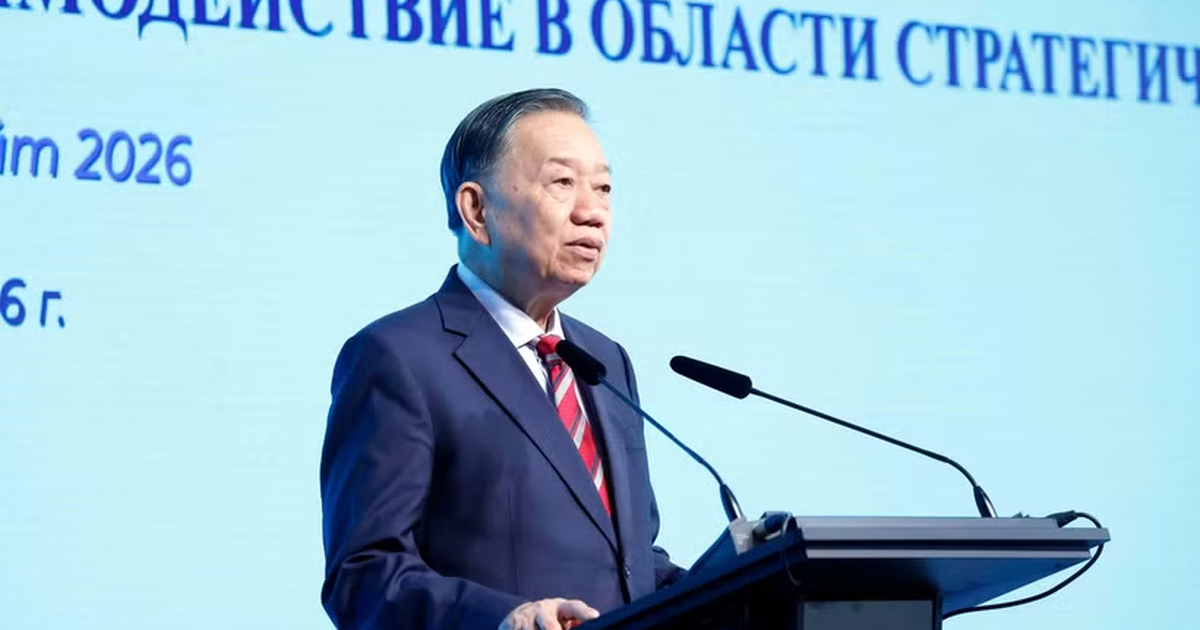
General Secretary and President To Lam suggested that cooperation in strategic technologies should become a new pillar of Viet Nam-Russia relations. Addressing the Viet Nam-Russia Science and Technology Forum in Moscow on September 9, during his State visit to Russia, Lam said Viet Nam has entered a new development phase with the aspiration to build a peaceful, independent, democratic, prosperous, civilized, and happy nation, striving to become a developed, high-income country by 2045. To achieve this goal, Viet Nam has identified science, technology, innovation, and digital transformation as the main drivers to reform its growth model, enhance productivity, competitiveness, and economic self-reliance. Lam noted that science, technology, and education constitute a special foundation of Viet Nam-Russia relations, recalling that tens of thousands of Vietnamese cadres and experts were trained in the former Soviet Union, many of whom have made significant contributions to national development. He emphasized that future technology cooperation requires a new mindset, new approaches, and higher targets, moving beyond expert exchanges and cadre training toward jointly mastering technologies, co-creating products, and participating in the market together. Lam suggested selecting key strategic fields that combine Russia's scientific and technological strengths with Viet Nam's development needs, human resources, and market potential, such as nuclear energy, new energy, space and satellite technology, semiconductors and microelectronics, quantum technology, and artificial intelligence. These fields should be capable of generating new technological capabilities that directly contribute to socio-economic development, ensure national security and safety, and enhance each nation's technological autonomy. Lam expressed his desire for Russian energy and technology corporations to boost investment and technology transfer to Viet Nam, while encouraging Vietnamese tech firms to proactively seek investment and partnership opportunities in Russia. He also called for creating favorable conditions for scientists and businesses to meet, exchange, and cooperate, and for strong investments in the next generation of young Vietnamese and Russian scientists and experts. Expansion of training programs in strategic technological domains, increased exchanges of young scientists, and enabling young research teams to undertake scientific and technological assignments together were also proposed. Lam expressed his confidence that with the foundation of traditional friendship, high political trust, Russia's scientific and technological potential, and Viet Nam's strong determination for reform and development, bilateral cooperation in science, technology, and innovation can fully become a new engine, a new pillar, and a new symbol of Viet Nam-Russia relations in the 21st century. At the forum, both sides launched the Viet Nam-Russia Knowledge Network and exchanged cooperation documents in science, technology, and education.
Original source
Bao Chinh Phu