Hanoi Unveils 100-Year Master Plan: Hopes and Challenges for Future Development
Hanoi has announced its 100-year Master Plan for Capital Development. The plan focuses on economic growth, infrastructure development, and cultural heritage preservation, aiming to make Hanoi a globally competitive city. However, addressing social issues arising from rapid urbanization is also crucial.
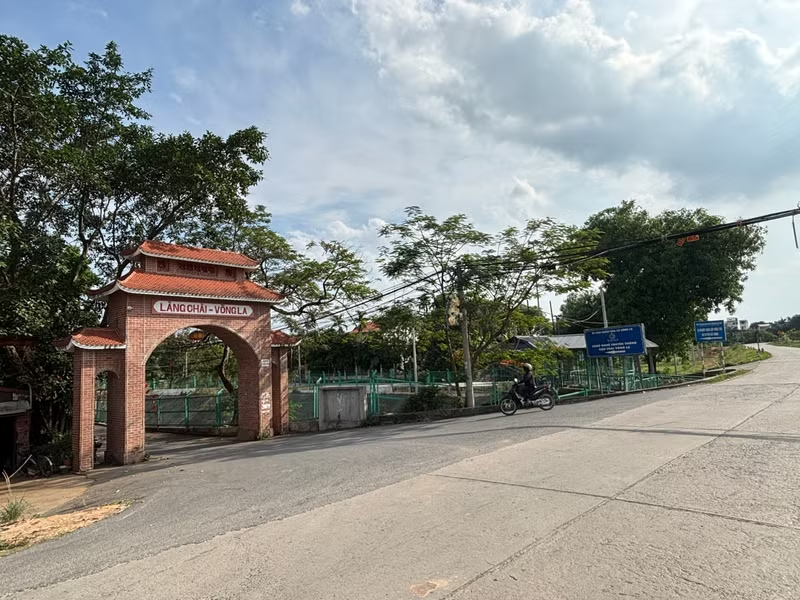
Hanoi has unveiled its 100-year Master Plan for Capital Development, outlining a blueprint for future growth. The plan centers on sustainable economic expansion, enhancing international competitiveness, and preserving historical and cultural heritage. Key to the plan is the comprehensive improvement of infrastructure, including expanding transportation networks, integrating smart city technologies, and promoting environmentally friendly urban development. The aim is to improve living standards and stimulate economic activity. Areas like Vong la village (Thien Loc commune, Hanoi), a traditional village with a century-old history, face the challenge of how to inherit its culture and historical background within new development plans. Through this long-term vision, Hanoi aims to elevate its international standing and attract further domestic and foreign investment. However, rapid urbanization also presents challenges such as increased strain on existing social infrastructure and the preservation of traditional communities, necessitating careful consideration of these social aspects during implementation. Under the leadership of the Communist Party of Vietnam, national development plans have consistently prioritized economic growth. This long-term plan for Hanoi can be seen as an extension of that strategy. Vietnam's pursuit of economic development while navigating its complex relationship with China is likely reflected in the capital's development plan.
多角的分析
ハノイの100年計画は、インフラ投資による経済成長の促進を意図している。これは、ベトナムが輸出主導型経済から脱却し、国内消費とサービス業を強化しようとする戦略と合致する。しかし、計画の成功は、外国直接投資(FDI)の継続的な流入と、国内資本市場の成熟に依存する。特に、中国経済の減速リスクがベトナム経済に波及する可能性も考慮する必要がある。
この計画は、インフラ、不動産、テクノロジー分野への投資機会を提供する可能性がある。しかし、ベトナムの一党体制下での意思決定プロセスは、透明性や予測可能性の点で投資家にとってリスクとなり得る。また、土地利用権や規制の変更が、投資リターンの安定性に影響を与える可能性も否定できない。
ヴォン・ラ村のような伝統的な地域社会は、都市開発の波に直面する。住民は、生活様式の変化、文化遺産の喪失、そして土地収用による移住といった課題に直面する可能性がある。計画の進展に伴い、地域住民の生活の質と文化の継承のバランスをどう取るかが、社会的な安定にとって重要となる。
ハノイ市民は、交通渋滞の緩和や、より良い住環境への期待を寄せている。しかし、都市開発に伴う地価の高騰や、生活コストの上昇は、特に低所得者層にとって大きな負担となる可能性がある。計画の恩恵が、一部の層に偏らず、広く市民に行き渡るかが問われる。
背景・歴史的文脈
ベトナムは、1986年のドイモイ(刷新)政策以降、市場経済化を推進し、目覚ましい経済成長を遂げてきた。特にハノイは、政治・文化の中心地として、その発展は国家全体の象徴とされる。中国との経済的結びつきが強い一方で、安全保障上の懸念から、経済的多角化と国際社会との関係強化を模索してきた。今回の100年計画は、こうしたベトナムの長期的な国家戦略の一環であり、国内の安定した政治体制の下で、経済発展と国際的地位の向上を目指す姿勢を示している。
原文ソース
Nhan Dan