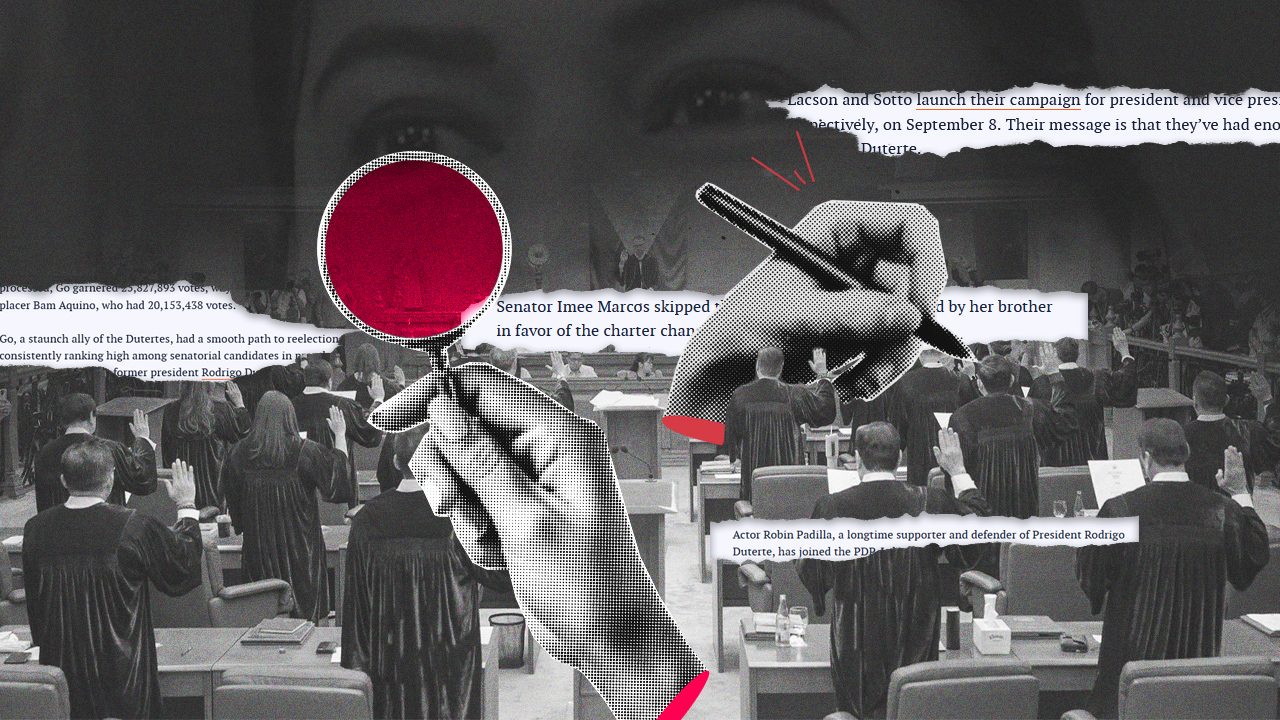
Senator-Judges' Leanings in Duterte Impeachment Trial Analyzed
Politics
2026年7月6日
5
Rappler Philippines

Senator-Judges' Leanings in Duterte Impeachment Trial Analyzed

AI サマリー

An analysis of past voting records and political affiliations of senator-judges is underway to predict their leanings in the impeachment trial of Philippine Vice President Sara Duterte. Experts note that strategic decisions, rather than simple past patterns, will be at play.

The impeachment trial of Vice President Sara Duterte will be a numbers game. Looking back on the track records of the senator-judges can foreshadow how their loyalties may either endure or falter. “Legislative voting patterns are not random. They are the product of institutional incentives, party relationships, coalition dynamics, constituency pressures, and individual preferences,” political analyst and Ateneo de Manila University assistant professor Arjan Aguirre told Rappler. He added that while these votes show where senators may initially lean, they do not determine how they will ultimately vote in the impeachment trial. According to him, senators act strategically, adapting to new political realities instead of merely repeating past behavior to give them better potential returns. He summarized these incentives into six factors that may push a senator’s vote to conviction or acquittal. For him, assessing these factors through voting behavior provides a more reliable signal of alignment — even compared to the positions that these officials may explicitly express. These votes, after all, are an “indicator of where that member has typically stood on important political questions,” according to Aguirre. Duterte’s impeachment trial is one of those questions. Political science professor Jean Franco of the University of the Philippines - Diliman also said that predicting how senators will vote in an impeachment trial is incredibly difficult due to the institutional nature of the Senate, where members are elected as individual personalities rather than strict party loyalists. “We definitely need to look at how public opinion will influence senators whether to find Duterte guilty or not,” Franco told Rappler. So, how has the current roster of senators reacted to the changing political tides of the last two administrations? And what do these show about their voting tendencies? Here’s a look back on their key legislative votes and political alliances. To calculate the probability of where senator-judges may lean during the impeachment trial, Aguirre applied the six factors he outlined to three key Senate leadership votes: the May 11 coup installing Cayetano, the June 3 ouster of Cayetano, and the June 17 formal election of Gatchalian. Legislative studies show that swing legislators who are not firmly aligned with either bloc can make or break a vote, Aguirre told Rappler. “In an impeachment trial, where conviction requires a constitutional supermajority, every potential swing vote becomes even more consequential,” he said. But these legislators cannot be described as "unpredictable," Aguirre added. He said a better description would be “strategically responsive” since lawmakers tend to respond to incentives rather than act randomly. With Marcoleta’s possible arrest on the horizon — along with Estrada’s detention and Dela Rosa’s fugitive status — Franco said that legal luminaries are still debating the required voting threshold for conviction. However, she emphasized that the more critical factor for the public to watch out for is how both Duterte’s camp and the prosecution will handle the trial and whatever results emerge from it. “There’s now a danger that it will be the Supreme Court (SC) that will ultimately decide,” she said. The SC previously intervened in the first impeachment attempt against Duterte, declaring the initial case unconstitutional on July 25, 2025, because of the one-year bar rule. Duterte is now trying to use the same rule to block the 2026 impeachment trial. Many of our current senators have floated between the campaign slates of different presidential hopefuls across the past two administrations. In the context of Duterte’s impeachment, their alliances from the past two elections are the most informative. From the 2025 elections, senators Tito Sotto, Ping Lacson, Lito Lapid, Pia Cayetano, Imee Marcos, Erwin Tulfo, and Camille Villar were from the administration-backed Alyansa slate. Five came from the Duterte slate: Bato dela Rosa, Rodante Marcoleta, and Bong Go, along with Marcos and Cayetano — who were part of both slates at one point. Senators Sherwin Gatchalian, Migz Zubiri, Jinggoy Estrada, Loren Legarda, Marcoleta, Robin Padilla, and Mark Villar were from the UniTeam slate endorsed by both Marcos and Duterte in 2022. Eight senators were not part of the slates endorsed by either camp in the past two elections: Alan Peter Cayetano, Bam Aquino, JV Ejercito, Chiz Escudero, Risa Hontiveros, Kiko Pangilinan, Raffy Tulfo, and Joel Villanueva. Aguirre said that for us to best understand the positions and leanings of the senator-judges, it is also best to look at their interests — both personal and public — that may be weighted in their casting of votes. How they will vote can open a risk for their 2028 political ambitions, especially for those who are seeking reelection. Among the 24 senator-judges, there are four graduating senators — all of whom are currently in Gatchalian’s majority bloc. There are also nine reelectionists, with four in the majority bloc and five in Cayetano’s minority bloc. According to Aguirre, this means that these senators will be highly concerned about public perception that will shape their chances for the next election. He explained that protecting Duterte will draw backlash from media and civil society groups, but opposing her risks losing support from Duterte’s mass base for the upcoming elections. The latest Pulse Asia ratings indicate that she holds the highest approval and trust scores in 2026, standing at 55% and 54% respectively, compared to Marcos’ 36% approval and 35% trust ratings. Prior to Duterte’s impeachment trial, the senator-judges had voted on several motions in relation to her first impeachment. Many of them voted in her favor. But almost an entire year has passed since then, and in the span of that year, many Senate alliances have shifted. Sara’s father, former president Rodrigo Duterte, and his case with the International Criminal Court (ICC) will also continue to hold sway over the impeachment trial, according to Aguirre. Senators have voted on Duterte and the ICC in the past. When a majority of lawmakers are aligned with the administration, the executive can leverage that influence to champion even the most polarizing bills. This was evident in how the Marcos administration enacted controversial laws like the Maharlika Investment Fund and the postponement of the Barangay and Sangguniang Kabataan elections, with wide margins. Most of these bills have been met with supermajority votes even with strong opposition from other lawmakers and a low awareness rate among citizens, according to surveys. Under the previous Duterte administration, various controversial bills and resolutions were also enacted given the massive legislative majority the former president’s allies held in the 17th and 18th Congresses. Like his successor, Rodrigo Duterte was also able to get supermajority v

多角的分析

経済的影響

副大統領の弾劾裁判は、直接的な経済的影響は限定的ですが、政治的不安定さは投資家の信頼を損ない、国内経済の成長に悪影響を与える可能性があります。特に、サラ・ドゥテルテ副大統領は高い支持率を誇っており、その進退は国民の消費意欲や政府の政策実行能力にも間接的に影響を与えることが考えられます。

投資家心理

投資家にとって、弾劾裁判は政治リスクの増加を意味します。過去の投票行動や政治的所属から senator-judges の動向を予測しようとする試みは、不確実性の高さを浮き彫りにしています。政治的安定性の欠如は、フィリピンへの外国直接投資(FDI)を抑制し、資本流出を招く可能性があります。

社会的影響

弾劾裁判は、フィリピン社会の分断をさらに深める可能性があります。 senator-judges の投票は、国民の支持を得るための政治的駆け引きの側面も持ち合わせており、世論の動向が裁判の結果に影響を与える可能性があります。特に、サラ・ドゥテルテ副大統領が高い支持率を維持していることは、裁判の進め方によっては国民の間に大きな反発を生むリスクもはらんでいます。

市民の声

市民にとっては、 senator-judges の投票行動は、自分たちの代表がどのような基準で、誰のために判断を下すのかという問いを投げかけます。過去の投票パターンや所属政党だけでなく、議員が個々の利益や公的な利益をどのように天秤にかけるのか、また、世論がどの程度影響するのかは、市民が政治家を評価する上で重要な要素となります。特に、支持率の高い副大統領の弾劾裁判は、多くの国民の関心を集め、その結果次第では社会的な波紋を広げる可能性があります。

背景・歴史的文脈

フィリピンにおける弾劾裁判は、過去にも政治的な争点となってきました。特に、現職大統領や副大統領に対する弾劾手続きは、政権の安定性や権力バランスに大きな影響を与えます。サラ・ドゥテルテ副大統領の弾劾裁判は、現職大統領フェルディナンド・マルコス・ジュニア氏との関係性や、前大統領ロドリゴ・ドゥテルテ氏の影響力も考慮される複雑な政治的文脈の中にあります。 senator-judges となる上院議員の過去の投票行動や政治的所属は、彼らがどのような政治的圧力やインセンティブに影響されやすいかを示唆しており、裁判の結果を予測する上で重要な手がかりとなります。

原文ソース

Rappler Philippines

原文を読む