Vietnam's Last Dynasty Sparks 'Historical Revisionism' Debate on Social Media
Society
2026年7月22日
5
BBC Vietnamese
Relations
🇻🇳Vietnam🇯🇵Japan

General articles are free for 24 hours after publish.

Vietnam's Last Dynasty Sparks 'Historical Revisionism' Debate on Social Media

Share
AI Summary

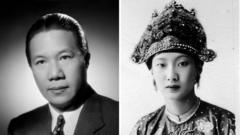
Debates over the legacy of Emperor Bao Dai and Empress Nam Phuong, the last rulers of Vietnam's Nguyen Dynasty, have intensified on social media. Sparked by a new film, critics label them "puppets" and "Western stooges," while defenders argue for a nuanced view considering their historical context.

Debates surrounding the legacy of Emperor Bao Dai and Empress Nam Phuong, the last rulers of Vietnam's Nguyen Dynasty, have reignited on social media, fueled by the release of the film "The Last Empress." Initial discussions around the film focused on costumes, dialogue, and perceived inaccuracies in the trailer. However, as the project gained traction online, the conversation shifted to the lives of the historical figures themselves, and by extension, the entire Nguyen Dynasty. Critics, including prominent social media accounts, have labeled Bao Dai a "puppet" groomed by the French, incapable of meaningful reform and solely focused on personal indulgence. Accusations of selling ancestral treasures during wartime have also surfaced. Empress Nam Phuong has faced similar condemnation, with her marriage described as "arranged" and her opulent lifestyle seen as a sign of "indifference to the nation's fate." Critics argue her mindset and lifestyle were entirely French, lacking any connection to the Vietnamese people. Conversely, many have come to the defense of the last emperor, portraying him as a victim of his era. They highlight his ascension to the throne amidst a weakened monarchy, colonial pressures, and significant international upheaval. His role in securing French recognition of Vietnam's independence and territorial integrity, including the return of Cochinchina, is also emphasized. Research cited by the Vietnam Union of Science and Technology Associations (VUSTA) points to Bao Dai's contributions to the international legal affirmation of Vietnamese sovereignty over the Paracel and Spratly Islands, referencing the 1951 San Francisco Peace Conference where a Vietnamese delegation declared sovereignty without opposition. Regarding Empress Nam Phuong, archaeologist Dr. Nguyen Thi Hau suggests that the affection she garnered in Southern Vietnam stemmed not from her royal status but from her embodiment of a woman who balanced faith, skillful conduct, and self-respect amidst major historical shifts. Her memory is often associated with humility, grace, and quiet resilience as a mother, rather than political power. Her life reflects a generation of Southern Vietnamese women who were educated abroad, managed businesses, and confidently asserted equality with men. Despite the Nguyen Dynasty ending over 80 years ago with Bao Dai's abdication, it remains a sensitive topic in Vietnamese society. While official narratives have historically been critical of the dynasty, the current wave of "cancel culture" on social media has amplified these criticisms. Past artistic portrayals of Bao Dai and Nam Phuong, such as the 2004 TV series "Imperial Candle" or a 2020 music video, did not generate the same level of backlash. Official historical accounts in Vietnam tend to be more critical than laudatory of the Nguyen Dynasty, often citing actions like Emperor Gia Long's reliance on foreign aid or subsequent emperors' "compromises" with the French that led to colonization. However, positive discussions about certain figures, like Gia Long's role in unifying the country and asserting sovereignty over the Spratly and Paracel Islands, have appeared in state-affiliated media. The Vietnamese government has also previously issued directives discouraging the naming of public spaces after historical figures with controversial evaluations, such as Phan Thanh Gian and Truong Vinh Ky, citing their contributions not meeting the "great contribution to the cause of national defense" standard. Nevertheless, other state media have acknowledged figures like Truong Vinh Ky for his foundational role in Vietnamese vernacular journalism. Information Source: BBC Vietnamese

0

Original source

BBC Vietnamese

原文を読む