General articles are free for 24 hours after publish.
Philippines on Alert for Sept. 21 Protests Amid Corruption and Fuel Price Concerns
The Philippine government is heightening security measures and deploying police forces for anticipated mass protests on September 21. The demonstrations are fueled by discontent over alleged corruption and rising fuel prices. Authorities are appealing for peaceful expression, recalling past clashes.
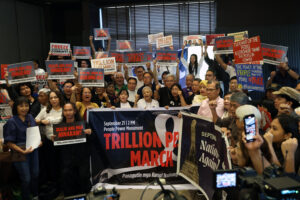
MALACAÑANG said authorities are prepared to secure the mass protests planned for Sept. 21, with various groups expected to troop to the streets to press their demands over the flood control corruption scandal and rising fuel prices. “First of all, the President does not suppress or hinder our fellow citizens from expressing their sentiments in gatherings like these,” Palace Press Officer Clarissa A. Castro told a news briefing in Filipino. “However, there is no need for violence, physical harm, or the loss of life among our countrymen, because the President listens to every grievance they have,” she said. More than 15,000 police personnel are set to be deployed across Metro Manila for the Sept. 21 rallies, the National Capital Region Police Office earlier said. “Our police force is prepared for the upcoming September 21,” Ms. Castro said. “And our only prayer and appeal to our fellow citizens is this: while it is your right to speak out and make your voices heard — and to ensure your message reaches the government — please do so without resorting to violence.” The forthcoming protests come a year after anti-corruption demonstrations near Malacañang descended into clashes between protesters and police forces. Some activist groups have called for President Ferdinand R. Marcos, Jr.’s resignation as part of broader demands for accountability over the flood control controversy. Sept. 21 also marks the anniversary of the 1972 declaration of martial law under then-President Ferdinand E. Marcos, Sr. Meanwhile, transport groups have continued to protest rising fuel prices. PISTON and Manibela have called for measures including the suspension or reduction of petroleum taxes, stronger fuel subsidies and a review of oil in-dustry policies. The Department of Energy on Tuesday certified that the one-month average Dubai crude price had reached $99.41 per barrel, breaching the $80 threshold required to open discussions for fuel excise tax relief. Pump prices rose by P5.68 per liter for gasoline, P4.31 for diesel and P4.62 for kerosene this week. — Erika Mae P. Sinaking
Original source
BusinessWorld Nation