General articles are free for 24 hours after publish.
Indonesia's Climate Action Contradicts International Commitments, Says Environmental Group
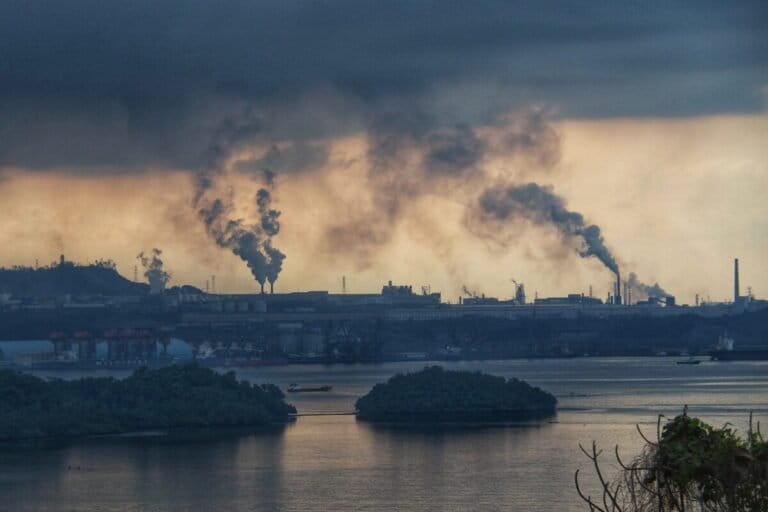
Indonesian Forum for the Environment (Walhi) criticizes the government for its contradictory climate actions. While agreeing to international obligations in an ICJ advisory opinion, domestic policies, including deforestation permits for extractive industries, are increasing emissions, exacerbating the climate crisis.
The Indonesian Forum for the Environment (Walhi) has highlighted a contradiction between the government's stance on climate action and its domestic policies. While the government agreed with an advisory opinion from the International Court of Justice (ICJ) affirming states' obligations in climate action, its internal policies are reportedly contributing to increased emissions. The ICJ's advisory opinion, issued on July 23, affirmed that states have an international legal obligation to protect the climate system and the environment. It also stated that states are responsible for actions or omissions that cause significant damage to the climate system or the environment. The Indonesian government participated in this process and agreed with the obligation. However, Christine Constanta, Executive Director of Walhi's Legal Defense, pointed out the discrepancy with the reality on the ground. According to Walhi's data, out of approximately 103 million hectares of forest area in Indonesia, about 26.5 million hectares are burdened by extractive and plantation permits. Specifically, 21.1 million hectares are under forest utilization permits (PBPH), 4.7 million hectares under mining business permits (WIUP), and 717,000 hectares under land use rights for plantations (HGU). Walhi argues that these permits legalize deforestation, despite the crucial ecological function of forests in absorbing carbon. The organization estimates that the affected land alone, covering 23 million hectares, holds carbon reserves of 2.46 billion tons. The loss of this forest could lead to potential emissions equivalent to about 9.03 billion tons of CO2e, accelerating the climate crisis and the extinction of biodiversity. Constanta stated that despite the government's involvement in the advisory opinion, its domestic policies, particularly the issuance of permits for large-scale land use, are a trigger for rising emissions, contradicting the nation's climate commitments.
Original source
Mongabay Indonesia