General articles are free for 24 hours after publish.
Mekong Delta's Burmese Grape Faces Decline, Seeks Revival
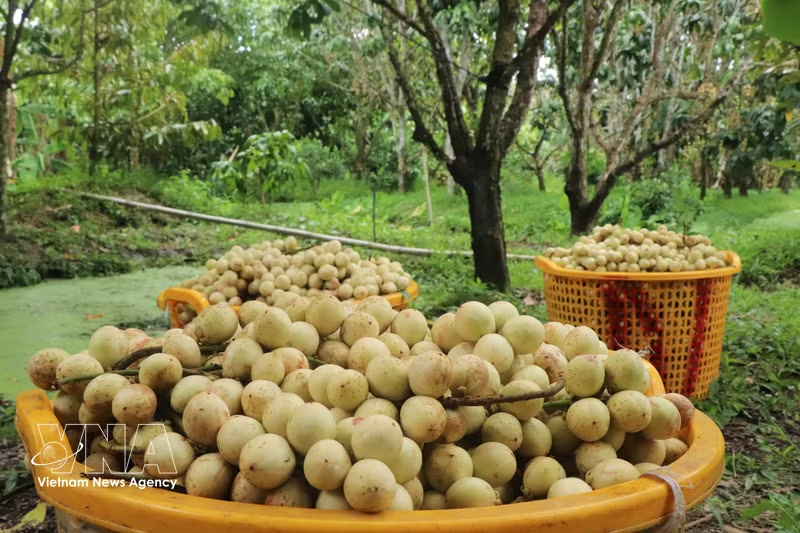
Ha Chau Burmese grape, a specialty of Can Tho city in Vietnam's Mekong Delta, is facing decline as farmers switch to more profitable crops. However, some households are working to preserve the tradition through quality improvement and branding.
Ha Chau Burmese grape, one of the best-known local specialties in the Mekong Delta city of Can Tho, is gradually losing ground as many growers switch to more profitable fruit crops. Nevertheless, a number of farming households continue to cultivate the fruit, improving its quality and value to preserve and promote this distinctive regional specialty. The rich natural environment and climate of the Mekong Delta have traditionally nurtured the Burmese grape. However, recent market shifts and the increasing demand for more efficient agricultural practices are making its cultivation challenging. In Vietnam's one-party system, agricultural policies are often aligned with the nation's economic growth strategies. The preservation of local traditional industries, like Burmese grape cultivation, frequently involves difficult decisions balancing economic rationality. Can Tho city is a significant agricultural hub in the Mekong Delta, known for its vibrant fruit cultivation. The Vietnamese government has been promoting the modernization of its agricultural sector and enhancing export competitiveness, leading to a shift from less profitable crops to those with greater market potential. The current situation of the Burmese grape reflects this broader structural change in Vietnamese agriculture. This case highlights the challenge Vietnam faces in preserving its unique regional cultures and traditional agricultural products while pursuing economic growth. Efforts in quality improvement and branding are crucial for the future of this distinctive specialty.
Original source
VietnamPlus English