General articles are free for 24 hours after publish.
Rục Ethnic Minority Village in Quảng Trị Isolated by Floods
In Vietnam's Quảng Trị province, the Hung Trâu valley floods during the rainy season, severing the sole road to Yên Hợp village, home to the Rục ethnic minority. Residents are forced to rely on boats for transport, impacting daily life and supply chains.
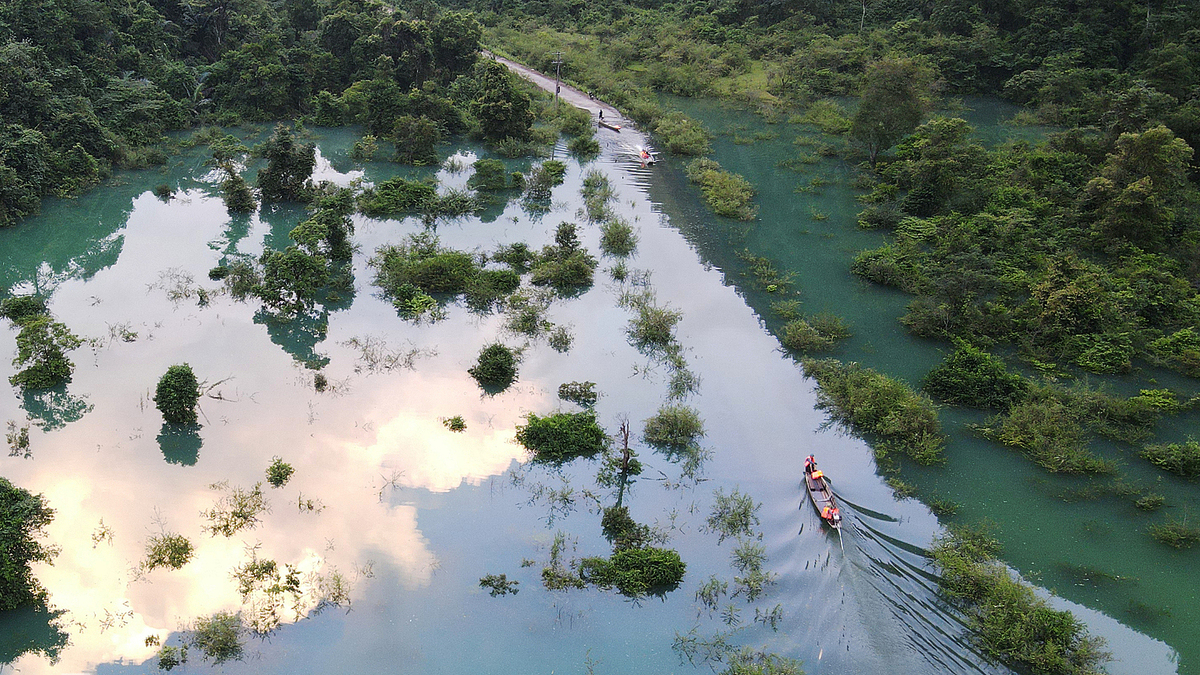
During the rainy season in Vietnam's central Quảng Trị province, the Hung Trâu valley transforms into a vast lake, severing the only road leading to Yên Hợp village, home to the Rục ethnic minority. The Rục, part of the Chứt people, are known as one of Vietnam's most mysterious ethnic groups, primarily residing in the mountainous border areas of Kim Phú commune. For nearly a week, Hung Trâu, located within Phong Nha – Kẻ Bàng National Park, has been submerged. This valley, spanning dozens of hectares, contains the sole access road to Yên Hợp village. Historically, the Rục lived in caves, relying on hunting and gathering, and used tree bark for clothing. In 1959, border guards discovered and encouraged them to settle in higher, flood-free areas. The approximately 6-kilometer concrete road connecting the Hồ Chí Minh Highway to the Rục village is now cut off due to the flooding of Hung Trâu valley. The submerged section is about one kilometer long, with the deepest point exceeding 2 meters. Even after the rain stops, the water can remain for 7 to 30 days, making overland travel impossible for the Rục people. During the flood season, residents primarily use boats with engines to cross Hung Trâu. The Kim Phú commune military command has arranged a free ferry service. In emergencies, soldiers transport residents day or night. Those with motorbikes load them onto boats to cross the flooded stretch. During peak times, residents can also hire private boats for 20,000 VND per trip. "We drive about 4 kilometers from the village, then put the motorbike on a boat to cross Hung Trâu. After that, we travel another kilometer to the Hồ Chí Minh Highway," said Trương Văn Ảnh, a resident of Yên Hợp village. The emerald-green water reflects the people and the limestone cliffs. The journey across Hung Trâu during the flood season offers a beautiful spectacle that occurs only a few times a year. Hung Trâu floods due to its basin-like terrain, lacking natural surface drainage. From September to November each year, rainwater accumulates, turning the area into a large lake surrounded by limestone mountains. The clear, calm water contrasts with the deep green of the primeval forest, creating a picturesque scene. Ancient trees in the valley have their bases submerged, with only their trunks and canopies visible above the water, resembling a forest growing in a lake. During these isolated days, boats become the only means connecting the Rục people to the commune center. When Hung Trâu is full, many tourists visit. The Rục previously lived in three hamlets – Ón, Yên Hợp, and Mò Ó Ồ Ồ – with over 200 households and about 800 people; they are now consolidated under the name Yên Hợp. Despite periods of isolation due to floods, they maintain their agricultural production, growing rice and largely self-supplying food. Traders bring in daily necessities. Before each flood season, authorities transport rice, instant noodles, cooking oil, and other essential supplies into the village to prepare for the days when Hung Trâu floods and the Rục are cut off from the outside.
Original source
VnExpress