Phnom Penh Drainage System Reaches 90% Completion, Boosting Flood Prevention
The large-scale drainage system construction project in the Chak Angre Leu area of Phnom Penh has reached 90% completion. This initiative is expected to significantly contribute to mitigating urban flooding, particularly during the rainy season.
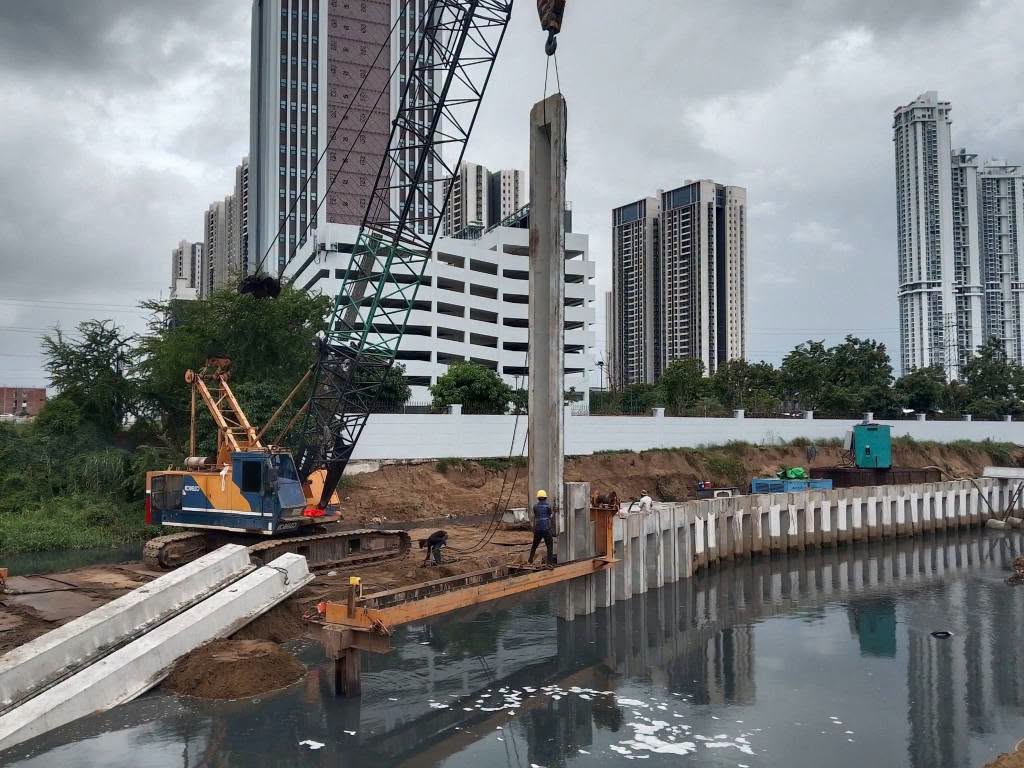
The large-scale drainage system and irrigation infrastructure construction project in the Chak Angre Leu area (Meanchey District) of Cambodia's capital, Phnom Penh, has achieved approximately 90% of its planned progress as of July 7, 2026. This initiative aims to prevent flooding in the area and is proceeding according to plan with high quality and safety standards. This significant project has received approval from the Royal Government of Cambodia, with the Phnom Penh Municipal Hall taking the lead and the Department of Public Works and Transport of Phnom Penh Municipality overseeing its implementation. Construction is actively underway in collaboration with specialized companies. According to technical officials, the project involves the installation of large-scale concrete pile foundations (sipiles) measuring 20 meters in width and over 1,700 meters in total length. The depth of these pile foundations ranges from 12 to 10 meters. To date, the technical team has driven a total of 3,111 concrete piles, which represents 90% of the planned work. This new drainage system will play a crucial role in channeling water from the Boeung Trakoun pumping station, directing it towards the Maha Oupaseika Hun Neang Bridge, and subsequently to the Boeung Tompun wastewater treatment area, especially during the rainy season. Once fully completed, this large-scale concrete pile foundation system is expected to significantly enhance the capacity for rapid rainwater drainage, thereby contributing substantially to reducing and preventing flooding of residential areas and roads for citizens in Phnom Penh during the monsoon season.
多角的分析
この排水システムプロジェクトは、プノンペンにおけるインフラ投資の一環であり、都市開発と生活環境改善に不可欠な要素である。完成すれば、洪水による経済的損失(インフラ被害、商業活動の停滞、農作物被害など)を削減し、都市の持続的な経済活動を支える基盤となる。特に、都市化が進む中で、排水能力の向上は不動産価値の維持や新たな投資を呼び込む上でも重要である。
インフラ整備、特に洪水対策は、カンボジアへの投資、特に不動産や物流関連企業にとってリスク低減要因となる。インフラの安定性は、事業継続計画(BCP)の観点からも重要視されるため、このようなプロジェクトの進捗は、外国からの直接投資(FDI)を呼び込む上でポジティブなシグナルとなる。ただし、プロジェクトの遅延や品質問題は、投資家の懸念材料となり得る。
チャック・アンレー・ルー地区の住民は、長年、雨季の浸水被害に悩まされてきた。この排水システムの完成は、直接的に住民の生活の質の向上に繋がる。住居や通学路の浸水が減ることで、健康被害(水系感染症など)のリスクも低減し、子供たちの安全な通学や日々の生活が保障される。また、インフラ整備は地域社会の安定にも寄与する。
プノンペン市民、特にチャック・アンレー・ルー地区の住民にとって、この排水システムは長年の課題であった浸水被害からの解放を意味する。雨季の度重なる浸水は、家財道具の損傷、衛生環境の悪化、移動の困難さなど、生活に直接的な影響を与えてきた。プロジェクトの進捗は、これらの苦痛が軽減されることへの期待を高める。
背景・歴史的文脈
プノンペンはメコン川、トンレサップ川、バサック川という3つの川が合流する地理的条件に加え、急速な都市化による土地の不浸透性舗装の増加、そして地球温暖化に伴う降雨パターンの変化により、慢性的な浸水問題に直面してきた。特に、過去数十年にわたり、都市部では開発が進む一方で、老朽化した排水インフラや不十分な整備が問題を深刻化させてきた。このチャック・アンレー・ルー地区のプロジェクトは、こうした長年の課題に対応し、都市のレジリエンス(回復力)を高めるための政府主導の取り組みの一環として位置づけられる。
原文ソース
Kampuchea Thmey Local