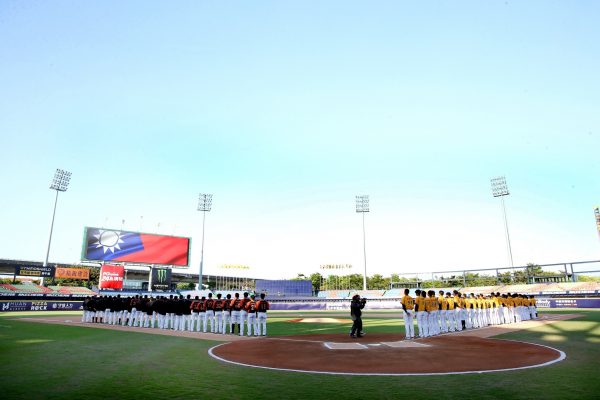
Taiwan's Baseball Diplomacy: Global Presence Under the 'Chinese Taipei' Banner
Taiwan leverages international sports, particularly baseball, to gain global visibility amidst limited diplomatic ties. Despite victories in tournaments like the WBSC Premier12 and the World Baseball Classic, Taiwanese athletes compete under the politically constrained name 'Chinese Taipei.' This naming issue highlights complex debates over Taiwan's international identity and participation.
Taiwan is strategically leveraging sports, particularly baseball, as a means to enhance its international presence amidst limited diplomatic ties. The victory over Japan 4-0 in the WBSC Premier12 final on November 24, 2024, marking Taiwan's first title in a top-tier international baseball tournament, was more than just a sporting triumph; it ignited national fervor across Taiwan. The decisive three-run home run by captain Chen Chieh-hsien and the stellar pitching that limited Japan to four hits propelled Taiwan to second place in the WBSC men's world rankings, behind Japan. However, behind this glory lies the complex reality Taiwan faces on the international stage. The name engraved on the trophy was not Taiwan, but Chinese Taipei. This designation symbolizes the political conditions under which Taiwanese athletes enter international competitions. Taiwan is excluded from international bodies such as the United Nations and the World Health Organization (WHO), and maintains formal diplomatic relations with only a handful of countries. Consequently, international sports offer one of the few platforms where Taiwan can appear before a global audience as a team representing one society. Baseball's arrival in Taiwan dates back to the Japanese colonial era, from 1895 to 1945. The Japanese government at the time promoted the sport as a means of education and assimilation. A defining episode occurred in 1931 when a team from Chiayi Agriculture and Forestry School reached the final of Japan's national high school championship. The team's inclusion of Han Taiwanese, Indigenous Taiwanese, and Japanese students made its run a significant part of Taiwan's sporting memory. After World War II, especially after the Kuomintang government retreated from mainland China to Taiwan, baseball acquired a different political purpose. The Kuomintang government presented victories abroad as proof of the strength and vitality of the Republic of China (ROC). Under the International Olympic Committee's (IOC) 1979 Nagoya Resolution and the subsequent 1981 Lausanne Agreement, Taiwanese athletes were allowed to compete as Chinese Taipei. This allowed Taiwanese athletes to participate within the Olympic system, but they had to use a designated Olympic flag and anthem rather than Taiwan's official national symbols, and the name Taiwan was removed from official results. The naming issue has also become part of the debate over Taiwan's identity. In 2018, a referendum was proposed on whether Taiwan should apply to enter the 2020 Tokyo Olympics under the name Taiwan. However, warnings from the IOC about potential exclusion from participation and opposition from athletes led to the referendum's failure. The proposal for this referendum itself led to Taichung City losing its right to host the 2019 East Asian Youth Games. China's considerable influence in many organizations that decide who may host and participate in international events is cited as a background to this pressure. While sports remain a relatively inclusive international arena for Taiwan, the 'Chinese Taipei' designation continues to present a dilemma between the opportunity to participate and the struggle for identity.
多角的分析
台湾の国際スポーツにおける成功は、直接的な経済効果よりも、ソフトパワーと国際的な認知度向上に寄与する。WBSCプレミア12優勝のようなイベントは、国内の消費心理を刺激し、関連産業(スポーツ用品、メディア、観光)に一時的な恩恵をもたらす可能性がある。しかし、長期的な経済成長への影響は限定的であり、むしろ「中華台北」という名称が、経済的な国際連携や貿易交渉において、台湾の立場を曖昧にするリスクも孕んでいる。特に、中国との経済関係が密接であるため、スポーツにおける名称問題が経済活動に波及する可能性も否定できない。
「中華台北」という名称は、投資家にとって台湾の市場リスクを評価する上で、政治的安定性に関する不確実性の一因となり得る。スポーツイベントでの成功は、台湾の技術力や競争力を間接的に示すものだが、それが直接的な投資判断に結びつくわけではない。むしろ、国際機関への参加制限や、中国との関係性といった地政学的な要因が、より大きな投資リスクとして認識される傾向がある。投資家は、スポーツの成果よりも、台湾の経済政策、産業構造、そして地政学的な安定性を重視するだろう。
台湾の野球チームが国際大会で勝利することは、台湾社会における国民統合とアイデンティティの確認という点で極めて重要である。特に、異なる背景を持つ選手たちが一体となって勝利を掴む姿は、多様性を内包する台湾社会の象徴となり得る。しかし、「中華台北」という名称は、多くの台湾市民にとって、自らのアイデンティティを完全に表現できないフラストレーションの源となっている。2018年の住民投票の試みは、この問題が社会的にどれほど深く根差しているかを示している。スポーツの現場でさえ、政治的な制約が市民の感情や自己認識に直接影響を与えている。
「中華台北」という名称は、台湾市民にとって、国際舞台での活躍の機会と、自らのアイデンティティを完全に表明できないというジレンマを常に突きつけている。野球チームの勝利は、多くの市民にとって誇りであり、国民統合の象徴となる一方で、公式な場で「台湾」と名乗れない現実は、深い無念さを伴う。特に、若年層はSNSなどを通じてこの問題に対する意識が高く、スポーツイベントの結果以上に、名称問題の解決を強く望む声も少なくない。2018年の住民投票のように、市民の意思表示が政治的な圧力によって覆される経験は、彼らの政治への関心と不信感を同時に増幅させている。
背景・歴史的文脈
台湾の国際スポーツにおける「中華台北」という名称の使用は、1979年のIOC名古屋決定と1981年のローザンヌ合意に端を発する。これは、中華人民共和国が「一つの中国」原則を主張し、台湾の国際機関への参加に圧力をかけた結果である。それ以前、台湾は「中華民国(ROC)」として国際スポーツに参加していたが、国連における議席の移転(1971年)以降、国際社会における孤立が進んだ。1930年代の日本統治時代には、野球は植民地化の道具であったが、戦後は国民党政権によるナショナリズム高揚の象徴となった。1968年のブームや、1970年代から90年代にかけての少年野球の世界大会での連勝は、台湾のスポーツ史における重要なマイルストーンであり、国民のアイデンティティ形成に影響を与えてきた。しかし、これらの成功も、国際的な政治的制約の中で「中華台北」という名称の下で行われている。
原文ソース
The Diplomat Indonesia