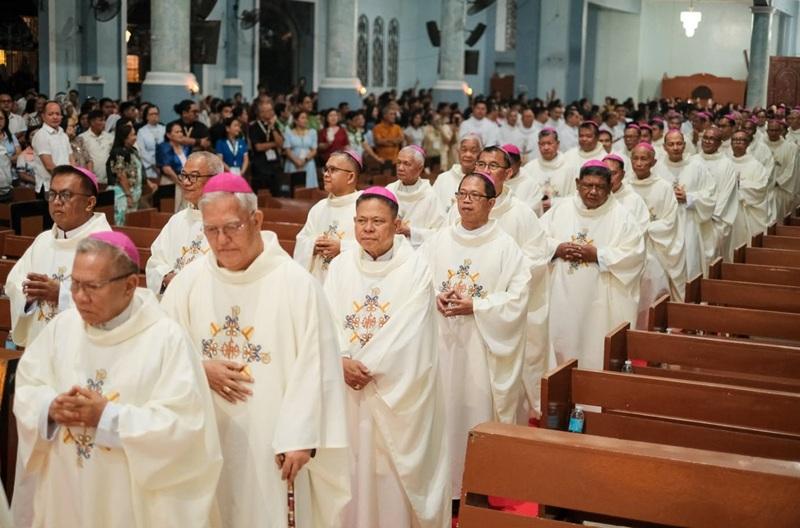
CBCP Tackles Mental Health Awareness, Offers Counseling and Apology
The Catholic Bishops' Conference of the Philippines (CBCP) has issued a pastoral letter addressing mental health awareness, apologizing to families who felt shunned by the Church after losing loved ones to suicide and proposing counseling groups and collaboration with professionals.
The Catholic Bishops' Conference of the Philippines (CBCP) has issued a pastoral letter on mental health awareness, acknowledging the "unseen burden" of people dealing with anxiety, depression, addiction, loneliness, grief, and raising a proposal to "listen and offer accompaniment" by establishing counseling groups. The members of the Catholic Bishops' Conference of the Philippines (CBCP) also apologized to families that are grieving the loss of a loved one through suicide who felt they were shunned by the Church. "Many among us carry unseen burdens. Some struggle with anxiety, depression, addiction, loneliness, grief, or other mental health challenges. Others silently bear the pain of poverty, unemployment, overwhelming debt, family conflict, migration, or the loss of hope. Many suffer in silence, afraid of being judged, misunderstood, or rejected. There are those who begin to believe their lives no longer matter," according to the statement signed by CBCP President and Lipa Archbishop Gilbert Garcera. "As your bishops, we wish first of all to say to every person who is struggling: you are not alone. God loves you. Jesus never turned away those who suffered. He drew near to them, listened to them, touched them, restored their dignity, and brought them back into the community. The Church is called to do the same today. The Church loves you," the CBCP also said. Understanding, care, compassionate accompaniment The bishops clarified that "Mental illness is not a sign of weak faith. It is not a punishment from God." Affected individuals, the CBCP said, "understanding, appropriate care, and compassionate accompaniment." It was proposed that parishes organize counseling groups, make sure priests are available to hear confessions, prayers and Masses are offered for mental health and healing while the people are encouraged to seek professional care. "No one should suffer alone," the bishops said. "We encourage those experiencing mental health challenges to seek appropriate professional care whenever needed. Seeking medical or psychological help is not a lack of faith. God’s healing often comes through the dedicated service of doctors, psychologists, counselors, and other caregivers, whose work we gratefully acknowledge," they added. Apology to grieving families The church leaders also talked about families that are grieving the death of a loved one through suicide and issued an apology for past misunderstanding. "If you have experienced misunderstanding or felt unwelcome within the Church during your time of grief, we ask your forgiveness. We urge our priests and pastoral workers to accompany families with compassion, to celebrate the Church’s funeral rites in accordance with current ecclesiastical discipline, and to proclaim the hope that is found in Christ," they said. "The Church entrusts your loved ones to the infinite mercy of God. “As the grave psychological suffering can diminish personal responsibility, we should not despair of the eternal salvation of persons who have taken their own lives” (CCC 2282–2283). “In God’s hand is the life of every living thing and the breath of all mankind” ( Job 12:10). Please do not lose hope," said the bishops, as they underscored the "sacredness of human life." Supportive communities The CBCP issued the pastoral letter at the end of their biannual general assembly that was held in the Archdiocese of Ozamis raising the increase in mental health concerns involving students, parents, overseas workers, victims of abuse, among others. The factors affecting mental health such as poverty, unemployment, injustice, family breakdown, natural disasters, migration, online addiction, as well as technology and artificial intelligence "when left unchecked, can also contribute to anxiety, loneliness, unhealthy comparison, cyberbullying, addiction, and other threats to mental well-being." In conclusion, the CBCP is calling on the participation of parishes, religious communities, Basic Ecclesial Communities (BECs), and schools "to promote honest conversations about mental health and strengthen collaboration with families, professionals, and government institutions." "Above all, let us become communities where no one is ashamed to seek help, no one is judged for struggling, and no one is left to carry life’s burdens alone," they said. — BAP, GMA News
多角的分析
フィリピン経済は、海外からの送金やBPO産業に大きく依存しており、国民の経済的困難はメンタルヘルスに直結する。失業、貧困、過剰な借金といった経済的要因が、不安や希望の喪失に繋がっている現状は、経済的安定の重要性を示唆している。教会がこれに言及することは、経済政策における社会的弱者への配慮の必要性を間接的に示唆している。
メンタルヘルス問題の広がりは、労働生産性や従業員の定着率に影響を与える可能性がある。特に、海外就労者(OFW)の増加に伴う家族の離散や孤独感は、経済活動の担い手である労働者の精神的健康を損ない、結果として経済全体の活力低下に繋がるリスクがある。投資家は、企業が従業員のメンタルヘルスケアにどの程度配慮しているかを、ESG投資の観点から評価するようになる可能性がある。
フィリピン社会において、メンタルヘルス問題は依然としてスティグマ(偏見)が根強く、助けを求めることに躊躇する人が多い。教会が自殺者の遺族に謝罪したことは、過去の教会の対応が一部の人々を孤立させていたという認識を示している。地域社会(BECs)や学校が、メンタルヘルスに関する率直な対話を促進し、支援体制を強化することは、社会的な孤立を防ぎ、より包摂的なコミュニティを築く上で極めて重要である。
多くのフィリピン国民、特に学生や海外労働者は、経済的なプレッシャー、将来への不安、家族との離別など、様々な要因で精神的な負担を抱えている。教会がこれらの「目に見えない重荷」に言及し、寄り添う姿勢を示したことは、苦しんでいる人々にとって大きな慰めとなるだろう。しかし、教会だけの努力では限界があり、政府や専門機関との連携による、より実践的な支援体制の構築が国民の切実な願いとなっている。
背景・歴史的文脈
フィリピンでは、カトリック教会が国民の精神生活に大きな影響力を持つ。過去、教会は自殺やメンタルヘルス問題に対して、しばしば厳格な姿勢をとってきた。しかし、社会の変化や問題の深刻化を受け、教会もより包括的で共感的なアプローチへと転換しつつある。特に、海外労働者(OFW)の増加に伴う家族の離散や、経済的困難、自然災害の頻発などが、国民のメンタルヘルスに多大な影響を与えている背景がある。教会は、こうした社会的な課題に対して、精神的な支えを提供する役割を再定義しようとしている。
原文ソース
GMA News Philippines