Thai MP Questions Defense Budget Cut Amid DE Ministry Funding Increase
A Thai Member of Parliament questioned the reduction of the defense budget by nearly 1 billion baht and the increase in funding for the Ministry of Digital Economy and Society. He specifically pointed out delays in infrastructure development in border areas, questioning the government's response.
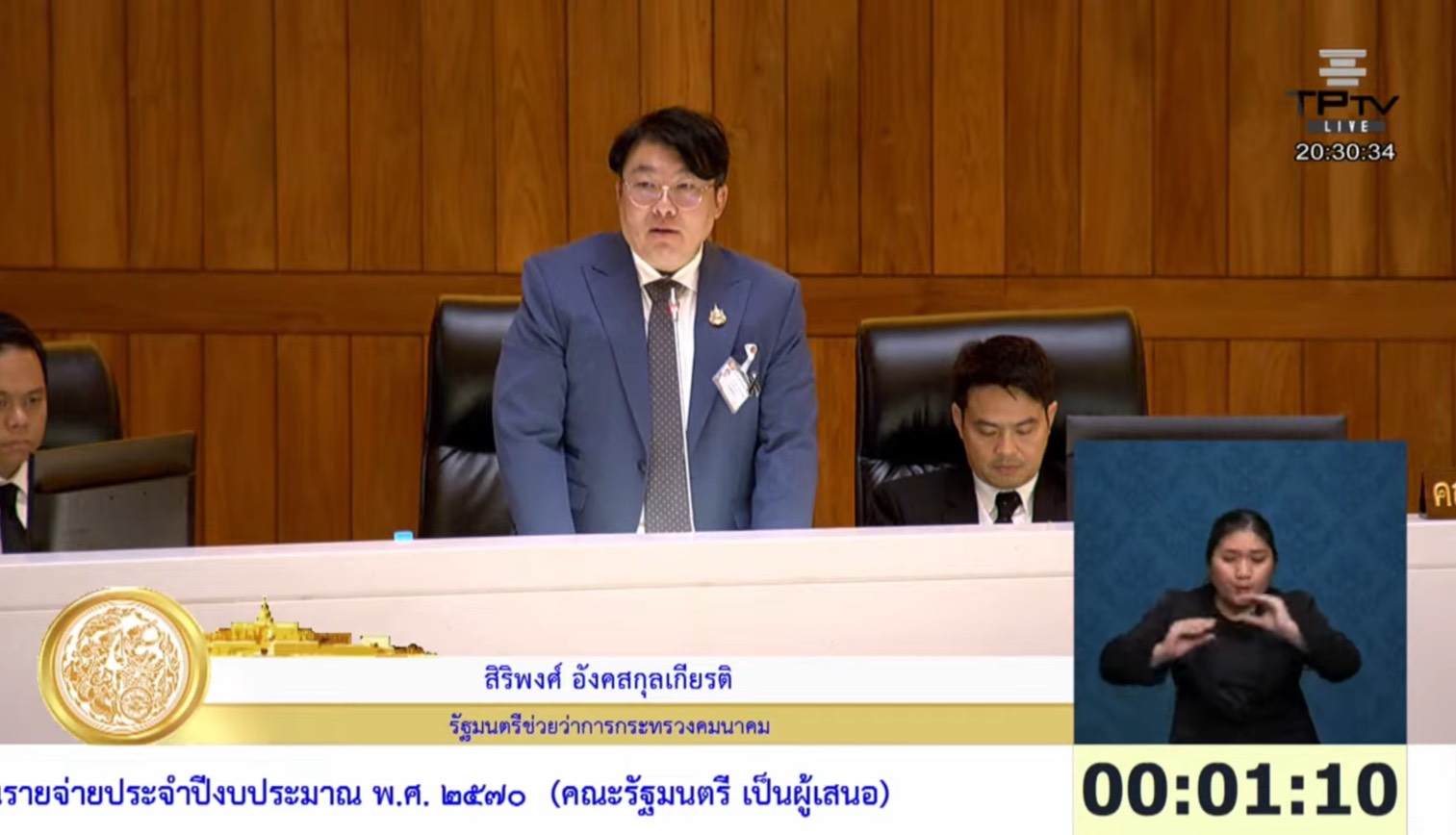
During the deliberation of the 2027 fiscal year budget bill in the House of Representatives, MP Wasawat Puangphonsri of the Ruam Phalang Party raised concerns over the reduction of the defense budget by nearly 1 billion baht, while the budget for the Ministry of Digital Economy and Society was increased. MP Wasawat pointed out that the border situation remains unstable and questioned, "When will the infrastructure in border areas, such as water supply, electricity, roads, and telecommunication networks, be developed?" He also stated that bunkers, roads, and flagpoles photographed by government officials during his visit to the Khao Phra Wihan area from June 15-17 were funded by donations from monks, not public funds. Regarding the development of roads along the border, he mentioned that 18 routes, totaling 114 kilometers, were surveyed and requested a budget of 763 million baht. However, progress by the Department of Highways is slow, with military engineers currently handling 72 routes. He highlighted that Highway 2214, a crucial evacuation route during past conflicts, is not included in the budget proposal, and requested an additional 60 million baht for shoulder widening. In response, Deputy Minister of Transport Siripong Angkasakulkiat asserted that the Prime Minister consistently prioritizes Thailand's sovereignty, especially concerning the border situation with Cambodia. He stated that any budget requests from the Ministry of Defense, whether from the central fund or other sources, related to border areas receive the Prime Minister's directive for maximum cost-effectiveness. Siripong explained that constructing roads in border areas faces challenges, including land ownership issues and regulations concerning forest reserves and national parks. He added that when private companies find it difficult to undertake construction, the military may need to carry out the work directly, and the government is fully prepared to support budget requests from the security sector. He emphasized that the government, including himself, regularly visits border areas to address these issues, underscoring that the government does not neglect border concerns and that the Prime Minister places the highest importance on Thailand's sovereignty. Source: INN News
多角的分析
国防予算の削減とデジタル関連予算の増額は、タイ政府が現代化と経済成長を優先する姿勢を示唆している。しかし、国境地域のインフラ未整備は、経済活動の阻害要因となり得る。特に、軍事的な緊張が続く地域への投資不足は、長期的な経済発展におけるリスクとなる可能性がある。
国防予算の削減は、軍事関連産業への投資にはネガティブな影響を与えうる。一方で、デジタル関連予算の増額は、テクノロジー関連企業やインフラ開発への投資機会を示唆する。国境地域のインフラ未整備は、物流コストの増加やビジネス機会の損失につながる可能性があり、投資家はこれらのリスクを慎重に評価する必要がある。
国境地域住民の生活インフラ(水道、電気、道路)の未整備は、生活の質に直接的な影響を与える。特に、軍事衝突時の避難路となるべき道路が整備されないことは、住民の安全保障上の懸念を高める。公的予算ではなく僧侶からの寄付金でインフラが賄われるという事実は、政府の役割分担と地域への支援体制に疑問を投げかける。
国境地域に住む住民は、基本的な生活インフラの不足に直面している。道路の未整備は、移動の困難さ、物資の輸送コスト増加、緊急時の避難の遅れなど、生活のあらゆる側面に影響を及ぼす。政府の予算配分が、安全保障と国民生活の基盤整備に十分に応えられていないという不満が生じる可能性がある。
背景・歴史的文脈
タイとカンボジアの国境地域では、過去に領土問題や武力衝突が発生しており、特にカオプラウィハーン周辺は緊張が高まる地域として知られている。こうした背景から、国境地域のインフラ整備は、安全保障と経済発展の両面から重要視されてきた。しかし、予算配分においては、国防費と開発関連費の間で常に議論が生じており、今回の国防予算削減とデジタル予算増額は、政府の優先順位の変化を示唆している。軍の工兵隊がインフラ整備の一部を担っている現状は、公的機関の予算不足を補うための軍の役割の大きさを物語っている。
原文ソース
INN News