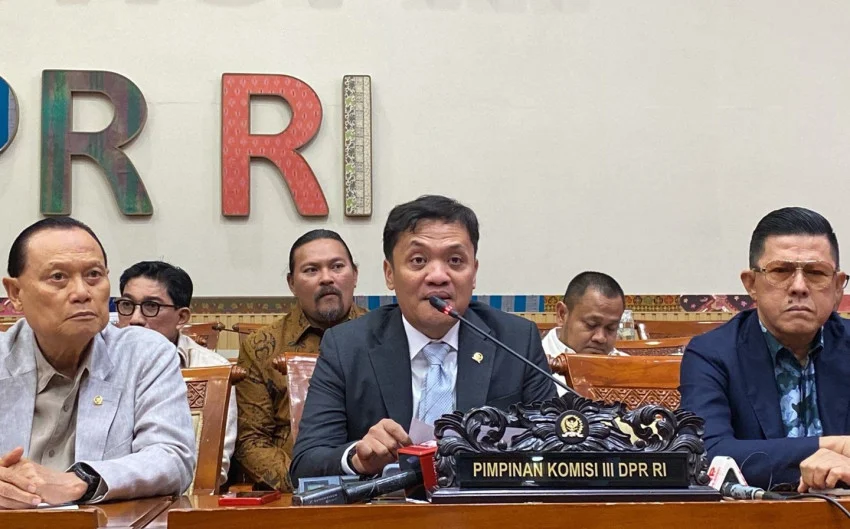
House Committee Vows Continued Oversight of Suspected Coal Corruption Case
Habiburokhman, a member of Commission III of the Indonesian House of Representatives (oversight of law, human rights, and security), has stated the committee will continue to monitor cases of alleged corruption in the coal mining sector. This signals the legislature's commitment to addressing a matter of public concern.
Habiburokhman, a member of Commission III of the Indonesian House of Representatives (oversight of law, human rights, and security), has stated that the parliament will continue to monitor cases of alleged corruption in the coal mining sector. This statement is seen as an indication of the legislature's commitment to fulfilling its responsibilities concerning corruption issues that are of high public interest. The coal industry holds a significant position in the Indonesian economy, and transparency and fairness in its operations are issues directly linked to the public's livelihood and economic stability. Corruption in the management and development of natural resources has been a long-standing problem in Indonesia, with the government and parliament being urged to eradicate such malpractices and establish the rule of law. The continued oversight by Commission III of the House is expected to encourage progress in investigations by judicial authorities and lead to the uncovering of the truth and the pursuit of accountability. Source: Sindonews
多角的分析
石炭産業はインドネシアの主要な輸出品であり、国家歳入に大きく貢献している。汚職疑惑は、この産業の健全な発展を阻害し、投資環境を悪化させる可能性がある。また、不正な利益が一部の権力者に集中することで、経済格差を拡大させる要因ともなり得る。
投資家にとって、汚職疑惑は事業リスクの増大を意味する。法的な不確実性や、賄賂などの不正要求への懸念は、新規投資を躊躇させる要因となる。透明性の高い法制度と厳格な執行は、国内外からの投資を呼び込む上で不可欠である。
石炭採掘は、地域によっては環境破壊や健康被害を引き起こすことがある。汚職が蔓延すれば、環境規制の遵守がおろそかになり、地域住民の生活環境が悪化するリスクが高まる。また、不正に得た利益が一部の特権階級に流れることは、社会的な不満を高める要因となり得る。
国民の視点では、汚職は税金が無駄遣いされ、公共サービスが低下する原因となる。石炭産業における汚職は、資源の恩恵が一部の富裕層に独占され、一般市民に還元されないという不公平感を生む。国会による監視は、国民が不正を許さないという意思表示であり、透明性のある統治への期待を反映している。
背景・歴史的文脈
インドネシアにおける天然資源を巡る汚職は、長年の課題である。特に石炭産業は、その巨大な経済的価値ゆえに、過去にも多くの汚職事件が報じられてきた。1990年代以降の民主化以降も、法執行の弱さや、政治家と経済界の癒着が指摘されており、資源の公平な分配と持続可能な開発が求められている。2010年代以降、汚職撲滅委員会(KPK)の活動が注目されたが、その権限縮小を巡る議論も行われるなど、汚職対策の難しさが浮き彫りになっている。
原文ソース
Sindonews