General articles are free for 24 hours after publish.
Thai Education Ministry Shifts Rights Center to Proactive Stance
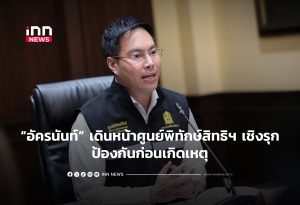
Thailand's Ministry of Education is transforming its Rights, Liberties, and Safety Protection Center from a reactive to a proactive model, emphasizing prevention before incidents occur. Deputy Minister Akaranan stated the goal is to make schools safe spaces and enhance protection for both students and teachers.
Thailand's Ministry of Education is undergoing a significant shift in its Rights, Liberties, and Safety Protection Center, moving from a reactive to a proactive approach with a strong emphasis on preventing incidents before they occur. Deputy Minister of Education Akaranan Kannikkanan announced this strategic pivot, aiming to protect students and teachers from potential risks and establish schools as safe havens. During the center's inaugural meeting, Deputy Minister Akaranan instructed relevant agencies to enhance inter-agency collaboration. The goal is to create a system that not only formulates policies but also provides tangible assistance to the public, encompassing complaint reception, coordination with agencies, problem resolution, and follow-up. The ultimate objective is to prevent issues from arising in the first place, rather than merely addressing them after they happen. "What I want to see from the work of this center is a reduction in incidents. Our end goal must be zero incidents, not waiting for problems to arise and then trying to fix them. We must find ways to prevent problems from occurring from the outset," Deputy Minister Akaranan stated. He emphasized that the key performance indicators are not the number of meetings or documents, but rather how quickly citizens receive assistance, how many problems are reduced, and whether people feel the government is a reliable support. Effective protection of rights, liberties, and safety hinges on integrated data, coordination, and follow-up from all agencies. "We will not measure success by the number of cases received, because true success is how we reduce problems and increase citizen protection," he added. The first meeting focused on urging relevant departments to quickly define clear operational formats and mechanisms. This will enable the center to systematically "receive cases, solve problems, and follow up." The priority is to reduce incidents that affect citizens' rights, liberties, and safety. Following the meeting, Deputy Minister Akaranan explained that he was tasked by Minister of Education Prasert Chandr-Thong to oversee the center's transition to a proactive model, making it a reliable resource for the public and ensuring schools are safe environments. This marks the official launch of the initiative. He noted that the number of complaints has been relatively low, partly because the public is not yet fully aware of the available channels. Efforts will be made to publicize the center to ensure students and teachers experiencing bullying, harassment, or abuse can report issues and seek help. Regarding concerns about internal school conflicts, the ministry plans to utilize technology like "Traffy Fondue" to promote transparency. If schools fail to resolve issues, multiple sectors, including families, parents, and the Ministry of Social Development and Human Security, will be involved. The center handles six types of complaints, focusing on matters within the scope of rights, liberties, and safety. In the month since its opening, "harassment" has been the most reported issue, with some cases involving internal school problems previously unknown to the central ministry. Deputy Minister Akaranan stressed that if complaints submitted via "Traffy Fondue" are not addressed by schools or district offices, an investigation will be conducted, performance indicators will be set, and potential penalties may be imposed. He assured that the confidentiality of complainants would be maintained. Furthermore, the center will provide support to both students and teachers who may face bullying or harassment, as well as address safety concerns for schools in border areas. On the systemic improvements within district offices, Deputy Minister Akaranan stated that over the past five months, the Ministry of Education has adopted a proactive approach, implementing technology and reducing teacher workload. While some accumulated problems cannot be solved immediately, expedited action will be taken. The ministry aims to support its over 400,000 staff members and more than 6 million students, particularly in safety aspects, to ensure tangible results from its reform efforts. Information Source: INN News
Original source
INN News